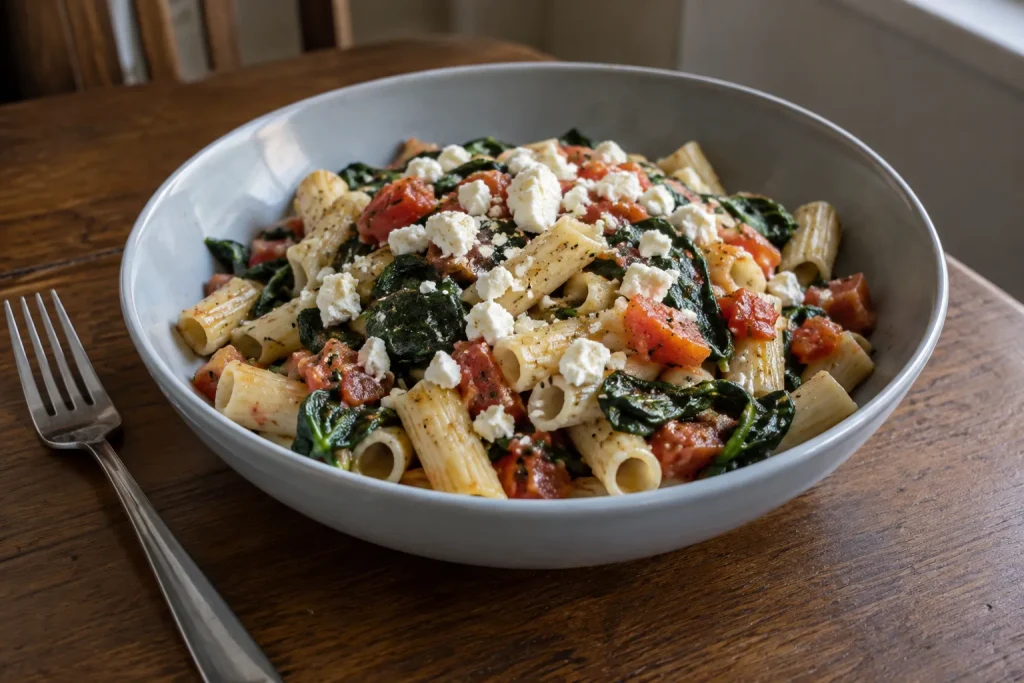
These weekly dinner menu ideas give you a flexible starting point for seven evenings, with a grocery-list method and a place for leftovers. Choose the meals that fit your household, move them around your calendar, and check the complete recipes before shopping.
This is a menu-planning guide, not a single recipe or a fixed nutrition plan. The suggested dishes need different ingredients, portions and cooking times. Start with the busiest nights and leave room to change your mind.
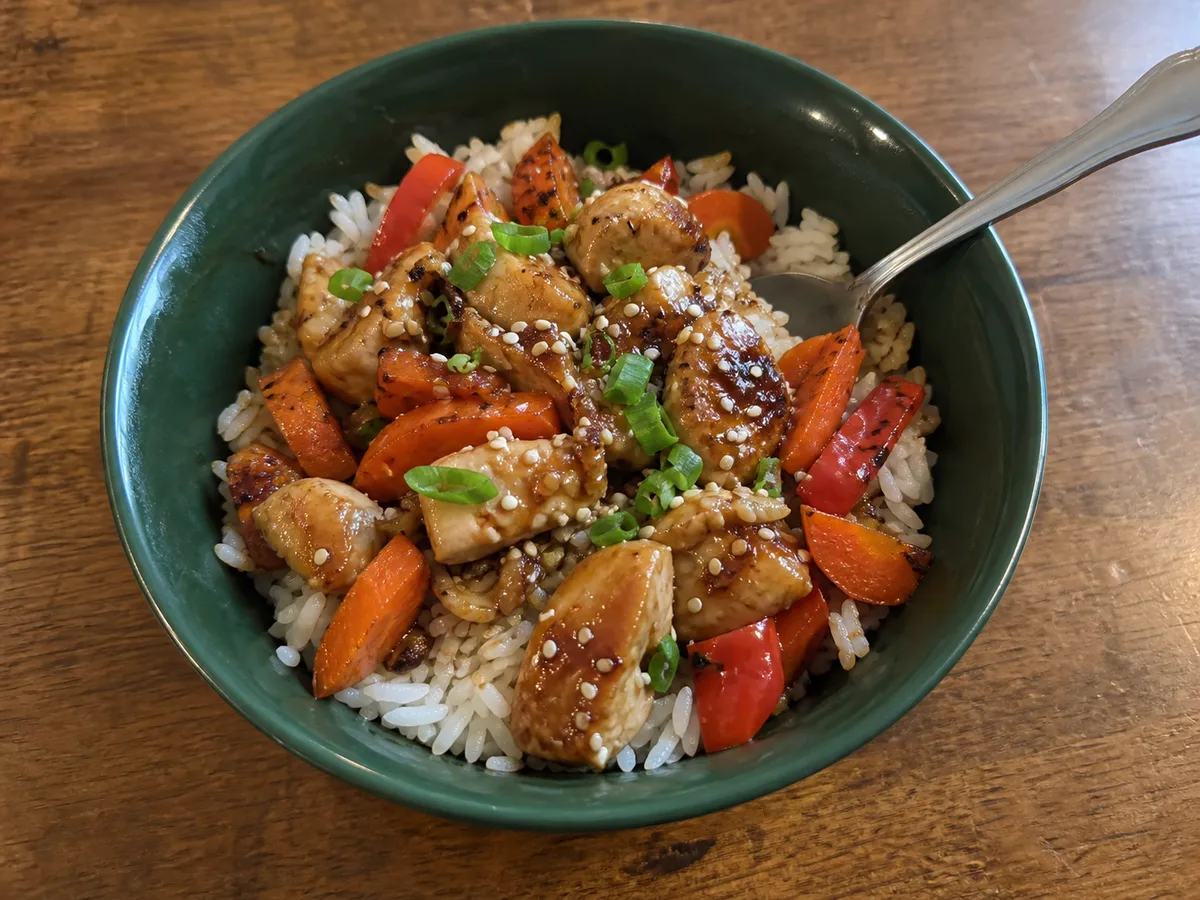
Images in this guide are AI-generated serving illustrations, not photographs of recipe testing.
A Flexible Seven-Day Dinner Menu
Use the week below as a template. You do not need to cook seven new dinners: Friday is deliberately flexible. If a dish is unfamiliar, choose a complete recipe for it before adding ingredients to your list.
| Day | Dinner idea | Planning note |
|---|---|---|
| Monday | Spinach, tomato and feta pasta | Save this for an evening with enough cooking time. Jess Rice’s baked feta pasta at Budget Bytes is one complete version; it lists one hour total, not a 20-minute dinner. |
| Tuesday | Lentil tacos with toppings served separately | Beth Moncel’s lentil tacos at Budget Bytes provide a complete option. That version lists 50 minutes total; check its lentil type, quantities and chosen toppings. |
| Wednesday | Salmon with broccoli and rice | Choose a recipe written for your fillets and appliance. Fresh and frozen fish do not automatically use the same method or timing. |
| Thursday | Honey-lime chicken with coconut rice | Choose a complete chicken recipe and a separate rice recipe. Plan an extra portion only if it fits your household and can be stored promptly for Friday. |
| Friday | Thursday’s properly stored leftovers, or a pantry backup | Check when the food was cooked and how it was stored. If leftovers are not suitable, choose a fresh backup or another meal rather than stretching their storage time. |
| Saturday | Broccoli chicken casserole with a side salad | Our broccoli chicken casserole guide starts with a broccoli-and-rice bake. It is a large recipe with preparation before baking; check servings and total time before shopping. |
| Sunday | Soup or chili, with bread or another side | Choose a stove or slow-cooker recipe that fits the day. Browse crockpot dinner ideas for soup and chili directions to explore, then use a complete recipe for the dish you choose. |
These are different meal options, not seven dishes tested together. The linked Budget Bytes recipes are credited to their creators; they are optional versions, not evidence that every pasta or taco dish has the same method or timing.
Build Your Grocery List from the Menu
Open the selected recipes first. Write down their serving sizes and decide whether you need a full batch, a smaller recipe or planned freezer portions. A menu without quantities is useful for choosing meals, but it is not yet a shopping list.
- Check what you already have. Look in the pantry, refrigerator and freezer before buying more rice, pasta, lentils, spices or sauces.
- Copy the quantities from each complete recipe. Keep uncooked and cooked amounts clearly separate, especially for rice and beans.
- Combine repeated ingredients. Add together the amounts of spinach, tomatoes, broccoli or chicken that your chosen recipes need. Different chicken cuts are not interchangeable shopping quantities.
- Subtract usable supplies. Check condition, dates and package instructions. A half-used ingredient is not automatically enough for the next recipe.
- Group the remaining list by store section. Keep produce, proteins, pantry items, dairy and frozen foods together so the list is easier to follow.
For this example, your categories might include pasta, rice, lentils and tortillas; spinach, tomatoes, broccoli and citrus; chicken and salmon; feta and any dairy required by the casserole. This is a starting checklist, not a complete list of ingredients. Toppings, sauces and the specific recipes will change it.
Leave an entry for one backup dinner. Pantry chili, pasta with a prepared sauce, or another familiar option can replace a meal when plans change. Compare prices at your own store rather than assuming a protein or frozen product is always cheaper.
Match Each Dinner to Your Schedule
Reserve your busiest evenings first
Mark late meetings, activities and evenings away from home. Put a familiar meal or suitable leftovers on those days. Move the pasta or casserole to a less rushed evening if its complete recipe needs more time.
If you need ideas for one evening rather than an entire week, use our weeknight dinner ideas to choose by the time and ingredients you have.
Count preparation, not just cooking
Read for thawing, marinating, resting, preheating and separately cooked components. Air-fryer chicken tenders still need coating and any resting time their recipe specifies. A casserole that starts with cooked rice needs that rice ready first.
Slow-cooker dinners need an advance start, even when hands-on preparation is short. Follow a recipe written for your appliance and ingredients; do not apply one generic low-setting time to chicken, pork, vegetables and pasta.
Swap Meals Without Rewriting the Whole Week
Change the day first, then the dish. Moving Tuesday’s tacos to Saturday usually requires less replanning than buying a new set of ingredients. Keep track of perishables and freeze suitable food in time if its planned use moves later.
Keep useful ingredients in rotation
Spinach can appear in pasta or a frittata, and broccoli can accompany salmon or become part of a casserole. Select the actual recipes before deciding how much to buy or prepare. Keeping sauces and toppings separate can make serving more flexible, but does not extend a food’s safe storage time.
Use other dinners from the same collection
For a different chicken night, consider shawarma, panko-coated tenders or honey-sesame chicken bowls. Ground-beef bowls, hushwee or kofta can fill another slot. Meatless alternatives include lentil tacos, roasted vegetable and farro salad, or a sweet potato, spinach and goat cheese frittata.
Other options include salmon cakes, zucchini pasta, chicken enchiladas, chili mac, white turkey chili or grilled pizza. These are ideas to explore, not interchangeable recipes. A protein change can affect seasoning, cooking time, temperature and servings. Do not swap salmon for chicken and keep the same cooking instructions.
Plan Leftovers, Freezing and Reheating
A seven-day menu does not mean keeping all seven dinners cooked in the refrigerator from Sunday onward. Plan fresh cooking, a midweek preparation session, or appropriate freezer portions for later days.
FoodSafety.gov’s cold-storage chart lists 3–4 refrigerated days for cooked meat or poultry leftovers and for soups and stews at 40°F (4°C) or below. Check the guidance for the actual food; do not treat every ingredient or dish as having one universal storage limit.
Following FDA safe-handling guidance, refrigerate perishables within two hours, or one hour above 90°F. Divide large leftovers into shallow containers. Thaw in the refrigerator, cold water or microwave, not on the counter; cook food thawed by cold water or microwave immediately.
Label portions with the cooking date and contents. Freeze suitable extras promptly if they will not be used within their recommended refrigerated time. Put raw meat and seafood apart from ready-to-eat foods, and keep marinades refrigerated.
Use a food thermometer rather than a fixed number of reheating minutes. FoodSafety.gov’s temperature chart gives 165°F (74°C) for poultry, casseroles and leftovers; 160°F (71°C) for ground beef; and 145°F (63°C) for fish. Follow the instructions for the specific food and method. Color, a browned crust or an illustration cannot confirm safety.
More Ideas for Your Next Weekly Menu
Keep the planning structure and change a few meals next week. Our healthy dinner ideas offer a wider selection of chicken, seafood, meatless and one-pan options. Choose meals for your household’s needs rather than treating a collection label as a nutrition guarantee.
After the week, note which meals fitted your schedule, which ingredients went unused and whether the portions worked. Use those notes to make the next grocery list more practical.
Supplementary Cooking Videos
These existing videos offer separate dinner and meal-prep ideas. They are not demonstrations of the seven-day menu above; use each creator’s own complete recipe and instructions.
Julia Pacheco — family dinner and grocery-budget ideas.
Essen Recipes — a separate salmon preparation.
Brian Lagerstrom — meal-prep ideas.


