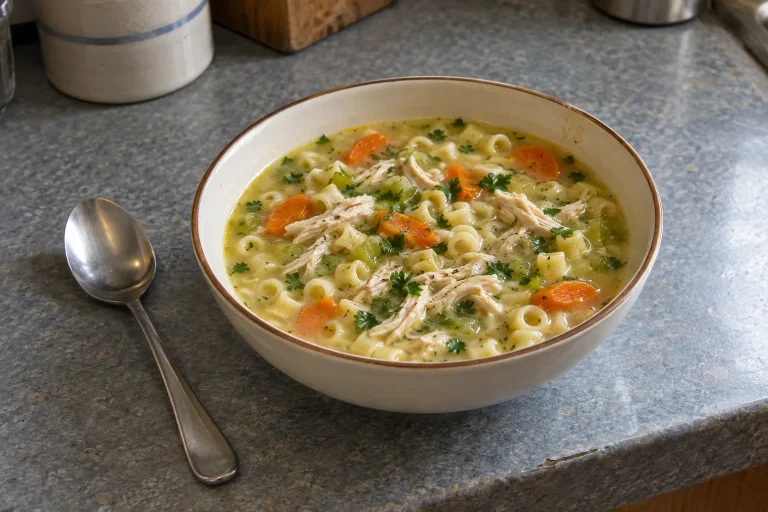
A can of condensed cream of chicken soup can become the sauce for a rice bake, the filling for a pot pie or the base of a skillet dinner. The useful question is which recipe fits the ingredients you have: raw chicken or cooked chicken, ordinary rice or instant rice, and an oven or a covered skillet.
These recipes using cream of chicken soup come from Campbell’s published recipe collection. This guide helps you choose between three options and links to their complete quantities and instructions. It is not a record of recipes tested for this site. For a meal served in a soup bowl instead, explore our chicken, bean and tofu soup ideas.
Images on this page are AI-generated illustrations of representative dishes, not photographs of recipe testing, measured portions or safe cooking temperatures.
Choose a Cream of Chicken Soup Dinner
| Dinner | Start with | Main distinction |
|---|---|---|
| Cheesy chicken and rice casserole | Raw chicken breasts and uncooked long-grain white rice | A covered oven bake with mixed vegetables and cheese |
| Chicken pot pie | Cooked chicken and refrigerated pie crusts | A creamy vegetable filling inside a double crust |
| Chicken and rice skillet | Raw chicken breasts and uncooked instant white rice | A stovetop option with broccoli |
Pick one route before you open the can. The rice types and chicken preparation are not interchangeable, even though each dish uses the same kind of soup. Read the chosen recipe from beginning to end, including its pan size and preparation notes, before shopping or starting dinner.
Keep a food thermometer handy. FoodSafety.gov’s temperature chart specifies 165°F (74°C) for poultry and casseroles. A browned surface, melted cheese or a recipe’s estimated time does not replace that check.
Cheesy Chicken and Rice Casserole
Campbell’s oven version pairs chicken breasts with long-grain white rice, mixed vegetables and a Cheddar finish. The chicken and rice start uncooked; the dish is covered for baking. Choose this route when you want an oven meal and have time for its baking and standing stages.
Keep the recipe’s water amount, rice type and covered-pan method together. Do not borrow the instant-rice instructions from the skillet option below.
Open Campbell’s cheesy chicken and rice casserole recipe for the full method. For other baked-dinner styles, see our broader chicken casserole dinner guide; those recipes have their own ingredients and instructions.
Chicken Pot Pie with a Double Crust
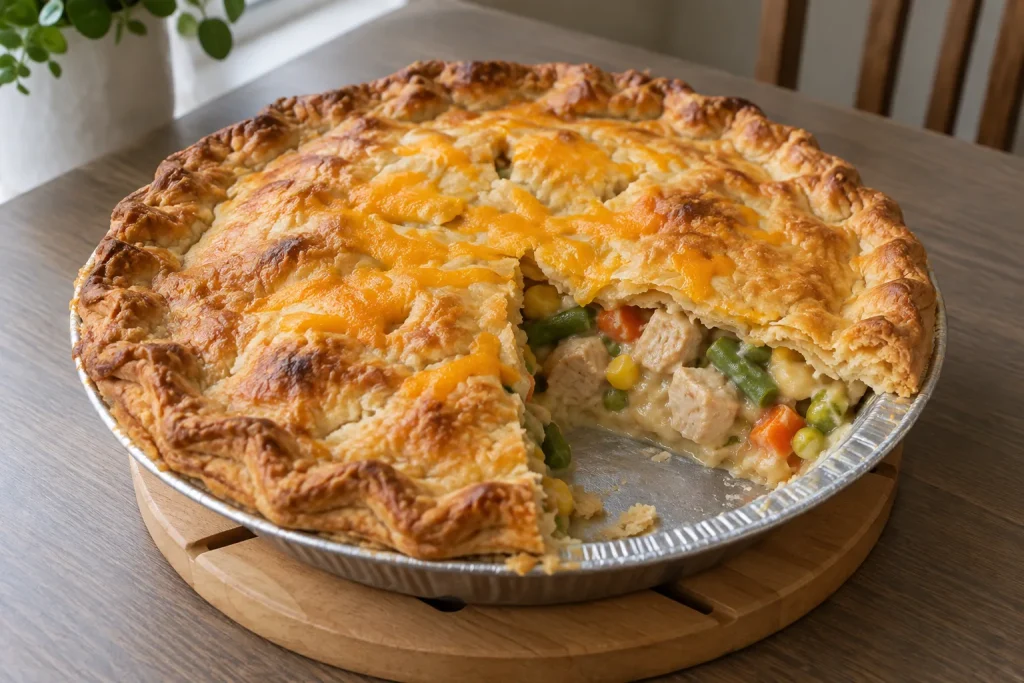
If you already have cooked chicken, Campbell’s Ultimate Chicken Pot Pie is the option to consider. It combines that chicken with mixed vegetables, condensed soup, milk and Cheddar inside refrigerated pie crusts. It is a pie, not a biscuit-topped casserole or a bowl of soup.
The source specifies cooked chicken. Do not put raw chicken into this filling and keep the same baking instructions. Its make-ahead section also separates baking from frozen from baking after refrigerator thawing.
Open Campbell’s full chicken pot pie recipe for the ingredient amounts, crust assembly and make-ahead directions.
Chicken and Rice in a Covered Skillet
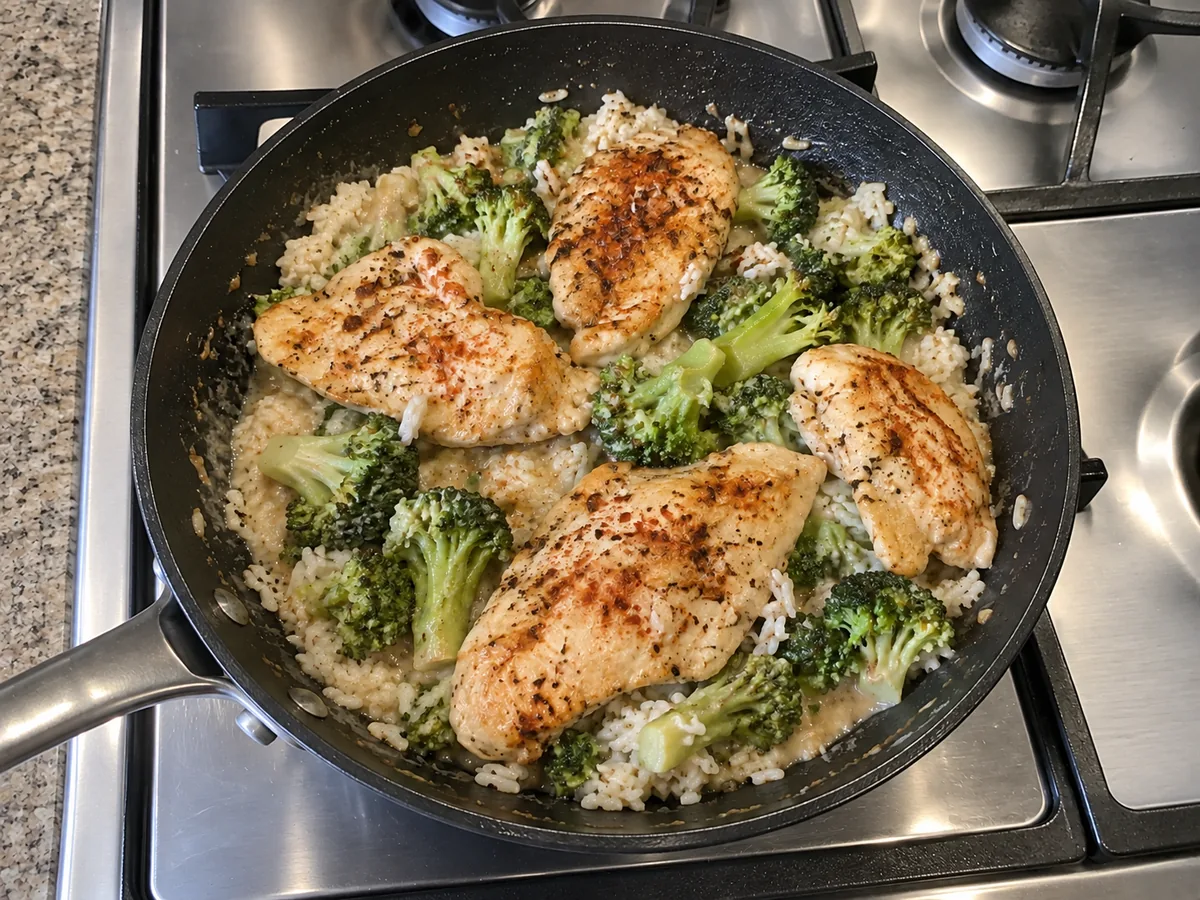
Campbell’s 15-Minute Chicken & Rice Dinner uses chicken breasts, broccoli and instant white rice. The source browns the chicken first, then builds the soup-based mixture and finishes the dish covered on the stovetop. Instant rice is a defining part of this version, not a detail to overlook.
The published name describes the source’s timing; it is not a promise that every stove, chicken breast or substitution will finish in 15 minutes. Use the specified chicken preparation and confirm its internal temperature before serving.
Open Campbell’s chicken and rice skillet recipe for the full quantities and instructions.
Check the Condensed Soup Before Cooking
The linked recipes call for condensed cream of chicken soup, not an already-prepared bowl of soup. Match the product type and can size in the ingredient list. Follow the recipe’s separate water or milk amount rather than diluting the can first as though you were serving soup on its own.
Check the label on the product you actually buy. The current Campbell’s regular condensed cream of chicken soup page lists wheat, milk and soy. That does not describe every variety or future formulation. The crust, cheese and other ingredients need checking too; replacing one ingredient does not establish that the whole dish meets a dietary requirement.
When comparing sodium, read the serving size as well as the number on the label. A figure for condensed soup alone is not the nutrition value of a serving of the finished dinner. This guide does not assign one calorie or protein total to all three dishes.
Can You Use a Homemade Cream of Chicken Substitute?
A homemade soup intended for bowls is not automatically a replacement for a cooking concentrate. This guide has no verified conversion between an unrelated homemade soup and the cans used in these recipes, so it does not supply a universal cup-for-can formula.
If avoiding canned soup is your priority, choose a complete recipe written for a homemade sauce, or a condensed substitute with a stated yield and an intended use. Keep that recipe’s thickener and liquid amounts together. Do not fill in missing flour or milk quantities by guessing.
The same care applies to ready-to-eat soup and dietary substitutions. Look for a recipe that explicitly supports the product you want to use instead of assuming that a similar name means the same concentration or ingredients.
Store and Reheat the Finished Dinner Safely
Use USDA FSIS guidance for leftovers after cooking:
- Refrigerate promptly, within 2 hours, or within 1 hour when the surrounding temperature is above 90°F.
- Divide large amounts into shallow containers for rapid cooling. Do not leave the whole dish on the counter until it reaches room temperature.
- Keep the refrigerator at 40°F or below and use refrigerated leftovers within 3–4 days.
- Reheat leftovers to 165°F, checking with a food thermometer. USDA also advises bringing separately reheated soups, sauces and gravies to a rolling boil.
For make-ahead freezing, follow the instructions for the particular recipe. An assembled, unbaked pie and a portion of cooked rice casserole are different starting points; this guide does not give them one shared freezer-to-table time.
Frequently Asked Questions
What can I make with cream of chicken soup besides soup?
The three options here are an oven rice bake, a double-crust chicken pie and a covered skillet dinner. Choose by your available chicken, rice type and equipment, then use the linked complete recipe.
Do I add water to the condensed soup first?
Not automatically. Follow the water or milk amount in the dinner recipe. Its sauce is part of that recipe, not a separate bowl of prepared soup added afterward.
Can I use regular rice in the quick skillet recipe?
The linked skillet recipe calls for instant rice. Do not replace it with uncooked ordinary long-grain rice while keeping the same liquid and cooking instructions. The oven recipe is a separate option for long-grain white rice.
Which option uses chicken that is already cooked?
The pot pie uses cooked chicken. The two rice recipes start with raw chicken breasts and provide their own cooking methods. Keep those starting states distinct.
Are these dinners gluten-free or dairy-free?
They are not presented as either. Read every ingredient label and use a recipe designed for the substitutions you need; changing the milk alone is not enough when other ingredients contain milk.
Can I use cream of mushroom soup instead?
Check the particular recipe’s published variations before making that change. This guide does not extend a substitution allowed in one recipe to every dish in the collection.