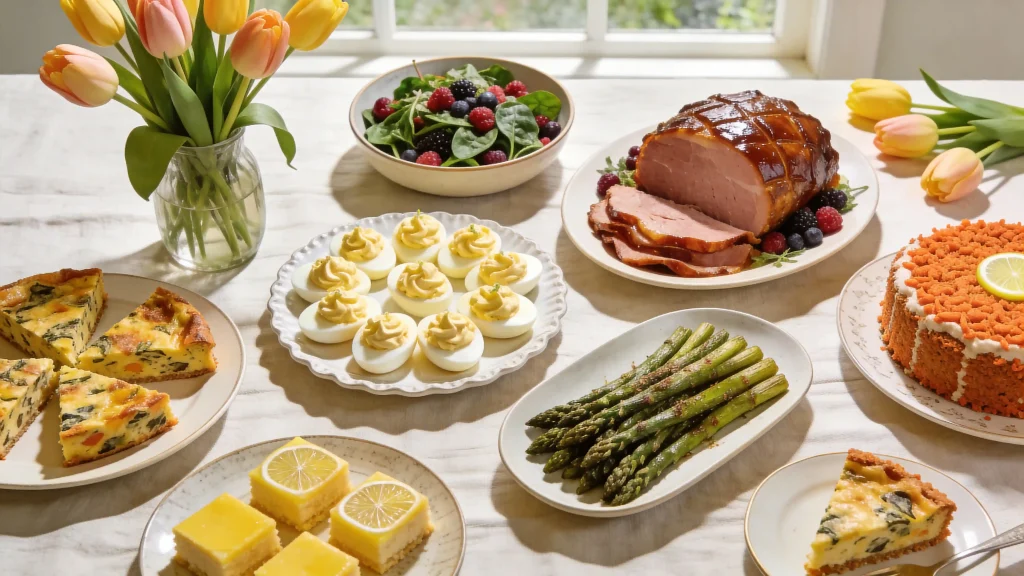
I love hosting, but I hate missing the party because I’m stuck in the kitchen. So I built a list of 25 easy make-ahead dishes that let me prep ahead and enjoy the day with guests.
One year I made deviled eggs, scalloped potatoes, and a honey-baked ham. I assembled most of it the night before. On the holiday I only reheated pans and arranged platters while people arrived. That small plan made the meal stress-free and full of spring flavor.
This post covers overnight assembly, day-before prep, and reheat-friendly picks. You’ll find brunch and dinner options—eggs, ham, lamb, chicken, seafood, potatoes, salads, breads, and desserts. I also show how to scale each dish: double ingredients, pick the right pans, and avoid oven bottlenecks.
Use the guide like this: choose one main, two to three sides, one salad, and one dessert. Later in the article I give a timeline that keeps things simple and dependable so you spend time with people, not pans.
Key Takeaways
- These 25 make-ahead dishes cut holiday day-of work and boost flavor.
- Prep options include overnight assembly and day-before staging.
- Mix brunch and dinner items to suit your guest list and timing.
- Scaling tips help you double portions and avoid oven delays.
- Pick one main, 2–3 sides, a salad, and a dessert for balanced planning.
- Follow the timeline later in the post to stay relaxed and present.
How I Plan an Easter Menu That Feeds a Crowd Without Stress
My planning begins with what stays great at room temperature and what needs the oven. I map the whole menu around three zones: make-ahead, hold-warm, and quick finish. That makes day-of time predictable and calm.
My make-ahead game plan for dinner and brunch
I pick one anchor main or one egg bake for brunch, then add support sides and a crisp salad. Brunch bakes like breakfast casserole or French toast casserole get assembled the night before. For roast lamb, I always rely on a meat thermometer for safe, even doneness.
What “scales easily” means
Scales easily means recipes double cleanly, fit 9×13 pans or sheet pans, and use predictable ingredient math. I count eggs, potatoes, cheese, and greens per person so I don’t undercook or run out.
Quick guide to balance and oven time
Pair rich mains with lemony or herby sides and one crisp salad. Stagger oven time: bake covered to retain moisture, finish uncovered for crisp tops, and reheat simple items while guests snack.
| Dish Type | Best Prep | Hold Method |
|---|---|---|
| Breakfast casserole | Assemble night before | Warm in low oven |
| Roast lamb | Season ahead, roast day-of | Rest under foil, use thermometer |
| Salad | Prep greens and dressing separately | Toss just before serving |
- Shop early, prep components, save easy make items for the last stretch.
Easter Recipes for a Crowd That You Can Make Ahead
I built my menu around trays and casseroles because they scale without extra babysitting. These unified bakes hold heat and reheat well, so you can prep early and finish with a quick browning.
Best make-ahead winners: casseroles, baked pastas, and tray bakes
Casseroles, baked pastas, and sheet-pan tray bakes are the most reliable make-ahead recipe types. They combine proteins, starch, and sauce into one pan that you can assemble the night before. French toast casserole, for example, sits overnight and needs only baking the next morning.
What I prep the day before vs. the morning of
I follow a component-prep method: chop, grate, whisk, and assemble in advance so morning work takes minutes. I always wash greens, chop vegetables, mix dressings, and assemble bakes the day before.
- Day before: assemble casseroles, mix sauces, store in glass or foil pans.
- Morning of: final bake, quick garnishes, and salad tosses that take 10–15 minutes.
| Dish Type | Prep Time | Day-Before Tasks | Morning Tasks |
|---|---|---|---|
| Breakfast casserole | 30–45 minutes | Assemble and refrigerate | Bake 35–45 minutes, rest 10 minutes |
| Baked pasta | 45–60 minutes | Cook pasta, layer, refrigerate | Bake 30–40 minutes until bubbly |
| Sheet-pan tray bake | 20–40 minutes | Toss ingredients, chill if needed | Roast 20–30 minutes for crisp edges |
Scaling tip: double the recipe but split into two pans for even cooking. Use foil pans for transport, glass for even heat, and sheet pans when you want crisp edges.
Deviled Eggs That Multiply Fast and Travel Well
I rely on deviled eggs when I want something pretty, portable, and perfect to prepare in advance. They scale cleanly, chill without losing texture, and arrive on the table looking like you spent more time than you did.
Classic with paprika
For the classic version I mash yolks with mayo, mustard, and a touch of vinegar until silky. I pipe the filling for neat halves and finish with a dusting of paprika for color and mild smoky flavor.
Smoked salmon with capers and fresh herbs
This upgrade mixes flaked smoked salmon and chopped fresh herbs into the yolk blend. Add small capers on top for briny pops and a lemon zest finish to brighten each bite.
Beet-pickled for bright color
Pickled beets give eggs a vivid pink hue and a tangy note that feels very spring. I quick-pickle the whites, then fill as usual—guaranteed to start conversations.
Spicy with sriracha, Dijon, and cayenne
For mixed-age gatherings I scale the heat. Start mild with Dijon and a splash of sriracha, then offer extra cayenne on the side. That keeps everyone happy.
Avocado for extra creamy texture
Avocado blends make the filling lush and green. Add lemon or lime to slow browning and press plastic wrap directly on the filling when chilling.
- Why I pick them: they multiply quickly, look festive, and keep well chilled.
- Packing tips: store yolked halves in a snug container, keep cold with ice packs, and add garnish on arrival.
- Presentation tip: sprinkle fresh herbs right before serving for vivid color and aroma.
Easy Easter Appetizers and Dips for Grazing Tables
I set up a grazing table so guests nibble happily while the oven handles the mains. Dips, crudités, and small bites keep people fed and let me finish hot dishes without fuss.
The best hummus platter with spring veggies
I layer classic hummus with sliced asparagus, radishes, and carrots. Slice veggies ahead, wrap in damp towels, and plate just before serving to keep them crisp.
Green goddess hummus with fresh herbs
Bright herbs lift plain chickpea dip into something festive. I pulse parsley, tarragon, and lemon into the blender for color and tang.
Stuffed mushrooms with garlic, cheese, and butter
I fill caps with garlicky crumbs, grated cheese, and a pat of butter. Bake in batches so pans don’t crowd; finish under high heat for color.
Healthy spinach artichoke dip (warm and oven-friendly)
This lighter version stays creamy when I fold in yogurt and low-fat cheese. Cover while baking to stop the top from drying.
White bean dip with lemon, garlic, and thyme
White beans, lemon zest, minced garlic, and fresh thyme make a bright, spreadable dip. Serve with pita, crackers, or raw asparagus spears.
Smoked salmon cheeseball centerpiece
I form the cheeseball the day before, chill well, then garnish with dill and lemon slices. It slices cleanly and reads like a party showpiece.
Make-Ahead Easter Brunch Bakes That Serve a Crowd
Brunch bakes win for holiday mornings because they free me to greet guests instead of manning burners. One pan, predictable timing, and buffet-friendly slices make them my go-to. I prep most components the night before and finish in the morning with minimal fuss.
Ultimate breakfast casserole with potatoes, peppers, and cheddar cheese
I roast diced potatoes and peppers, then fold them into an egg and cheddar cheese custard. The mix bakes evenly and portions easily so everyone gets a hearty scoop.
Portion tip: bake in two pans if you need even browning, and rest 10 minutes before slicing.
French toast casserole you assemble the night before
This classic soaks overnight; bread soaks into the custard and develops flavor. In the morning, bake until set, then remove cover for the last few minutes to crisp the top.
Frittata formulas that flex with spring veggies
My formula is simple: sauté vegetables, add beaten eggs and a finishing handful of cheese, then finish under heat until set. Swap whatever spring produce you have—asparagus, peas, or ramps—and adjust salt.
Quiche options that hold well for buffet-style brunch
Make the crust a day ahead to save time. Fill with cream, eggs, cooked fillings, and cheese if you like. Quiche slices keep shape on a buffet and reheat gently in the oven if needed.
- Night-before: chop, cook fillings, blind-bake crusts, assemble casseroles.
- Morning: bake or reheat pans, finish uncovered for crisp tops, and let rest a few minutes before serving.
Egg-Based Mains for Easter Morning (Fast, Flexible, and Filling)
Quick, high-impact egg bakes are my go-to when I need something filling and simple. They bake quickly, slice well, and hold while guests arrive.
Here are three reliable mains that scale and finish fast.
Spring vegetable frittata with goat cheese
I pre-chop asparagus, peas, and leeks the night before so the morning step truly feels easy make. I sauté the veggies briefly, pour beaten eggs, dot with goat cheese, and finish under the broiler until set.
Slice and serve with lemon-dressed greens. The mild tang of goat cheese lifts the spring vegetables without overpowering them.
Smoked salmon frittata (special-occasion twist)
To make brunch feel elevated, I fold flaked smoked salmon and a handful of dill into the eggs. Chives and a light sprinkle of crème fraîche finish each slice nicely.
Herbs that pair best: dill, chives, and parsley. They cut through the salmon and add fresh color.
Shakshuka: one-pan, minimal-ingredient crowd-pleaser
Shakshuka runs well as a scaled pan meal—use a larger skillet or make two pans at once. Simmer tomatoes, onions, and paprika, then nest eggs and cover until just set.
Serve with crusty bread and quick greens. To avoid overcooked eggs when it sits, pull the pan off heat at soft-set stage; residual heat finishes gently.
| Dish | Prep Time | Make-Ahead Tip | Serving Note |
|---|---|---|---|
| Spring vegetable frittata | 15 minutes active | Pre-chop vegetables; assemble morning | Slice-and-serve; pairs with salad |
| Smoked salmon frittata | 10–15 minutes active | Flake salmon and chill; add herbs just before baking | Garnish with dill and lemon |
| Shakshuka | 20–25 minutes | Simmer sauce ahead; reheat and add eggs | Serve family-style with bread |
- I use these when I want fast mains that feed many without a full buffet.
- Prepping veg and proteins ahead makes morning assembly a true easy make.
- Keep eggs slightly underdone if the pan will sit; carryover heat will finish them in minutes.
Holiday Centerpiece Mains That Scale Easily
Pick your centerpiece based on scale, budget, and whether you’ll cook on the grill or in the oven. A clear choice here keeps the rest of the day simple and lets you focus on sides and timing.
Honey-baked ham that’s easier than you think
Honey-baked ham is forgiving and feeds many with little hands-on time. Glaze toward the end, let it rest, then slice—this frees oven space and shortens day-of work.
Rosemary grilled lamb chops with fresh mint apple sauce
Grilled lamb chops cook fast and look special on the plate. Serve them with a mint apple sauce to cut the richness and add bright spring flavor.
Classic roast lamb that shines with a thermometer
For roast lamb, I rely on a meat thermometer for perfect doneness every time. Roast low and rest well; the thermometer removes guesswork and keeps slices even.
Easy roast chicken for a dependable family-style dinner
Roast chicken is my go-to when I want a no-fuss dinner. Plan roughly one bird per 3–4 guests and let sides carry the meal if you have fewer birds.
Garlic herb prime rib for a stunning table finish
Garlic herb prime rib is the showpiece that demands little staging. Rest it long, then slice at the table so each guest gets perfect, juicy pieces.
- I help you pick the right centerpiece by crowd size, budget, and appliance.
- Choose ham to free oven time, chops for quick grill service, or roast for slow, steady flavor.
- Finish with rest and simple slicing plans so serving is smooth.
| Protein | Best for | Key tip |
|---|---|---|
| Ham | Large groups | Glaze late; slice after rest |
| Lamb | Special-occasion meals | Use thermometer; pair with bright sauce |
| Chicken | Budget-friendly family dinner | One bird per 3–4 guests; rest before serving |
| Prime rib | Showpiece table | Long rest; carve at the table |
Ham for Easter Dinner: Glazes, Brown Sugar, and Leftover Wins
A good ham glaze turns a simple roast into the meal people remember.
Below I break down three crowd-friendly glaze directions and explain how they behave in the oven. I also share my reheating tips, serving math, and smart leftover ideas that feel intentional.
Honey glaze vs. brown sugar glaze vs. maple glaze
Honey glaze gives bright shine and mild floral sweetness. It browns fast, so add it near the end.
Brown sugar glaze gives deep caramel notes and a sticky crust. It holds up well under heat but can burn if left uncovered.
Maple-style glaze balances sweetness with autumnal depth and pairs well with mustard or spice.
How I keep ham juicy when reheating in the oven
- Reheat low (275–300°F) covered, with ½ cup liquid in the pan to create steam.
- Glaze in the last 10–15 minutes to avoid overcooking or burnt sugar.
- Rest under foil 10 minutes before slicing so juices redistribute.
Leftover wins: ham salad and soup ideas
Plan slices for a buffet: estimate ¾ pound per guest if ham is the main with many sides; slice thin for sandwiches.
Save the bone for rich ham-and-bean or split-pea soup. Shred meat for ham salad, sandwiches, or fried rice the next day.
| Glaze | Flavor profile | Oven tip | Best leftover use |
|---|---|---|---|
| Honey | Bright, floral | Brush last 10–15 min; watch for quick browning | Glazed slices for sandwiches |
| Brown sugar | Caramel, deep sweetness | Cover early, glaze late to prevent burning | Ham salad or sweet-glazed hash |
| Maple | Warm, maple depth | Pair with mustard; glaze near finish | Soup base and glazed pan drippings |
Seafood Mains That Feel Springy and Reheat Like a Dream
Seafood brightens a spring table and keeps the menu feeling light without skimping on flavor.
Best baked salmon for tender, flaky filets
I rub fillets with oil and a light salt mix, then bake at moderate heat so the center stays moist. Shorter bake time and a quick rest keep texture silky.
Slow-roasted salmon with fennel and orange
Slow roast a large filet on a bed of sliced fennel and orange rounds. The gentle heat deepens flavor and makes warm plating easy for many guests.
Orange glazed salmon for bright citrus flavor
I make the orange glaze ahead and brush it on in the last minutes so the citrus caramelizes without burning. The glaze doubles as an easy reheating finish.
Garlic herb baked cod with lemon
Cod takes garlic and herbs well. I drizzle oil, scatter minced garlic and herbs, and squeeze fresh lemon before baking. Use two sheet pans to scale portions evenly.
Mediterranean cod en papillote for individual portions
Fold fish, tomatoes, olives, herbs, and lemon into parchment packets. They bake separately, simplify plating, and suit dietary needs without cross-contamination.
Scallops with citrus ginger sauce
Pan-sear scallops and finish with a quick citrus-ginger sauce just before serving. They take only a few minutes and make a lovely special-occasion upgrade.
- Quick tips: rest salmon after baking, brush glaze near finish, and time scallops to cook in minutes for best texture.
| Dish | Best prep | Serve note |
|---|---|---|
| Baked salmon | Prep, refrigerate | Brush glaze last; slice to serve |
| Cod en papillote | Assemble packets | Serve individual packets with lemon |
| Seared scallops | Dry and chill | Sear hot, finish with sauce |
Potatoes for a Crowd: Cheesy, Crispy, and Make-Ahead Friendly
Potatoes are my fallback side because they scale, satisfy, and travel well on buffet trays.
I make scalloped potatoes with cream and cheese when I want rich comfort that pairs with ham, lamb, or fish. Thin slices bake in creamy layers until tender and golden.
Potatoes au gratin gets a lift when I tuck fresh thyme between the layers. That small herb note adds depth without extra work.
For simpler sides I roast garlic herb potatoes tossed with oil and cracked pepper. I spread them on two sheet pans so they brown evenly and crisp on the edges.
My make-ahead mashed potato casserole assembles today and bakes tomorrow. I top it with cheese, refrigerate, then finish in the oven for an effortless, bubbly crust.
Crispy roast potatoes reach peak crunch if you choose the right fat. Duck fat gives the best crisp and rich flavor, but butter or vegetable fat work when duck fat isn’t available.
- Scaling tips: don’t overcrowd pans, rotate racks, and give potatoes extra time if needed.
| Dish | Main fat | Best use | Make-ahead tip |
|---|---|---|---|
| Scalloped potatoes | Cream & butter | Rich holiday side | Assemble and chill; bake day-of |
| Au gratin with thyme | Cream & cheese | Herb-forward upgrade | Add thyme between layers before chilling |
| Garlic herb roast | Olive oil | Sheet-pan brown edges | Par-roast, finish on bake day |
| Crispy roast (duck fat) | Duck fat | Maximum crunch | Roast hot on single layer; flip once |
Spring Vegetable Sides That Look Great on a Big Table
I build my vegetable line-up so it reads like a spring garden on a platter. Pick two or three colors and textures to make the spread feel abundant and easy to serve.
Roasted asparagus for peak season
Roasted asparagus is my go-to for peak spring. Trim thin spears, toss with olive oil and salt, and roast hot until crisp-tender.
To avoid soggy tips, space spears on a single sheet pan and check after 8–10 minutes. Finish with lemon zest or shaved cheese right before serving.
Honey glazed carrots with garlic and warm spices
I roast carrots until edges caramelize, then toss them with honey, a touch of garlic, grated ginger, and a pinch of cinnamon. Glaze at the end for shine.
Green beans with shallots and lemon
Green beans give the menu a fresh anchor. Blanch or roast, then toss with browned shallots and a bright squeeze of lemon to lift richer dishes.
- My scaling tip: split vegetables across pans, swap rack positions mid-cook, and keep an eye on doneness.
- Plating trick: long asparagus platters, carrots piled slightly high, and beans topped with crisp shallots for a restaurant look.
| Vegetable | Cook method | Finish |
|---|---|---|
| Asparagus | Roast high heat, single layer | Lemon zest, shaved cheese |
| Carrots | Roast then glaze | Honey, garlic, cinnamon |
| Green beans | Blanch or roast | Shallots, lemon squeeze |
Fresh Salads That Balance the Rich Stuff
I always include at least one bright salad to cut through rich mains and keep the table fresh. A good salad is the part of the menu that makes ham, lamb, potatoes, and dessert feel balanced.
Broccoli salad is a make-ahead champion. I toss crisp florets with crumbled bacon, goat cheese, and a light creamy dressing. It sits and improves in the fridge, so it’s perfect the next day.
The French carrot version uses thin ribbons, honey Dijon, and fresh herbs for a crunchy, bright bowl that scales by the quart.
For color, I do a berry spinach salad with raspberry vinaigrette. It’s a springy, sweet-tart version that looks lovely on top of a buffet.
Nicoise works as a build-your-own platter—lay out tuna, eggs, potatoes, olives, and beans so guests assemble plates. It helps picky eaters and speeds serving.
- Greek salad with homemade dressing is my dependable pick alongside chicken or fish.
- Roast pumpkin, spinach, and feta with balsamic stands up to hearty mains.
- Classic potato salad remains the family favorite many return to year after year.
| Salad | Key mix-ins | Make-ahead tip |
|---|---|---|
| Broccoli salad | Bacon, goat cheese, creamy dressing | Dress just before serving or chill dressed for extra melded flavor |
| Berry spinach | Mixed berries, raspberry vinaigrette | Keep dressing separate until service |
| Nicoise platter | Tuna, eggs, finger potatoes, olives | Arrange components for build-your-own serving |
Breads, Rolls, and Brunch Bakes That You Can Prep Ahead
Fresh rolls and morning muffins are my secret to keeping the table welcoming and relaxed. Bread fills the gaps when guests arrive at different times and it soothes last-minute hunger without extra stove time.
Soft no-knead dinner rolls for holiday meals
I make no-knead dough the day before, cold-proof it overnight, then shape and bake in the morning. The method frees oven space and gives soft, pillowy rolls that pair with any main.
Biscuits with butter for a brunch spread
I fold cold butter into the dough, keep rounds chilled, and bake just before serving. I serve them with an extra pot of butter so guests can help themselves. To keep warm, I wrap them in a towel and place in a low oven for short periods.
Muffins and scones that bake the day before
Muffins and scones hold shape and texture well when baked a day early. Toast or refresh them for a few minutes if you want a crisp top. They free the oven for casseroles during the rush.
- I plan 1.5 rolls or 1 biscuit per person, with extras for the family and leftovers.
- Make-ahead dough the night before and finish in the morning in under 30 minutes.
| Item | Best prep timing | Day-of finish |
|---|---|---|
| Dinner rolls | Overnight dough | Bake and rest |
| Biscuits | Mix and chill | Bake; keep warm briefly |
| Muffins & scones | Bake day-before | Refresh 3–5 minutes if desired |
Easy Easter Desserts That Hold Up for Parties
I pick sweets that slice cleanly and taste better after chilling so service stays effortless. The right dessert should travel well, portion neatly, and let me finish other dishes without last-minute baking.
Gluten-free carrot cake with cream cheese frosting
This one uses almond or oat flour for texture and holds its shape when chilled. I frost it the day before and keep it covered so slices come out neat and moist.
Paleo citrus blueberry cake
Bright fruit and grain-free flours make this a reliable make-ahead option. It firms up in the fridge and still tastes fresh the next day.
Gluten-free citrus bars with shortbread crust
The shortbread-style base gives clean squares that travel well. Cut into portions chilled, and serve on a platter for easy self-serve.
Chocolate pots de crème
These cook and chill ahead in ramekins. I keep them refrigerated and top with whipped garnish just before serving for a rich, no-fuss finish.
Coconut crème brûlée (individual)
Small brûlées feel elegant and plate themselves. Torch the tops right before guests arrive for crisp caramel and creamy custard beneath.
Vegan caramel cheesecake
This dairy-free pick uses soaked cashews and a caramel topping. Long chill time is key; a full day in the fridge firms it for clean slices.
| Dessert | Make-ahead | Best serve method |
|---|---|---|
| Gluten-free carrot cake | Frost day-before; chill | Slice cold; room briefly before serving |
| Paleo citrus blueberry cake | Bake day-before; wrap | Slice chilled; garnish with fresh berries |
| Gluten-free citrus bars | Cut after cooling and chilling | Serve in neat squares on tray |
| Chocolate pots de crème | Make and chill 24 hours | Top with cream just before serving |
| Vegan caramel cheesecake | Chill 8–12 hours minimum | Slice with hot knife; plate individually |
My Make-Ahead Timeline for a Crowd (Day Before to Serving Time)
The day-before plan makes the whole meal come together without last-minute panic. I map shopping, chopping, and assembly into clear blocks so the final hours are calm and predictable.
What I shop early
I pick up staple ingredients first: butter, eggs, cheese, fresh herbs, lemons, and ham. Those items power most of my pans and sauces and save frantic runs on service day.
Oven scheduling and sample flow
I group dishes by temperature and finish needs. Roast or bake mains at higher temps, hold casseroles covered at low heat, and save uncovered browning for the last 15–20 minutes.
| When | Action | Notes |
|---|---|---|
| Day before | Shop, chop, assemble casseroles | Chill pans; label with bake times |
| Morning | Start slow-roast or main | Set thermometer; free oven space |
| Last hour | Bake sides, brown tops uncovered | Hold finished pans warm 30–60 minutes |
Reheating tips to protect texture and flavor
Cover to keep moisture, add a splash of stock or cream when reheating, and finish uncovered for crisp edges. Reserve fresh herbs and citrus to brighten plates at service.
I always build a 15–30 minute buffer into my timeline. That small cushion is the best way to handle the unexpected and still enjoy the table time.
Conclusion
The simplest hosts choose one star dish, add two steady sides, and keep the rest effortless.
I built this list so you can mix mains like lamb or chicken with crowd-friendly sides and a make-ahead dessert. Use the recipes that scale, then split big pans so everything cooks evenly.
Prioritize one or two showpiece items and let salads, rolls, and small sides tuck in around them. Plan oven timing and shop with a short checklist to avoid last-minute runs.
Now it’s your turn: tell me what you’ll make this year and which recipe became a family favorite. Share any herb twists you add—I love to hear how readers make these dishes their own.


