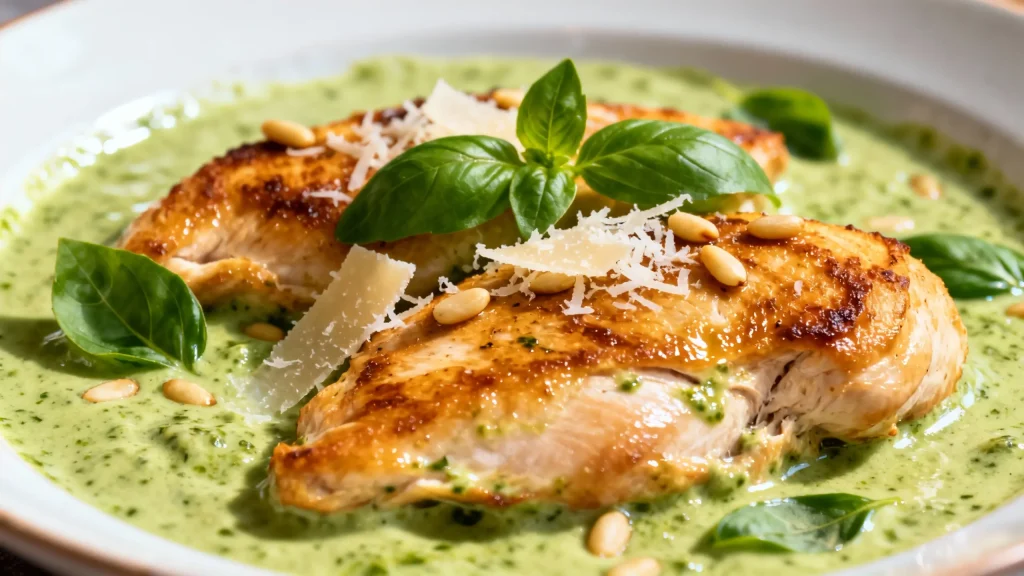
I once raced home from work with nothing planned for dinner and three hungry kids at the table. I grabbed a few chicken breasts, a jar of basil pesto, and a cup of cream, and in under 30 minutes we had a meal that felt like it came from a neighborhood bistro.
My one-pan method keeps the ingredients list short: olive oil and butter for searing, shallot and garlic for aroma, seasoned flour for a golden crust, and parmesan for a silky finish. I slice each breast in half so the meat cooks fast and stays juicy.
The trick is to simmer cream and stock until slightly thick, then fold in pesto over very low heat so the sauce stays glossy. I toss in halved cherry tomatoes and warm the chicken in the skillet before serving.
This recipe makes weeknight dinner feel effortless and gives you flexible serving options—over pasta, rice, or with crusty bread and a fresh side salad.
Why I Crave This Creamy Pesto Chicken for Dinner
Weeknight chaos taught me to value recipes that come together fast and still feel special. This one checks both boxes and keeps cleanup to a minimum.
A quick one-pan recipe that saves time on busy nights
Slicing breasts into thin cutlets cuts cook time so I can go from prep to plated in just minutes. I dredge each piece in seasoned flour (salt, garlic powder, black pepper) to speed browning and help the sauce cling.
How the sauce and heat make it forgiving
I start the skillet to seize flavor, then whisk stock and heavy cream so the base thickens fast. I add tomatoes near the end to keep brightness without thinning the sauce.
- I love that a single pan turns fond into flavor and saves time and dishes.
- The low heat when stirring in pesto prevents splitting and keeps the sauce glossy.
- The method is flexible: scale servings, tweak spice, or serve the pesto chicken over pasta, rice, or potatoes.
Ingredients I Use for a Luscious, Creamy Pesto Sauce
A short list of quality items is all I need to turn a simple protein into a special dinner.
I slice chicken breasts horizontally so each breast becomes thin, even cutlets that cook fast and stay juicy. I dredge them in flour seasoned with salt, garlic powder, and black pepper to build a savory crust that helps the sauce cling.
Choice of cuts and prep
I pick chicken breasts for speed, but I use chicken thighs when I want more richness. For thighs I choose boneless skinless, drain excess fat after searing, and cook a touch longer so they reach doneness.
Fats and aromatics
I sear cutlets in a mix of 1 tbsp olive oil and 1 tbsp butter to get good browning and fond. Then I sauté two finely diced shallots and minced garlic until fragrant.
Sauce foundation and finishing
I simmer 2/3 cup heavy cream with 1/3 cup chicken stock and 1/4 cup freshly grated parmesan until it thickens. I add 7 oz halved cherry tomatoes, then fold in 1/2 cup basil pesto very gently over low heat so the sauce stays glossy and balanced.
- I keep measured portions—about a cup of liquid total and 1/2 cup pesto—so the fat level stays in check.
- The goal is a sauce that glazes the meat but still pools for serving over pasta or rice.
Creamy Pesto Chicken
On busy nights I rely on a quick sear and a short simmer to turn simple cuts into a satisfying meal. Below I walk through each step so the sauce glazes the meat and stays glossy.
My step-by-step: sear, simmer, and gently stir in pesto
I slice each chicken breast through the center, dredge the pieces in flour seasoned with salt, garlic powder, and black pepper, and shake off excess so the coating stays light.
I heat 1 tbsp oil plus 1 tbsp butter in a hot skillet and sear the cutlets a few minutes per side until golden. I remove the meat, then use the same pan to sauté shallot and garlic for a minute or two.
I add a cup of stock, a cup of heavy cream, and a handful of grated parmesan, then simmer until the sauce thickens and coats the back of a spoon. I drop in halved cherry tomatoes to soften at the edges.
The flour dredge trick that helps sauce cling to the chicken
Before finishing, I reduce heat to very low and stir in the pesto swiftly to avoid splitting. Then I add the meat back with any resting juices and turn each piece so the sauce clings to the dredged exterior.
- Taste and adjust with a pinch of salt pepper, and let the sauce bubble for another minute to meld flavors.
- If the sauce is too thick, loosen with a splash of stock; if too thin, simmer a minute more.
- Finish with grated parmesan or basil ribbons and serve immediately while glossy and hot.
| Step | Action | Approx. Time |
|---|---|---|
| Prep | Halve breasts, dredge in seasoned flour | 5 minutes |
| Sear | Sear in oil + butter until golden | 4–6 minutes |
| Finish | Simmer cream & stock, add tomatoes, stir in pesto | 6–8 minutes |
How I Cook It in a Skillet Without Splitting the Sauce
A hot skillet and steady hands keep this sauce glossy and the meat tender. I methodically manage the heat so the cream and stock reduce before I add delicate ingredients.
First I bring cream and stock to a lively simmer. I watch for slower bubbles and spoon marks to know it has thickened enough. That base needs body so tomatoes and pesto don’t thin the sauce in the pan.
Heat management: when to simmer and when to go low
I add tomatoes briefly—one to two minutes—so they soften but do not release extra liquid. Then I drop the flame to the gentlest setting before stirring in pesto.
Why I thicken cream and stock before adding tomatoes and pesto
I combine the pesto quickly and stir to emulsify the fat into the sauce. I never let the sauce boil after the pesto goes in; high heat breaks the emulsion and makes it oily.
- I swirl in resting juices from the chicken to boost savory depth.
- If the sauce is too tight, I add a tablespoon of stock; if too loose, I simmer another minute.
- I wait to add salt pepper until the end, since pesto and parmesan add salt.
| Stage | Action | Timing |
|---|---|---|
| Reduce | Simmer cream & stock until tracks form | 4–6 minutes |
| Tomatoes | Soften briefly so they don’t flood the pan | 1–2 minutes |
| Finish | Lower heat, stir in pesto, return chicken to warm | 2–3 minutes |
| Adjust | Add stock or simmer more; taste last | 30–60 seconds |
Smart Swaps and Variations I Love
For a heartier pan dinner I often use boneless skinless thighs and adjust how I manage the fat. Small swaps change texture and timing, and they keep the core method the same.
Using thighs and draining excess fat
I reach for chicken thighs when I want extra richness. I sear them, then carefully drain excess fat from the pan before I build the sauce.
Veggie add-ins that brighten the dish
I fold in spinach to wilt into the sauce and add roasted tomatoes for concentrated sweetness. Bell peppers, zucchini, or cauliflower work well for texture and color.
Make it saucier or lighter
To make this extra saucy for pasta, I add an extra 1/4 cup stock and a splash more cream and simmer to the texture I want. To lighten it, I swap some cream for stock so the pesto still shines while trimming fat.
- I keep the skillet method with chicken breasts or a single chicken breast sliced into tenders, adjusting minutes for thickness.
- I season with garlic powder, onion powder, salt and pepper, and sometimes a pinch of red pepper flakes.
- I add chicken back only when the sauce tastes right so the meat finishes in a perfectly seasoned pan.
| Swap | What I do | Effect |
|---|---|---|
| Thighs | Sear, drain fat, cook 2–3 minutes longer | Richer flavor, more forgiving texture |
| Vegetables | Add spinach, roasted tomatoes, peppers, or zucchini | More color, nutrition, and texture |
| More sauce | +1/4 cup stock and extra cream, simmer | Best for pasta or rice to soak up sauce |
| Lighter option | Replace some cream with stock; finish with olive oil | Lower fat without losing basil and depth |
Serving Ideas and Sides to Make It a Complete Dinner
I plan sides that soak up sauce so no flavorful drop goes to waste. The method leaves enough glaze to dress a starch, a simple salad, and a warm loaf for dipping.
Perfect with pasta, rice, or potatoes
I pour the sauce over al dente pasta—penne, rigatoni, or fettuccine work great—so every bite holds basil and tomatoes.
I also spoon sliced chicken and sauce over fluffy rice or buttery mashed potatoes when I want comfort on a plate.
Simple sides that finish the meal
I keep salad and vegetable sides easy. A crisp green salad with lemon vinaigrette or sautéed green beans adds contrast. Warm crusty bread makes the meal feel special.
- I build bowls for busy nights: rice, sliced meat, sauce, and a quick salad on the side.
- I finish with basil ribbons, a dusting of parmesan, and a few extra tomatoes for color.
- For family-style service, I sometimes bring the skillet to the table so everyone plates from a hot pan.
Timing, Leftovers, and Nutrition at a Glance
A tight timeline and a hot pan are my secret to a fast, tasty meal. I keep the process simple so I can move from sear to plate in minutes without sacrificing flavor.
My timeline: from sear to simmer in minutes
I sear thin cutlets for a few minutes per side, then sauté shallot and garlic. I add a cup of stock and heavy cream to reduce until the sauce thickens.
Next I soften tomatoes briefly, lower the heat, stir in pesto, then add chicken back to warm through. The whole method takes about 15–20 minutes active time.
How I reheat and thin the sauce the next day
- Store in an airtight container up to 4 days; don’t freeze—cream sauces can break.
- Reheat gently in a skillet over low heat for 2–3 minutes or microwave 30–50 seconds.
- If the sauce tightens, thin with 1–2 tablespoons of stock or water to return a silky texture.
Nutrition notes and sodium tips for a balanced plate
Similar recipes land around 507–555 calories per serving. I watch sodium by using reduced-sodium stock and tasting before I add more salt pepper since pesto and parmesan are salty.
Check doneness with a quick-read thermometer—165°F means the chicken is safe. For a lighter plate, I add more veggies and cut the cup of starch in half.
| Topic | Quick Guidance | Timing / Note |
|---|---|---|
| Sear | Thin cutlets in hot oil until golden | 2–4 minutes per side |
| Simmer | Reduce stock & heavy cream until thick | 4–6 minutes |
| Leftovers | Refrigerate; reheat gently, thin if needed | Keep 4 days; do not freeze |
| Nutrition & sodium | Use reduced-sodium stock; taste before salting | ≈507–555 kcal; sodium varies by brand |
Conclusion
When I want a dependable dinner fast, I follow a clear sear, reduce, and finish routine. This one-pan method—sear, reduce cream and stock, add tomatoes, stir in pesto low and slow, then coat the chicken—delivers consistent results every time.
I serve it over pasta, rice, or potatoes and finish the plate with grated parmesan and basil for color. Leftovers keep up to 4 days; I reheat gently and add a splash of stock to revive the sauce.
If you want to make creamy pesto at home, save this simple recipe. I hope you try this creamy pesto chicken soon and make weeknight dinners feel easy and a little special.


