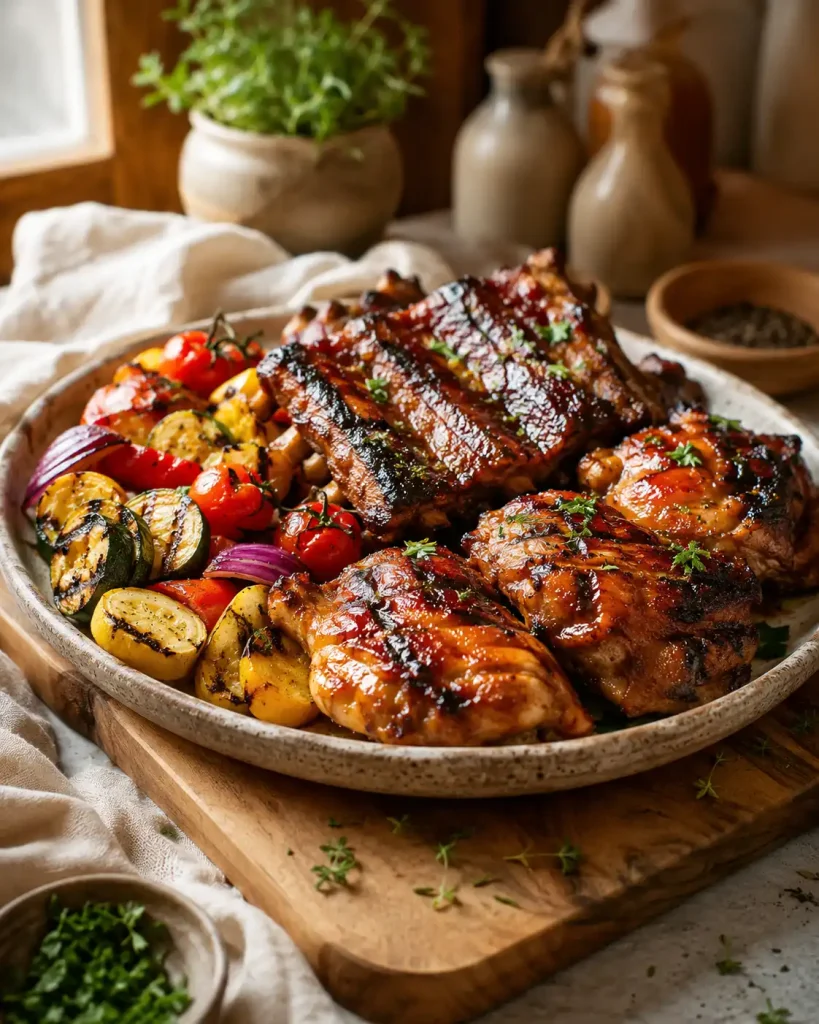
I’ve put together my go-to guide for bbq marinade recipes and rubs that work for chicken, ribs/pork, and vegetables. Weeknight grilling should still give you big flavor without fuss.
In this post I’ll give practical ratios, timing, and quick variations you can mix in minutes. My simple base starts with a bottle of sauce, a mild high-heat oil, and kosher salt. It takes about two minutes to combine and behaves better on a hot grill or in the oven.
I cover both wet marinades and dry rubs so you can pick what fits your schedule, cut, and setup. You’ll also get rules of thumb for how much to use per pound and safe handling tips so extra sauce stays confident and clean.
Ahead: fundamentals, a three-ingredient base, options for chicken, ribs, and veg, marinating times, and the doneness temps I trust when I cook.
Key Takeaways
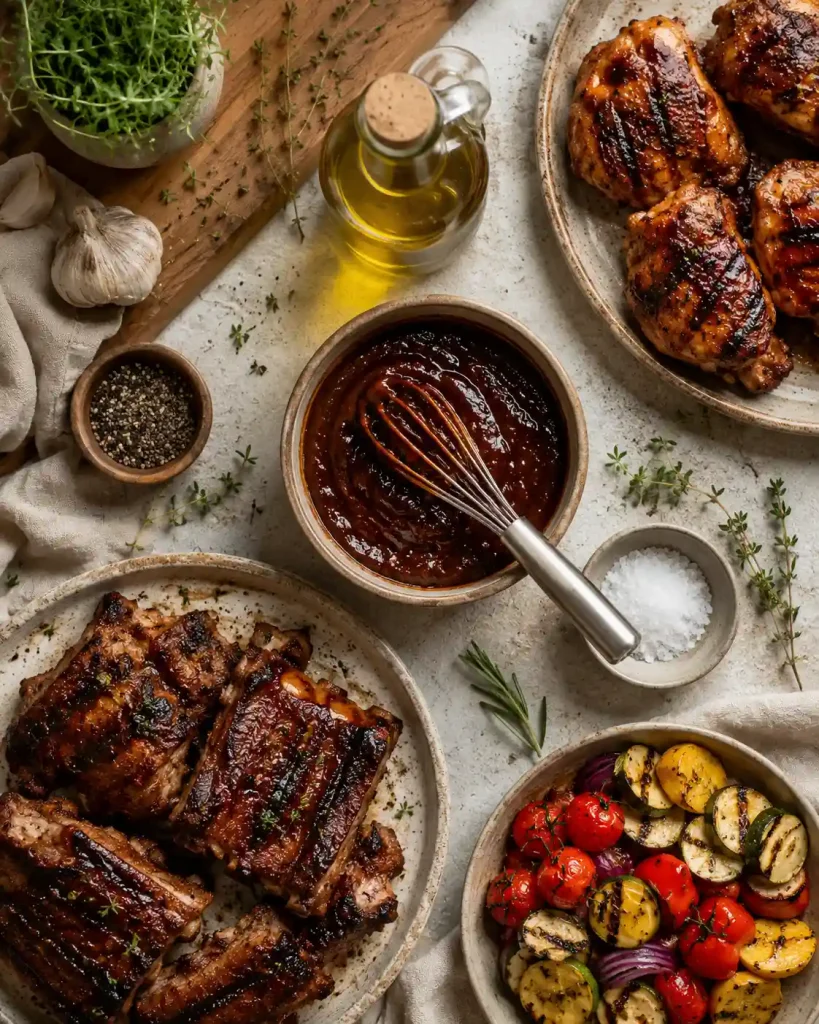
- Use a sauce + oil + kosher salt base for a fast, reliable wet option.
- Mix the base in about two minutes for quick prepping.
- Choose wet or dry based on time, cut, and your grill or oven.
- Follow simple per-pound rules to avoid over- or under-seasoning.
- Know safe handling so you can serve extra sauce without worry.
Why I Rely on Marinades and Rubs for Bigger BBQ Flavor
Great grilled food comes from smart choices: wet mixes when I need moisture, dry rubs when I want a crust. I decide by time, the texture I want, and the cut I’m cooking. This short section explains how I pick one over the other and what each method adds to the plate.
When I choose a wet mix vs. a dry rub
I reach for a marinade when I have a few hours and want surface seasoning plus added moisture. For quick cooks or mixed grills, rubs win — they form a bold crust fast and stand up to high heat.
- Quick cooks or thin cuts: dry rub, fast seasoning.
- Thicker pieces or chicken thighs: wet soak for deeper flavor and juiciness.
- Mixed grills: rubs are tidy and versatile.
How a wet soak helps lean proteins stay juicy
A good marinade brings salt, acid, and oil to the surface so lean protein like chicken or a thin steak won’t dry out under strong heat. It adds moisture and seasoning without masking the cut.
My reality check on sugar and heat
I avoid sugar-heavy mixes on direct flames. Sweet glazes burn quickly, so I watch the grill environment and finish with sauce if I want caramelized sweetness. Later sections cover exact timing, temps, and my favorite flavor pairings.
The Four Essentials Every Marinade Needs
Every effective soak follows the same basic formula: salt, fat, acid, and flavor. Nail those four elements and you can improvise a great mix from whatever ingredients you have on hand.
Salt to season meat and vegetables
Salt does more than add saltiness. It seasons through so the meat and vegetable taste like themselves—only better. I use kosher salt because it dissolves predictably and is easy to measure.
Fat to carry flavor and prevent sticking
Fat—usually oil—acts as the carrier. It helps spread flavors and stops food from clinging to the grill or pan. A mild, higher-heat oil supports browning without smoking out the dish.
Acid to brighten and tenderize
Acid (vinegar or citrus) adds brightness and loosens proteins just enough to help flavors penetrate. I avoid overdoing it; too much acid can make meat mushy if left too long.
Flavor builders: spices, garlic, and umami
Spices, garlic, pepper, and a splash of soy or soy sauce give depth and savory backbone. These ingredients turn the base into distinct flavors you want to eat.
- I rely on these four blocks so you can mix confidently from pantry staples.
- Vegetables follow the same framework, but I shorten the time so they stay crisp-tender.
- BBQ sauce brings tomato-based acid and spices; oil supplies the fat and kosher salt finishes the seasoning.
My Fast 3-Ingredient BBQ Sauce Marinade Base
A simple three-ingredient blend fixes most of the problems straight sauce creates on a hot grill. I keep this base ready for busy nights when I want big flavor in minutes and predictable browning without burned sugar.
Why sauce alone can burn or char
Straight bbq sauce often has a high sugar load. The sugar can burn, char, and glue food to grates before the inside cooks. That ruins texture and taste quickly.
The simple fix: adding oil and kosher salt
My quick fix loosens the sauce and seasons evenly. I whisk 1/2 cup bbq sauce with 1/4 cup mild, high-heat oil and 1 tsp Diamond Crystal kosher salt. It takes about 2 minutes to combine.
The oil I reach for
I use avocado oil because it handles heat and won’t compete with the sauce flavor. The oil helps the mixture behave like a true marinade and improves searing.
How much this makes
This amount covers 1 pound of protein. I also keep 2/3–3/4 cup extra sauce aside for basting or serving. When I mix, I often reserve about 1/4 cup of sauce so the finish tastes fresh and safe.
- Ratio: 1/2 cup sauce + 1/4 cup oil + 1 tsp kosher salt.
- Whisk in a cup or bowl — cleanup takes minutes.
- Keep extra sauce separate for serving to avoid cross-contamination.
My Go-To bbq marinade recipes for the Grill
My go-to approach is four flexible sauce tweaks that cover sweet, savory, bright, and pantry-driven tastes. Each one starts from the three-ingredient base and needs just one or two add-ins.
Sweet and tangy honey-mustard twist
I mix honey-Dijon into the base for a family-friendly sweet-tang. I cut sugar burn by using less honey and finishing with reserved sauce off direct flame.
Soy-ginger savory-sweet
A splash of soy sauce and grated ginger boosts umami and gives a restaurant-level hit. Use low-sodium soy if you’re watching salt and brush late for a glossy finish.
Citrus-lime bright and zippy
Lime juice brightens chicken without sogginess when I limit acid and add oil to balance. This is my summer go-to for quick grilling.
Garlic-vinegar pantry staple
When pantry nights happen I add minced garlic and a splash of vinegar. It’s bold, fast, and held together by the base so you don’t need fresh ingredients.
| Variation | Key Add-in | Heat tip | Best for |
|---|---|---|---|
| Honey-Mustard | Honey + Dijon | Low sugar, baste off direct flame | Family dinners, chicken |
| Soy-Ginger | Soy sauce + fresh ginger | Use late basting for sheen | Dark meat, pork |
| Citrus-Lime | Fresh lime juice | Short soak, moderate acid | White meat, kabobs |
| Garlic-Vinegar | Minced garlic + pantry vinegar | Good for long marinades, low sugar | Everyday grilling |
BBQ Chicken Marinade Recipes I Make on Repeat
When I want reliable weeknight chicken, I reach for two blends I use again and again. Both finish fast, taste bright on the grill, and keep cleanup simple.
Olive oil, soy sauce, garlic, brown sugar, and lemon
My go-to mix is olive oil, soy sauce, garlic, brown sugar, lemon juice, and thyme. I whisk about 1/3 cup oil with 2 tablespoons soy sauce, 1 clove minced garlic, 1 tablespoon brown sugar, and a squeeze of lemon.
The oil protects and carries flavor. Soy sauce adds savory depth. A touch of sugar helps caramelize without turning bitter if I watch the heat.
Cilantro-lime for fresh flavor
For something lighter I use cilantro, lime juice, a splash of oil, and salt. It’s zesty and fast—perfect when I want a bright, citrus-forward grilled chicken.
Choosing cuts and handling sauce
I pick breasts for quick cooks, thighs when I want forgiving juiciness, wings for bold surface flavor, and kabobs for fast weeknight meals.
Always reserve a clean portion of sauce as a side for brushing or dipping. Never reuse the marinade that touched raw chicken.
- Bag vs. bowl: I use a zip bag for even coating and less mess. A bowl works fine if I turn pieces every 15 minutes.
- Marinate times: 20–30 minutes for thin cuts, 2–4 hours for thicker pieces.
| Blend | Main ingredients | Best cuts | Finish tip |
|---|---|---|---|
| Olive-soy | Olive oil, soy sauce, garlic, brown sugar, lemon | Thighs, breasts, kabobs | Brush last minute; reserve clean side sauce |
| Cilantro-lime | Cilantro, lime, oil, salt | Breasts, wings, kabobs | Short soak, serve with lime wedges |
| Quick baste | Reserved BBQ sauce or sauce-thinned oil | Wings, thighs | Baste off direct flame for gloss |
My BBQ Marinade for Ribs and Other Pork Cuts
Pork needs its own plan—thin chops and big ribs demand different care. I choose my mix and my timing based on thickness so the meat stays juicy and the surface doesn’t burn.
What I use for thinner pork chops vs. thicker cuts
For thin-cut chops or tenderloin I keep the soak short: about 1 hour. That gives enough seasoning without changing texture.
For thicker boneless chops and larger pork pieces I go closer to 2 hours so flavors penetrate without making the meat mushy.
How I balance sugar so ribs don’t scorch
Sugar in sauce can scorch under direct flame, so I cut sweetness in the wet mix and lean on savory rubs for surface flavor. For ribs I often save sweeter sauce for the last 10–15 minutes of the cook and baste off direct heat.
Optional heat: chili powder, pepper flakes, or smoked paprika
To dial in heat, I add a pinch of chili powder or pepper flakes, or a dash of smoked paprika for warmth and smoke without extra sugar.
When grilling, watch the flare-ups: if sugar meets high direct heat, I move the pork to indirect heat until the interior finishes, then finish with a quick glaze if I want shine and stick.
| Cut | Soak Time | Finish Tip |
|---|---|---|
| Thin chops / tenderloin | 1 hour | Short sear; reserve sweet sauce |
| Thicker chops / larger pork | 2 hours | Indirect finish; baste late |
| Ribs | 2 hours (or low-and-slow without heavy sugar) | Savory rub; glaze last 10–15 minutes |
My Best BBQ Rubs for Chicken, Ribs, and Veggies
When time is tight, rubs are my fastest route to deep, grill-ready flavor. They build a crust, concentrate spices, and work across chicken, ribs, and vegetable cuts without extra fuss.
Classic smoky rub
I mix chili powder, garlic powder, kosher salt, and cracked black pepper for a balanced smoky profile. It browns quickly and adds a savory bark to chicken and ribs.
Sweet-heat rib rub
For ribs I add brown sugar to the blend for caramel and depth. To avoid burning, I use indirect heat or hold the sugar back until the last 10–15 minutes of cooking.
Bright citrus-pepper rub
This quick rub uses lemon zest, coarse pepper, salt, and a pinch of smoked paprika. It’s great when I don’t have time to soak—fresh, bright, and fast on chicken or veggie skewers.
How I make rubs stick
Pat proteins dry, then rub on a thin coat of oil or neutral fat. Apply the dry mix, press gently so spices adhere, and let sit 10–20 minutes before grilling. That step helps form a true crust that holds up to heat.
| Rub | Main spices | Best for | Heat tip |
|---|---|---|---|
| Classic Smoky | Chili powder, garlic powder, salt, pepper | Chicken, ribs, vegetables | Direct sear for crust; moderate heat |
| Sweet-Heat Rib | Brown sugar, chili, smoked paprika, salt | Ribs, pork chops | Use indirect heat or baste sugar late |
| Citrus-Pepper | Lemon zest, black pepper, salt, paprika | Chicken breasts, kabobs, zucchini | Short rest; grill hot and quick |
| All-Purpose | Paprika, garlic powder, onion powder, salt | Versatile across meats and veg | Press on after a light oil rub |
Vegetable Marinades That Grill Like a Dream
I treat vegetables like a main: intentional seasoning, quick soak, and hot sear. A short, smart mix gives mushrooms, zucchini, and peppers real flavor without turning them limp.
Balsamic-style for mushrooms, zucchini, and onions
A simple balsamic vinaigrette doubles as a vegetable marinade for brown, tangy char. Mix balsamic vinegar, oil, a splash of soy or mustard, and a pinch of salt.
Use just minutes for soak so mushrooms and zucchini brown while staying firm.
Apple-juice-inspired for gentle sweetness
Apple juice with a touch of oil and thyme adds soft sweetness to onions and bell peppers. The natural sugars help caramelize fast on a hot grill.
Quick taco-seasoning for fajita-style veg
For fajita-style vegetables I whisk taco seasoning with oil and lime juice. It’s pantry-easy and gives bold, grill-ready flavor in minutes.
| Mix | Main ingredients | Best veg | Soak time |
|---|---|---|---|
| Balsamic-style | Balsamic vinegar, oil, mustard | Mushrooms, zucchini, onions | 5–15 minutes |
| Apple-juice | Apple juice, oil, thyme | Onions, bell peppers | 5–10 minutes |
| Taco-style | Taco seasoning, oil, lime | Peppers, onions, squash | Just minutes before grilling |
Timing matters: I rarely marinate vegetable pieces for more than 15 minutes. Medium-high heat and enough oil prevent sticking and give a good char without sogginess.
How Long I Marinate for the Best Texture
I treat marinating like a quick tune-up—enough to season, not to change the cut. The right time protects texture and helps flavor land where it should. Below is what I follow so you don’t have to guess.
Chicken timing I follow for bone-in and boneless cuts
I keep marinate chicken time consistent: about 1 to 2 hours for both bone-in and boneless chicken. That window adds flavor without leaving the surface gummy or odd.
Pork marinating times based on thickness
For pork I scale by thickness. Thin chops or small pieces get about 1 hour. Thicker chops or larger cuts get closer to 2 hours. This prevents over-softening while letting seasoning penetrate.
Shrimp and prawns for fast grilling
Shell-off prawns and shrimp need only about 1 hour. That gives flavor without turning the protein rubbery. For very quick cooks, I sometimes cut it to 20–30 minutes.
- I use 1–2 hours for chicken; 1 hour for thin pork; 2 hours for thick pork; 1 hour for prawns.
- Be careful with acidic mixes—more hours can hurt texture.
- Proper timing plus the right grill heat equals juicy cooking every time.
| Protein | Soak time | Tip |
|---|---|---|
| Chicken (bone-in/boneless) | 1–2 hours | Good balance of flavor and texture |
| Pork (thin) | 1 hour | Short soak to avoid mushiness |
| Pork (thick) | 2 hours | Allows deeper seasoning |
| Shrimp / Prawns | 1 hour | Shells off; quick pick-up of flavor |
Grilling Temperatures and Doneness I Trust Every Time
No matter how great the flavor, final doneness comes down to temperature every time. Marinades and rubs give surface taste, but a reliable thermometer guarantees juicy, safe results.
Chicken internal temperature target
I cook chicken until the thickest part reads 165°F. I check the breast or thigh near the bone for accuracy.
Pork internal temperature target
I pull pork at 165°F measured at the thickest point. That temp balances safety with juicy texture for chops and larger cuts.
Shrimp and prawns doneness cues and temperature guidance
Shrimp and prawns are done at 145°F or when they are opaque throughout. Look for firm, slightly springy flesh—avoid a rubbery bite.
- I always use a thermometer when I can; visual cues help but temps confirm doneness.
- Use direct heat to sear for color, then move pieces to an indirect zone to finish without burning sugar-rich mixes.
- Allow for carryover cooking: thicker cuts can rise a few degrees while resting, so time basting and removal accordingly.
| Protein | Target Temp | Visual Cue | Grilling Tip |
|---|---|---|---|
| Chicken | 165°F | No pink near bone; juices run clear | Sear on direct, finish on indirect |
| Pork | 165°F | Firm but juicy; slight blush may remain | Finish indirect to avoid charring sugar |
| Shrimp / Prawns | 145°F | Opaque, firm, slightly springy | Quick high heat; watch closely to avoid rubbery texture |
Ingredient Swaps and Pantry Shortcuts That Still Taste Great
A few smart ingredient swaps keep the base working even when the grocery list is short. I choose swaps that maintain texture, browning, and clear flavor outcomes so the grill behavior stays predictable.
I use store-bought bbq sauce when I want speed and reliable sweetness. I reach for homemade when I want to control spice, sugar, or acidity. Either works with the three-ingredient base; expect a small jump in sweetness with many bottled options and a cleaner, tailored taste from a homemade blend.
I pick oil by heat and flavor. Avocado oil is my go-to for high-heat searing. Olive oil performs when heat is moderate and I want a green, fruity note. Other mild oils — grapeseed or canola — are fine in a pinch and keep sticking low.
Salt matters. I use Diamond Crystal kosher salt for predictable measurements. If you swap table salt or a denser kosher, cut the volume down: less salt by weight, not always by the spoon.
| Swap | When I use it | Flavor effect | Quick tip |
|---|---|---|---|
| Store-bought bbq sauce | Weeknights, fast glaze | Sweeter, consistent spice | Reserve some sauce for serving; baste late |
| Homemade sauce | Control sweetness/spice | Cleaner, custom heat | Adjust acid and sugar to taste |
| Avocado oil / Olive oil | High-heat / moderate heat | Neutral browning / olive note | Use avocado for sear; olive for milder cooks |
| Diamond Crystal vs other salt | Measurement accuracy | Volume varies; flavor unchanged | Reduce volume if using finer salt |
Make-Ahead, Storage, and Food Safety for Marinades
Prep and storage choices keep flavor bright and cleanup quick when I grill on a weeknight. I mix most marinades in a liquid measuring cup with a whisk so I can pour cleanly and wash one item in just a few minutes.
How I prep in minutes and keep cleanup easy
I measure ingredients into a cup, whisk for 30–60 seconds, and pour. That takes two minutes and cuts dishes.
When I save extra sauce for basting or serving
I always set aside a clean 2/3–3/4 cup of bbq sauce as a side for basting or serving. That reserved cup stays separate so I never contaminate the finish sauce.
What I never reuse from a raw-meat mix
I don’t reuse any liquid that has touched raw meat as a finishing sauce. If you must reuse it, boil it for safety—but my default is simple: don’t reuse.
- Make a batch ahead: store in a sealed jar for up to 3 days in the fridge.
- Basting rhythm: brush in the last 10–15 minutes to avoid burning sugars.
- Clean side sauce: keep that extra cup cold until serving.
| Action | Timing | Why |
|---|---|---|
| Whisk in a measuring cup | 2 minutes | Fast, easy pour and single item to clean |
| Reserve clean sauce | 2/3–3/4 cup | Safe basting and serving side |
| Store marinade | Up to 3 days chilled | Flavor ready for weeknight cooks |
Final food reminder: handle sauces and raw protein separately so your finished plate is both delicious and safe. These simple tips keep flavor strong and risk low.
Conclusion
You can turn pantry staples into dependable grill wins with a clear plan. I lean on four building blocks—salt, fat, acid, and flavor—so chicken, steak, ribs, or vegetables taste bright and consistent every time. A little fat and salt help the sauce behave under heat and cut sticking.
My fastest win is the sauce + oil + kosher salt base. It eases searing, tames sugar burn, and trims prep time. Pick marinades or rubs based on cut: short soaks for thin pieces, hours for thicker pork or prawns, and rubs for fast crusts.
Do this every time: set aside a clean cup of sauce for serving, follow marinating time and target temperature, and finish with late basting. Start with a variation—soy-ginger, honey-mustard, citrus-lime, or garlic-vinegar—and tweak spices, pepper, and powders to match your taste. These templates are flexible for summer grilling and year-round cooking.


