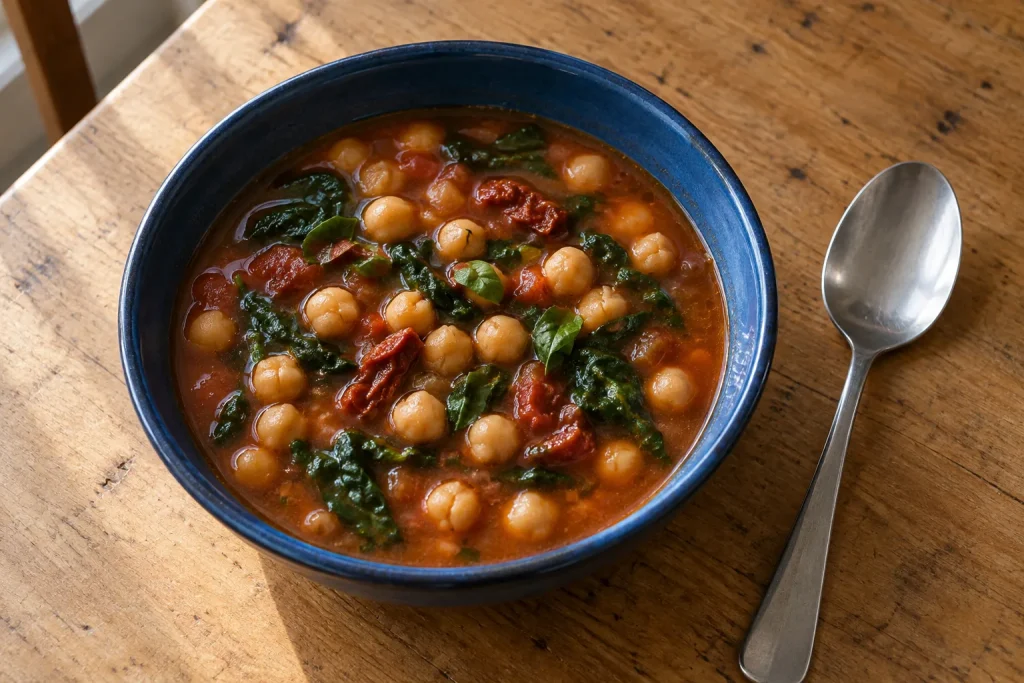
Looking for chickpea soup recipes? Start with the bowl you want: tomato-rich Tuscan-style soup, a lemon-and-herb broth, or a smooth chickpea puree. Chickpeas work in all three, but the ingredients, texture and cooking instructions are different.
This guide compares those three directions and links to complete recipes from their publishers. Use those recipes for measured ingredients, servings and cooking times. The flavor ideas here are not three newly tested recipes from this kitchen.
Images on this page are AI-generated soup illustrations, not photographs of recipe testing or measured nutrition servings.
Choose Your Chickpea Soup Style
Decide on flavor and texture before buying ingredients. A brothy lemon soup needs a different plan from a fully blended soup, and adding cream is not the only way to make a bowl feel creamy.
| Style | Flavor direction | Texture to look for |
|---|---|---|
| Tuscan-style | Tomato, sun-dried tomatoes, garlic, basil and spinach | Whole chickpeas and greens in a tomato-based broth; optional partial blending |
| Lemon and herb | Lemon, onion, carrot and celery, with parsley or dill | A lighter broth with whole chickpeas or some mashed for body |
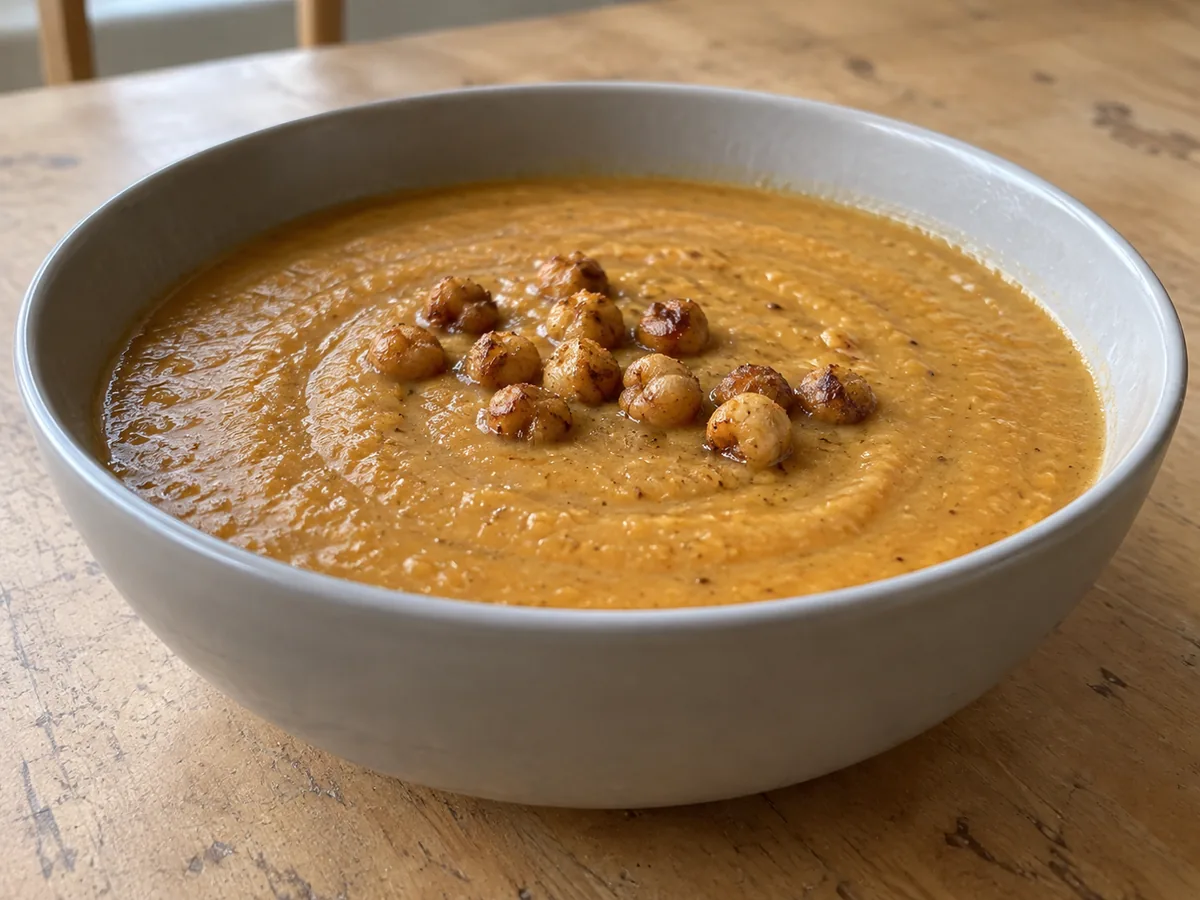
| Cream of chickpea | Leeks, onion, garlic, carrots and paprika | A smooth puree, with crispy chickpeas as an optional topping |
The combinations in this table describe the ideas covered below. They are not a single shopping list. Choose one complete recipe rather than combining all three sets of ingredients and assuming the same timing will work.
Tuscan-Style Chickpea Soup with Tomato and Greens
This is the tomato-forward choice: chickpeas with onion, garlic, tomato paste, sun-dried tomatoes and greens. Basil and lemon provide a brighter finish. Leaving most of the chickpeas whole keeps the bowl chunky; partial blending gives the broth more body.
Spinach is one option for the greens. Coconut milk or cream gives a richer version, but each changes the flavor and dietary profile. If using dairy cream, do not describe the finished soup as vegan.
For measured quantities and a complete method, see Skinny Spatula’s Creamy Tuscan Chickpea Soup. That recipe includes potatoes, coconut cream and black kale, with spinach listed as an alternative. Its recipe card lists 40 minutes total and 6 servings. Those details belong to that recipe, not every variation in this guide.
Lemon and Herb Chickpea Soup
Choose this direction when you prefer a bright broth to a tomato-based soup. Onion, carrot and celery support the chickpeas, while lemon and herbs finish the bowl. Parsley and dill give different herbal notes. A potato-containing version needs instructions that account for cooking the potatoes, not just warming canned chickpeas.
For a complete Greek-style recipe, Skinny Spatula’s Greek Chickpea Soup with Lemon uses canned chickpeas, carrot, celery, oregano and rosemary, with optional parsley. Its card lists 45 minutes total and 4 servings. It is a separate version, not the potato-and-dill combination described above.
Greek yogurt or sour cream is an optional tangy topping for a non-vegan bowl. Neither is a dairy-free substitute. If you want a vegan meal, check the broth and all toppings as well as the soup base.
For video demonstrations of other Greek chickpea soups, see Spain on a Fork’s Greek revithosoupa video and Dimitra’s Dishes’ Greek-style chickpea soup video. Follow each video’s own quantities and method; they are independent recipes, not demonstrations of this page’s flavor combinations.
Cream of Chickpea Soup with Leeks and Paprika
For a smoother bowl, this version combines chickpeas with leeks, onion, garlic, carrots and broth, then blends the cooked mixture. Paprika adds another layer of flavor. Crispy chickpeas on top create contrast with the puree underneath.
Kathy’s Vegan Kitchen’s Cream of Chickpea Soup provides a complete version with those vegetables and a crispy chickpea topping. Its recipe card lists 30 minutes total and 4 servings. Use its full instructions for the soup and topping rather than treating a photo or a texture description as a recipe.
A smooth texture does not establish a particular protein, fiber or calorie amount. This page does not calculate nutrition for the three variations. For a broader comparison of ingredients, browse the soup ideas organized by protein source.
Canned or Dried Chickpeas: Choose Before You Cook
When a recipe calls for canned chickpeas
Follow its draining and rinsing instructions, can size and quantity. Canned chickpeas are already cooked; the soup’s simmering stage may mainly develop the broth or cook the vegetables. That timing is not a dry-chickpea cooking method.
When you want to start with dried chickpeas
Choose a recipe written for dried chickpeas, or cook them separately using a reliable method before following a recipe that specifies cooked chickpeas. Keep soaking, cooking and soup assembly separate in your plan. Do not substitute dry chickpeas directly for canned ones or borrow an appliance time without its soaking, liquid and pressure-release instructions.
For other ingredients to build a soup around, the bean soup collection offers additional flavor directions. Its bean choices are alternatives to explore, not automatic one-for-one replacements for chickpeas.
Adjust Texture and Choose Swaps Carefully
Chunky, partly mashed or fully blended
Leaving chickpeas whole gives the most distinct bite. Mashing some cooked chickpeas produces a rougher, thicker texture. Blending part or all of the cooked soup makes it smoother. Follow the selected recipe’s proportions so you do not unintentionally turn a broth-based soup into a thick puree.
Before blending, read the instructions for your exact appliance. A vented lid is not permission to blend hot liquid in any machine. NutriBullet’s safety guidance, for example, distinguishes its hot-blending-capable models from models that must not blend hot ingredients. Do not put hot soup into a sealed personal blending cup. Use only the temperatures, fill limits and procedures permitted by the manufacturer.
Coconut milk, cream and yogurt are different choices
Coconut milk changes both flavor and richness; dairy cream and Greek yogurt contain dairy. Blending the cooked chickpeas offers a different way to create body without adding either. If you choose a substitution, use one supported by the recipe and check product labels for your dietary needs.
Likewise, spinach, potatoes and leeks do different jobs. Adding them all at the same point because they are vegetables can change the result. Use the recipe’s preparation and cooking instructions for the vegetables you actually choose.
Serve the Soup and Plan for Leftovers
Crusty bread, sourdough crackers or an olive-studded loaf work alongside these bowls. A small green salad offers a fresh contrast. Keep crispy chickpea toppings or croutons separate until serving, and choose basil, parsley or dill to suit the soup’s flavor.
To fit soup into a week of dinners, use the flexible seven-day dinner menu to plan which portions you will eat soon and which you will freeze.
For leftovers, follow USDA food-safety guidance: divide a large pot into shallow containers and refrigerate promptly, within two hours, or one hour above 90°F. Do not leave the whole pot out until it reaches room temperature. Keep the refrigerator at 40°F or below and use refrigerated leftovers within three to four days.
Freeze portions you will not use in that window and label them. Follow the chosen recipe’s freezing notes for texture, particularly when it contains dairy or toppings. Thaw in the refrigerator. Reheat leftovers to 165°F, checked with a food thermometer; bring soups to a rolling boil. A few minutes on low heat or visible steam alone does not verify safe reheating.
Chickpea Soup Questions
Which of the three linked recipes takes the least listed time?
The Cream of Chickpea Soup from Kathy’s Vegan Kitchen lists 30 minutes total. The linked Tuscan soup lists 40 minutes and the Greek lemon soup 45 minutes. These are their publishers’ recipe-card times, not a timing guarantee for substitutions.
Can I add dried chickpeas directly to a canned-chickpea recipe?
No. Use a method written for dried chickpeas, or prepare them separately before using a recipe that calls for cooked chickpeas. The can size, cooked quantity and method still matter.
How can I make chickpea soup thicker without dairy?
Choose a recipe that mashes or blends some of the cooked chickpeas. This changes texture without adding dairy, but the broth and toppings must also suit your dietary needs.
Is Greek yogurt a vegan or dairy-free topping?
No. Ordinary Greek yogurt is a dairy food, as are sour cream and dairy cream. Choose an appropriate recipe and check all ingredient labels if avoiding dairy.
Can I blend hot soup in any blender?
No. Check your exact model’s manual for permitted temperatures, fill limits and procedures. Never assume a sealed personal blending cup can handle hot soup.
How long can I refrigerate leftover soup?
USDA recommends three to four days for properly handled refrigerated leftovers. Freeze portions you will not eat within that period, and follow the cooling and reheating guidance above.
Does this page provide nutrition per bowl?
No. Ingredients, quantities and serving sizes vary. Check the complete recipe you choose for its nutrition estimate and calculation notes rather than assigning one number to every variation here.
What goes well with chickpea soup?
Bread, sourdough crackers, a green salad or crispy chickpea toppings are options. Match the herbs to the soup and add crunchy toppings when serving.


