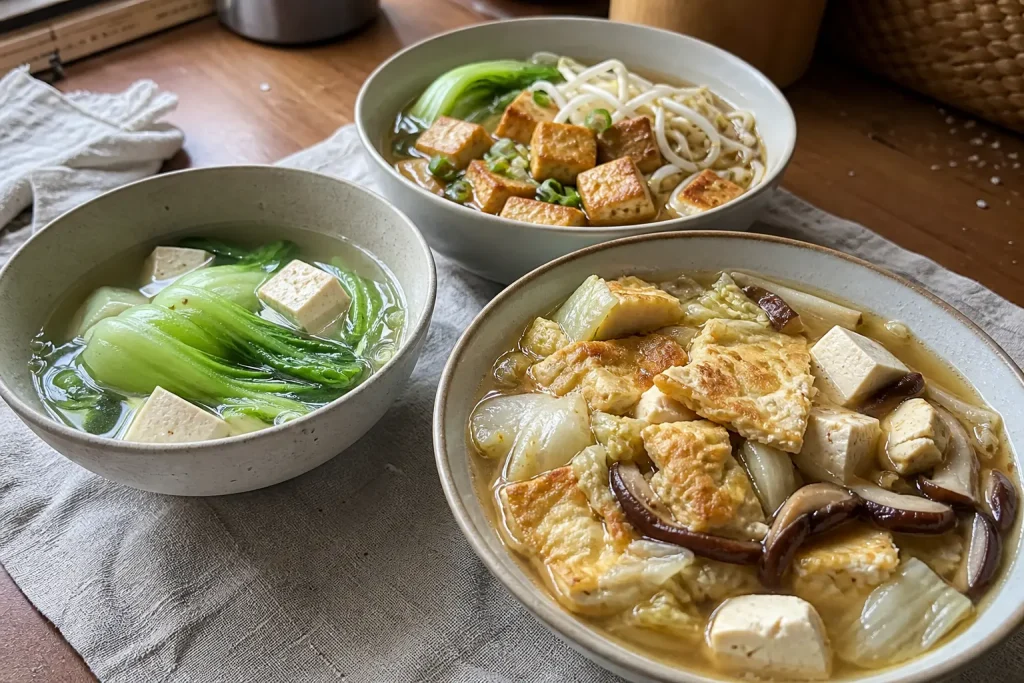
To make soup with tofu, sauté ginger and garlic, add broth and vegetables, then simmer cubed tofu until heated through. Use silken tofu for a soft texture or firm tofu for cubes that hold their shape. Finish with soy sauce, sesame oil, and white pepper. The three variations below take about 20–30 minutes.
I still remember a rainy Tuesday when I threw together a quick bowl on a whim and felt instantly better. I had firm tofu, a head of napa cabbage, mushrooms, and a pot of broth. In twenty minutes that bowl felt like a warm hug.
My approach keeps things fast and flexible. I show how frying an egg first can keep the broth light yet hearty, and how a ten-minute hard boil makes a milky ramen-like base. Small tricks like pressing firm tofu 10–12 minutes or simmering cabbage a bit longer change the flavor and texture a lot.
These beginner-friendly ideas fit weeknights. Use water or stock, one aromatic, a vegetable, and a few pantry ingredients. Pick from three simple paths: napa cabbage with fried egg, a vegan crispy tofu noodle bowl, or a minimal bok choy version with a roasted pepper dip. For more comforting ideas, browse my fall soup recipes, cozy soup recipes, and Japanese soup recipes.
Key Takeaways
- Short active minutes and clear steps make success likely for first timers.
- A base of broth or water, tofu, aromatics, and a vegetable is all you need.
- Pressing or frying tofu changes texture—soft or firm choices matter.
- Three simple paths let you pick a vegan or egg-forward bowl tonight.
- Most versions scale for meal prep and often taste better the next day.
Why I Love Making Tofu Soup at Home
A quick, savory pot at my stove is my go-to comfort when I need a fast, nourishing meal. I love how a simple bowl gives me that clean, savory taste without hours of fuss.
To me this food nails balance: gentle protein from soft or firm blocks, bright vegetables like mushrooms and napa cabbage, and a little sesame oil and soy for dependable umami. A brief sauté of aromatics saves time and unlocks deep flavor fast.
Some tricks I rely on make a big difference. Frying an egg first keeps the broth brothy and adds hearty chunks when I drop it back in later. Or I use sustained high heat for about ten minutes to coax a milky, ramen-like look from the broth without long simmering.
- I love that leftovers taste better after a day or two—flavors settle and reward you for saving a bowl for the next days.
- These bowls are flexible: sip-light or full-meal, depending on how many vegetables and noodles I add.
- For more cold-weather inspiration, browse my fall soup recipes and cozy soup recipes.
Pantry Staples and Tools I Use for Quick, Flavorful Soup
On busy weeknights I keep a small lineup of pantry items and one good pan so dinner comes together fast. A little planning lets me choose the right block and the right liquids without overthinking measurements.
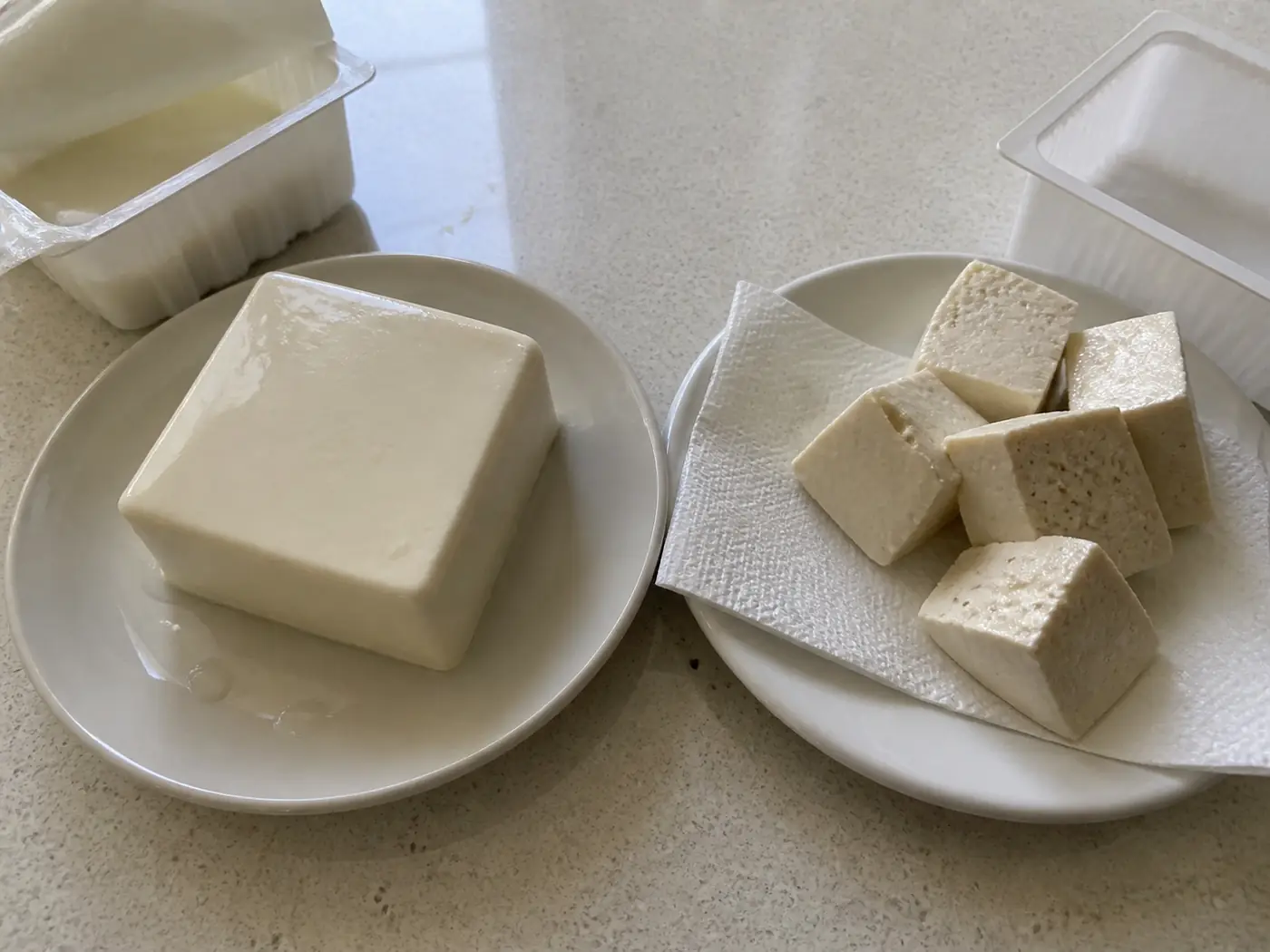
Choosing the right block: soft, firm, or extra-firm
I pick soft or silken when I want a spoonable texture, and firm or extra-firm when I plan to press and crisp cubes. For a vegan crispy noodle bowl I press firm for 10–12 minutes, marinate with ginger and garlic powders, light soy sauce, and a splash of sriracha, then crisp in a nonstick skillet.
Broth basics and simple ratios
My go-to ratio for a napa cabbage and tofu bowl is 4 cups stock to 3 cups water. I keep both vegetable broth and chicken stock handy so I can stretch stock without losing depth.
Flavor boosters and finishing
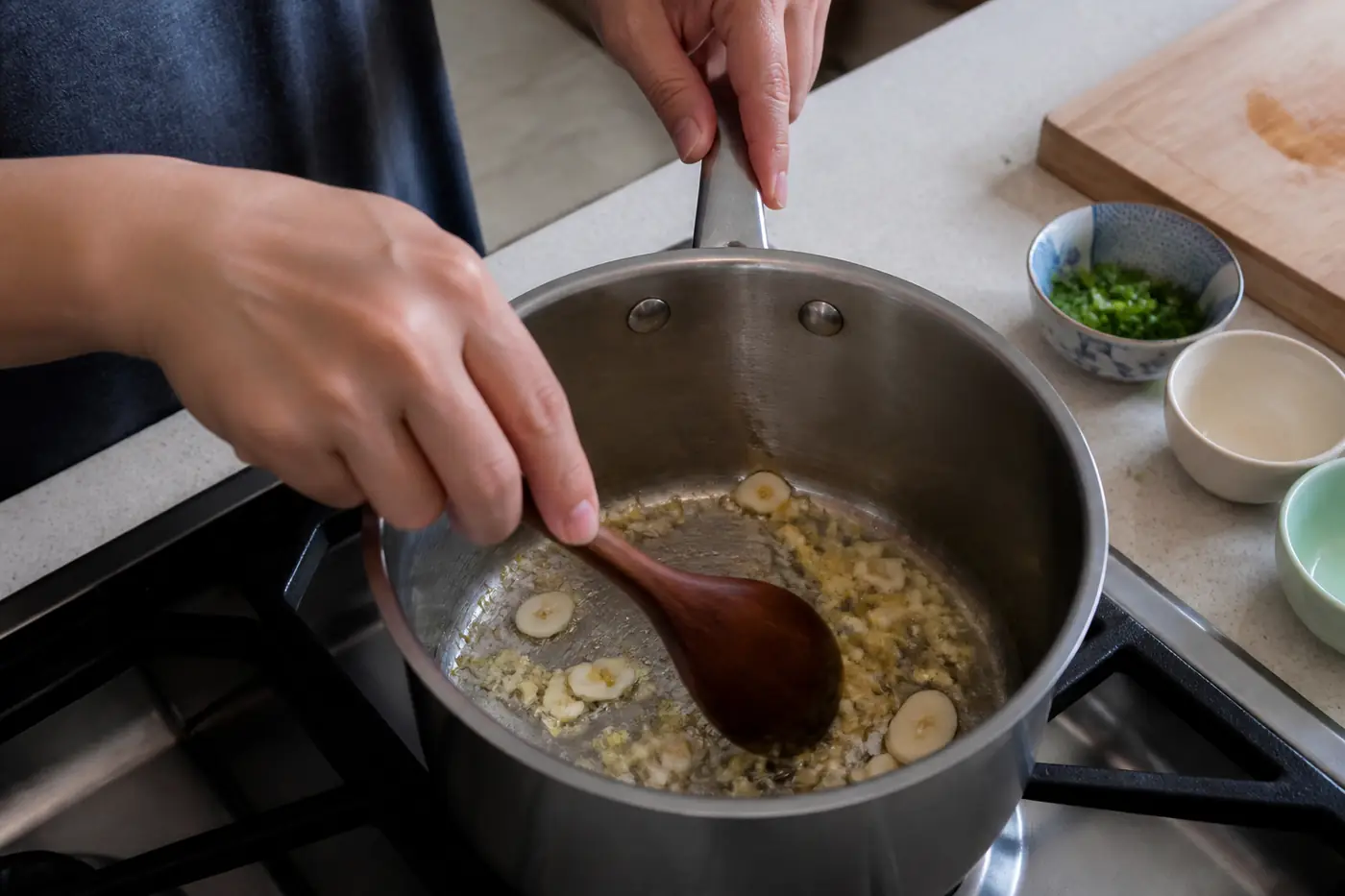
I reach for sesame oil, soy sauce, salt, and white pepper to finish a bowl. A quick sauté of garlic and ginger in sesame oil gives the broth immediate body.
| Tool | Use | Why |
|---|---|---|
| Medium pot | Simmer broth | Even heat for milky broth |
| Wok | High-heat moves | Fast sauté and stir |
| Nonstick pan | Crisp tofu or mushrooms | Less sticking, quick browning |
- I stock cremini and shiitake mushrooms for fast umami.
- I measure with cups and a teaspoon and prep vegetables in ounces so results repeat.
Essential Techniques for Better Flavor in Minutes
A few fast techniques lifted my weeknight bowls from plain to deeply savory in under ten minutes. These moves focus on texture and depth so a simple set of ingredients sings without extra effort.
Pressing and crisping for texture and protein
I press firm blocks for 10–12 minutes to remove moisture. That lets them crisp in a nonstick skillet until golden. I use just enough oil to coat the pan and flip for even browning.
Frying eggs first to keep the broth light
I brown eggs on both sides until fully cooked. This prevents clouding when I add them back and gives hearty bites that feel meaty without weighing the bowl down.
Rapid, high-heat boil for a milky, ramen-like broth
After adding hot stock, tofu, and mushrooms, I cover and boil the pot hard for about 10 minutes. The rolling boil pulls body into the liquid and makes the broth look rich and milky.
Quick sauté of aromatics for fast umami
I always hit the bottom of the pan with ginger and garlic in sesame oil first. Five to ten seconds wakes the aroma, then I add broth and a splash of soy near the end to adjust salt and pepper.
- I press firm or extra-firm first so the exterior crisps and the interior stays tender, boosting protein and chew.
- Brown eggs fully, slice, then drop in—clear broth, hearty pieces.
- Keep mushrooms slightly undercooked so they stay springy and add savory character.
- Finish with white pepper and a small drizzle of oil to lift the final flavor.
| Technique | Time | Impact |
|---|---|---|
| Press & crisp | 10–12 min press, 4–6 min crisp | Chewy exterior, firm protein |
| Fry eggs first | 3–4 min per side | Clear broth, hearty pieces |
| High-heat boil | 10 min covered | Milky, rich broth |
My Step-by-Step Base Method for Simple Tofu Soup
The easiest way I build flavor is by preheating my pot until a bead of water skitters, then adding a light film of oil so aromatics sizzle on contact.
Prep and aromatics: heat, oil, ginger, and garlic
I toss in grated ginger and sliced garlic and stir until fragrant. This takes only a few seconds and wakes the base fast.
Simmer and build: add broth, tofu, mushrooms, and vegetables
I pour in simmering broth and a cup of hot water so the pot returns to heat quickly. Then I slide in cubed tofu and sliced mushrooms.
- Cover and bring to a strong boil for about 10 minutes to develop body.
- Add napa cabbage or bok choy and simmer another 5–10 minutes until tender.
Finish to taste: soy sauce, sesame oil, salt, and white pepper
I finish with a splash of soy sauce, a small tablespoon of sesame oil, salt, and white pepper. I taste and adjust with an extra cup of hot water or a pinch of salt if needed.
Then I ladle into warm bowls and top with scallions or cilantro and serve right away.
| Step | Minutes | Impact |
|---|---|---|
| Preheat & sauté aromatics | 1–2 | Fast aroma and depth |
| Boil with tofu & mushrooms | 10 | Milky, rich broth |
| Simmer vegetables | 5–10 | Tender, bright greens |
3 Easy Tofu Soup Recipes
Grab stock, a few aromatics, and a block and you’ll have a hot bowl before the evening’s over. Below are three quick bowls that show how small swaps change texture and flavor fast.
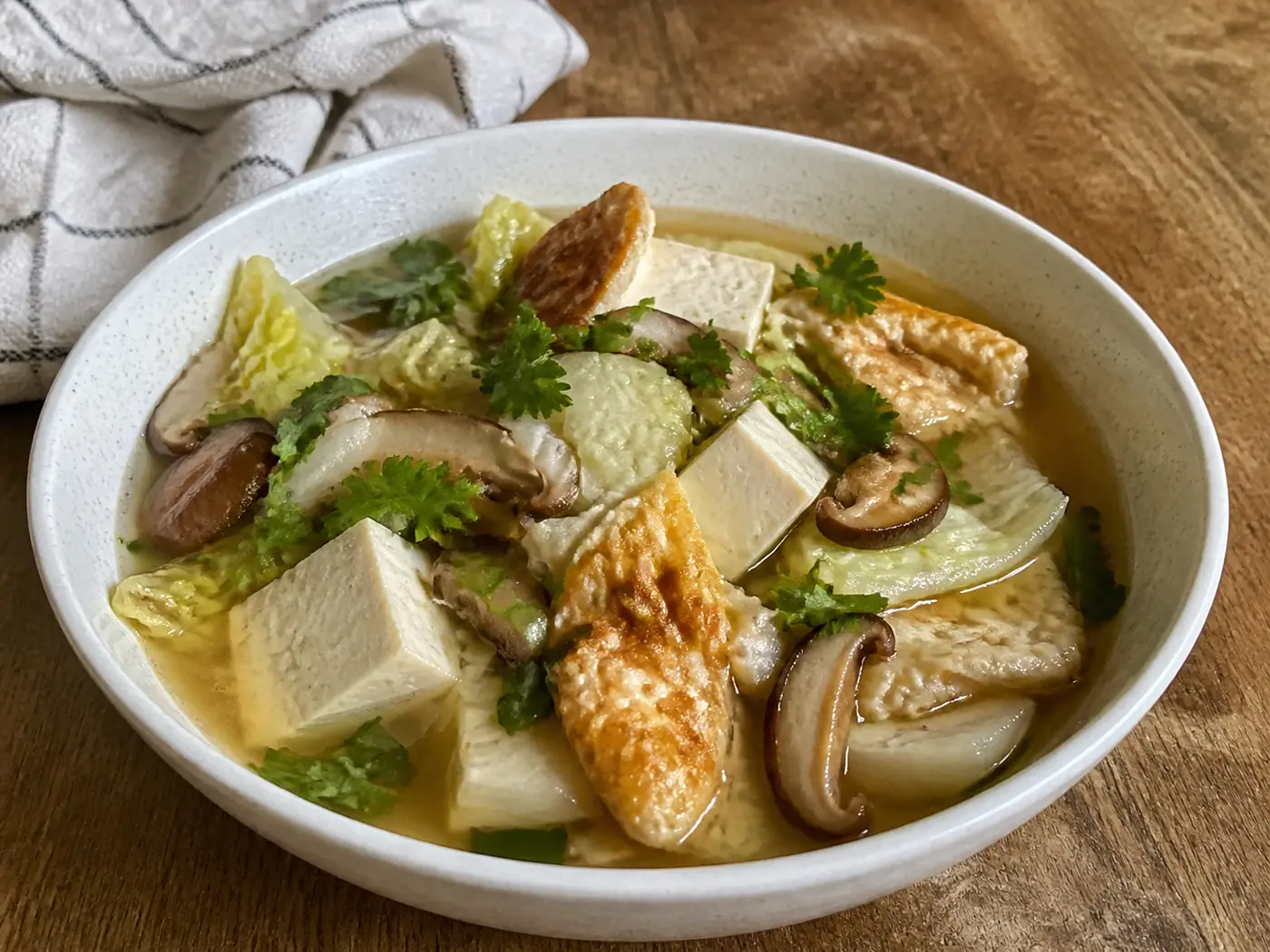
Napa cabbage and tofu with fried egg and mushrooms
Heat 4 cups stock and 3 cups water, then fry 3 eggs until both sides are browned and chop. Add cubed tofu and a mix of mushrooms — cremini or shiitake work well — cover and boil hard for 10 minutes.
Stir in 12 ounces napa cabbage and simmer 5–10 minutes. Finish with a drizzle of sesame oil, a pinch of white pepper, and salt. Top with cilantro and sliced scallions for brightness.
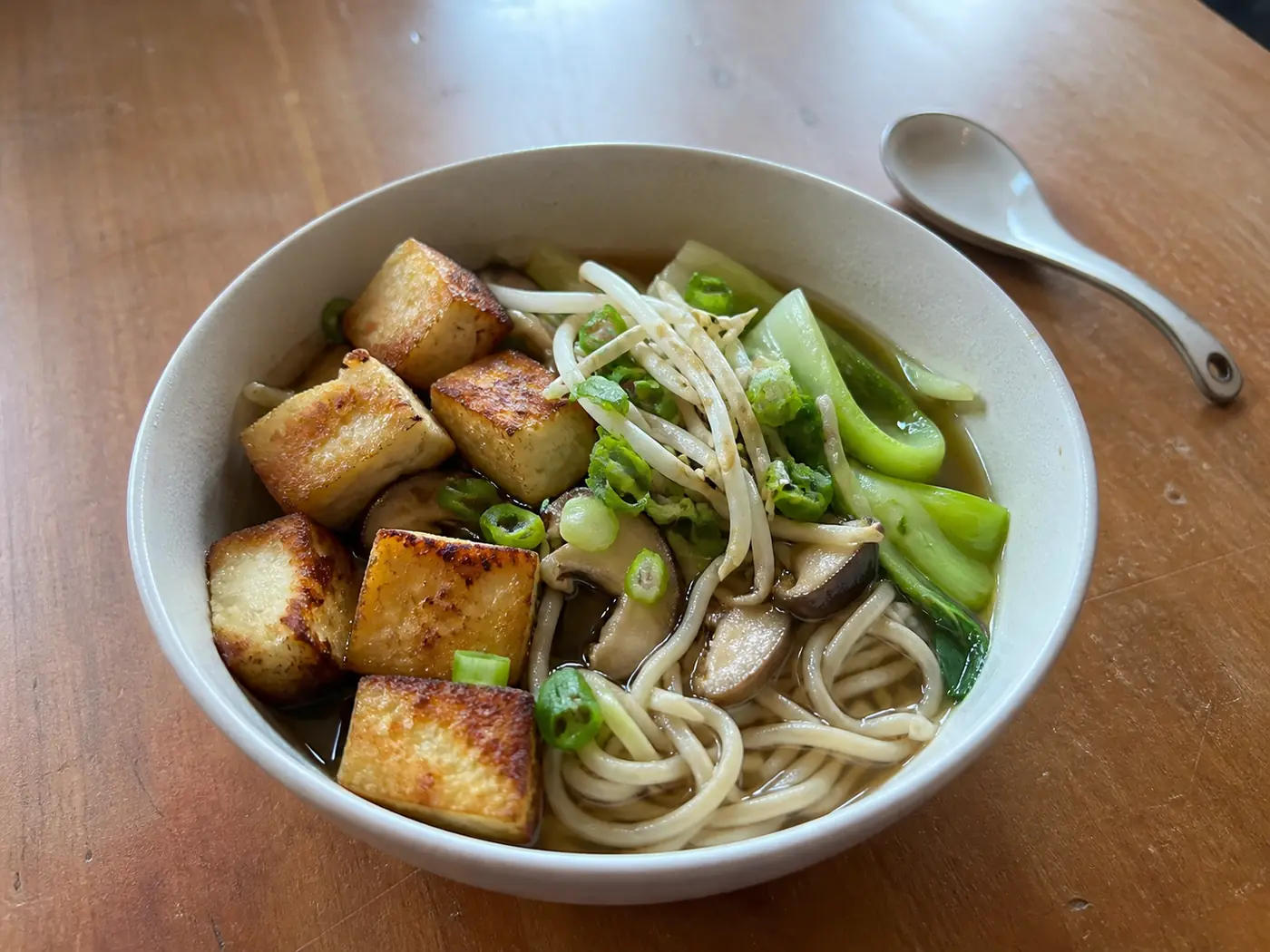
Vegan crispy block noodle bowl with bok choy and sprouts
Press firm block for 10–12 minutes, then marinate with ginger powder, garlic powder, light soy, and a touch of sriracha. Crisp cubes in oil until golden.
Sauté ginger and garlic in sesame oil, add vegetable broth and a splash of soy. Build bowls with noodles, cooked mushrooms and bok choy, sprouts, and the crispy pieces. Garnish with green onions.
For more dairy-free bowls, see my dairy-free soup recipes.
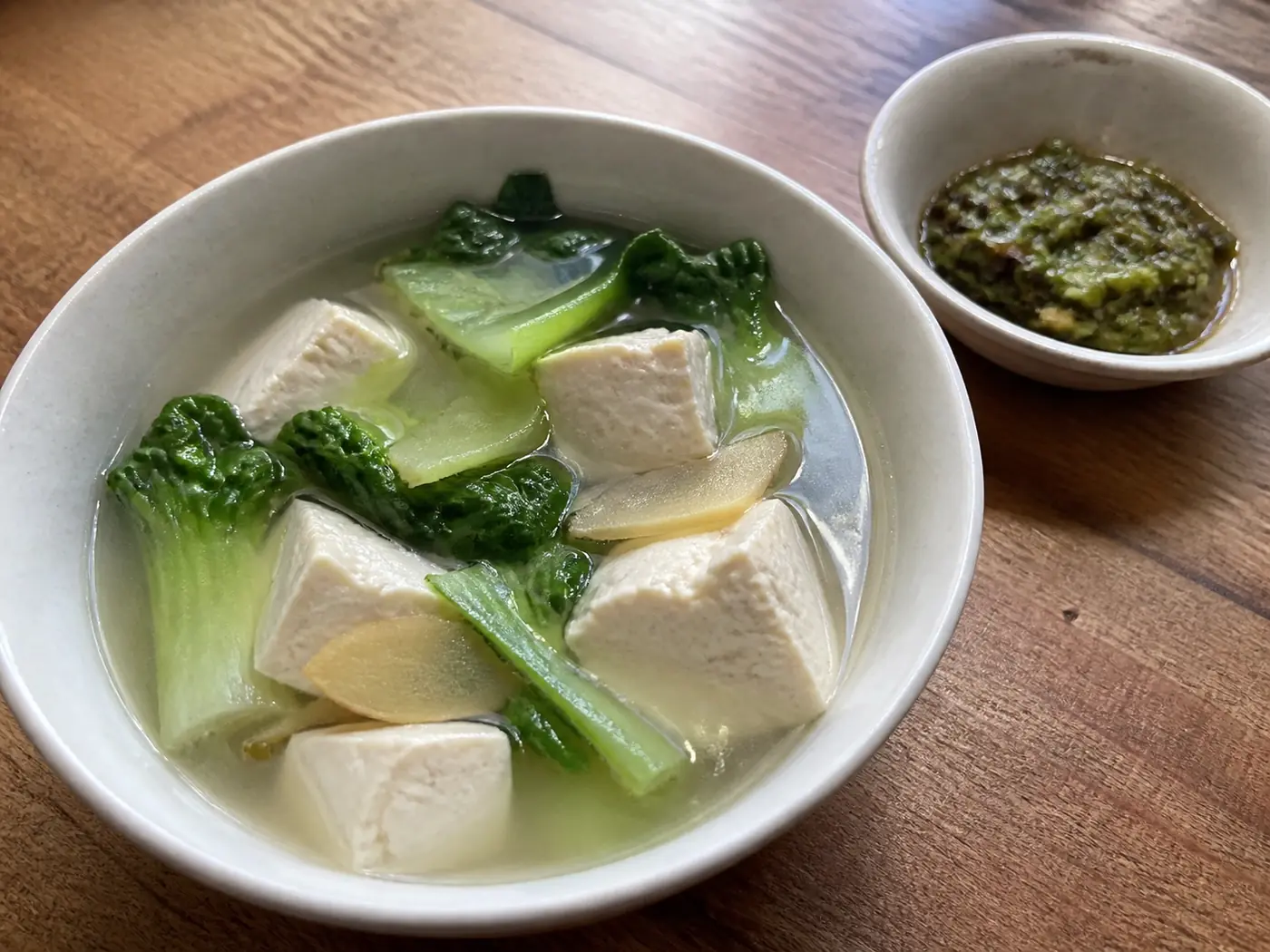
Minimal bok choy bowl with roasted pepper dipping sauce
Simmer cubed block and sliced ginger in water briefly, drop in bok choy, then finish with a single drop of sesame oil and salt. Serve immediately.
For heat, make a dipping sauce by charring long green chiles and Thai chiles, then crushing with garlic, scallion white, hot oil, light soy, and a pinch of sugar.
- I pick shiitake or cremini for deeper savoriness and swap by availability.
- Use fresh noodles or cooked dried; rice noodles are great for a lighter bowl.
- Light soy in broth and marinades keeps seasoning bright; finish with scallions and sesame for lift.
| Bowl | Key step | Finish |
|---|---|---|
| Napa & egg | Boil 10 min with stock | Sesame oil, scallions |
| Vegan crispy noodle | Press 10–12 min, crisp | Sprouts, green onion |
| Minimal bok choy | Simmer with ginger | Roasted pepper sauce |
Serving Ideas, Toppings, and Make-Ahead Tips
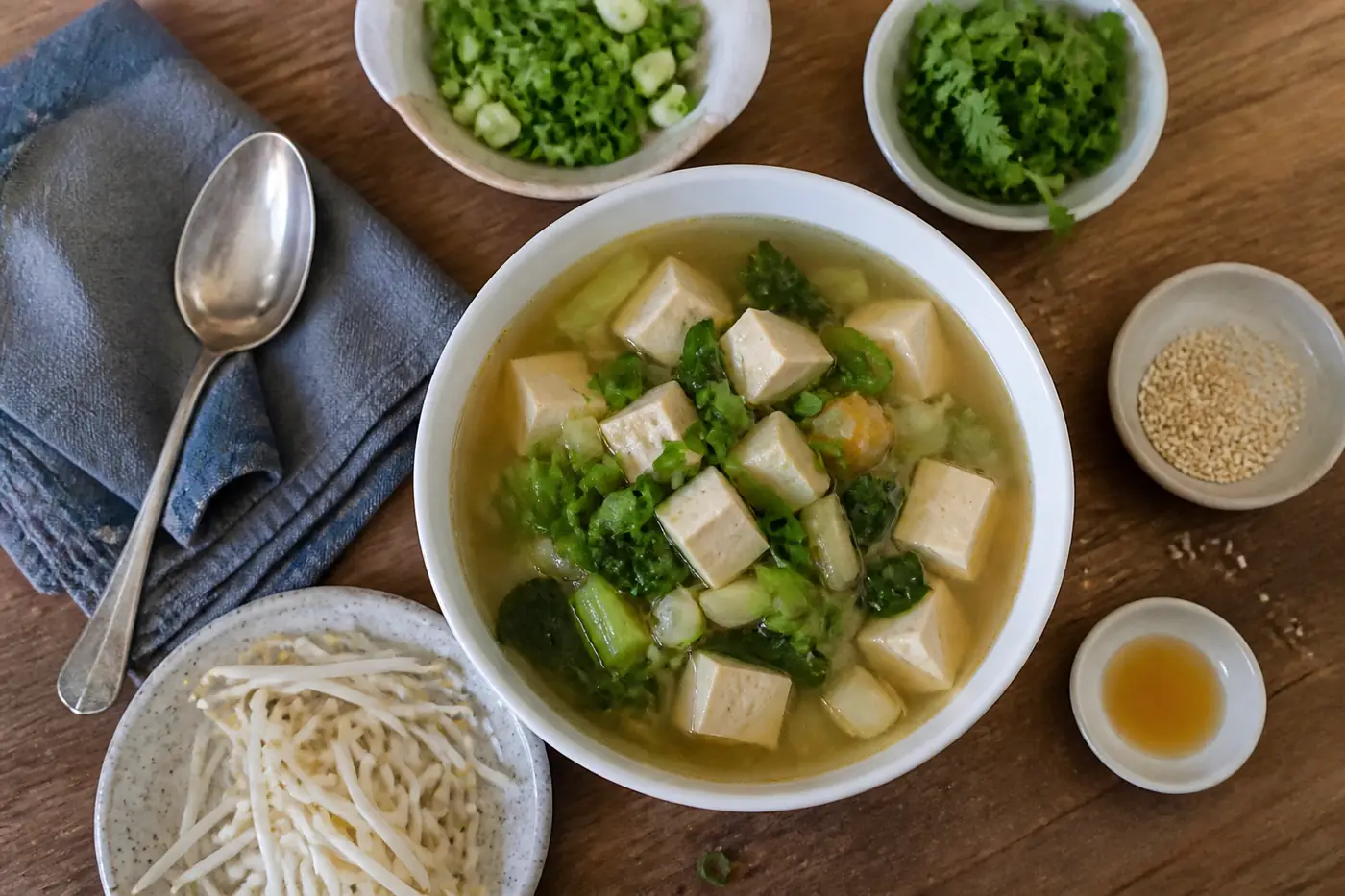
A few thoughtful garnishes turn a simple bowl into a dinner I want to eat again tomorrow. I top steaming bowls with cilantro and sliced scallions for bright contrast and crunch.
Bright toppings I reach for
- I shower bowls with sliced scallions, cilantro, and crunchy sprouts for freshness and texture.
- A light drizzle of sesame oil finishes each bowl; I keep a small dish of sesame and a tablespoon measure nearby so I don’t overdo it.
- Toasted sesame seeds add a nutty crunch, and a spoon of roasted pepper sauce lifts the minimal bok choy version when I want heat.
Storage, reheating, and low-sodium swaps
Transfer leftovers to shallow, covered containers and refrigerate promptly once the soup has stopped steaming heavily. Most versions taste even better the next day as the flavors settle.
Reheat gently in a pot over medium-low heat until the soup is hot throughout. Add delicate greens and sprouts after reheating for better texture, then taste and adjust with a splash of low-sodium broth, white pepper, or a little soy sauce.
| Tip | When | Why |
|---|---|---|
| Refresh scallions | Before serving | Keeps texture and color |
| Store sauce separately | Make-ahead | Roasted pepper sauce keeps punch for a few days |
| Serve with rice | For heartier meal | Scoops up broth and stretches the bowl |
Conclusion
After a few trial bowls I found a set of small moves that make every quick bowl feel carefully made.
With a dependable base—pressing and crisping tofu when you want chew, frying eggs first for a clear broth, and a ten-minute hard boil for milky body—you can move from a 20-minute minimal bok choy version to a 45-minute napa cabbage bowl with mushrooms and fried egg. A crispy noodle build will take about an hour including a short marinade.
Keep a jar of sesame oil, ginger, garlic, soy sauce, and 4 cups stock plus 3 cups water on hand. Finish with salt, white pepper, scallions, or a spoon of sauce. These bowls reheat well and welcome your swaps, so make them yours and enjoy. For more weeknight inspiration, see my healthy dinner ideas.


