Looking for seafood soup recipes? Choose between a creamy chowder with bacon, a clear fish-and-shrimp soup, and a vegetable-rich chowder with a cornstarch finish. The best starting point is the bowl you want to eat, followed by a complete recipe that fits your seafood and batch size.
Below are three recipes from their original publishers, with a comparison to help you choose. Follow each linked recipe for its measured ingredients and full method. This is a recipe guide, not a single interchangeable formula or a record of recipes tested in this kitchen.
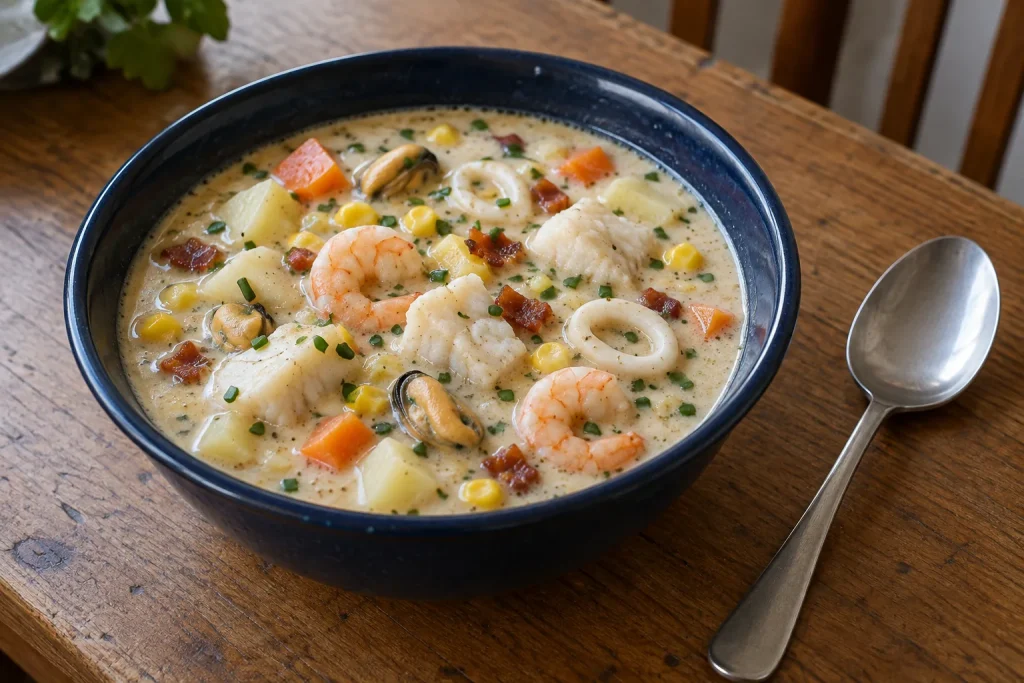
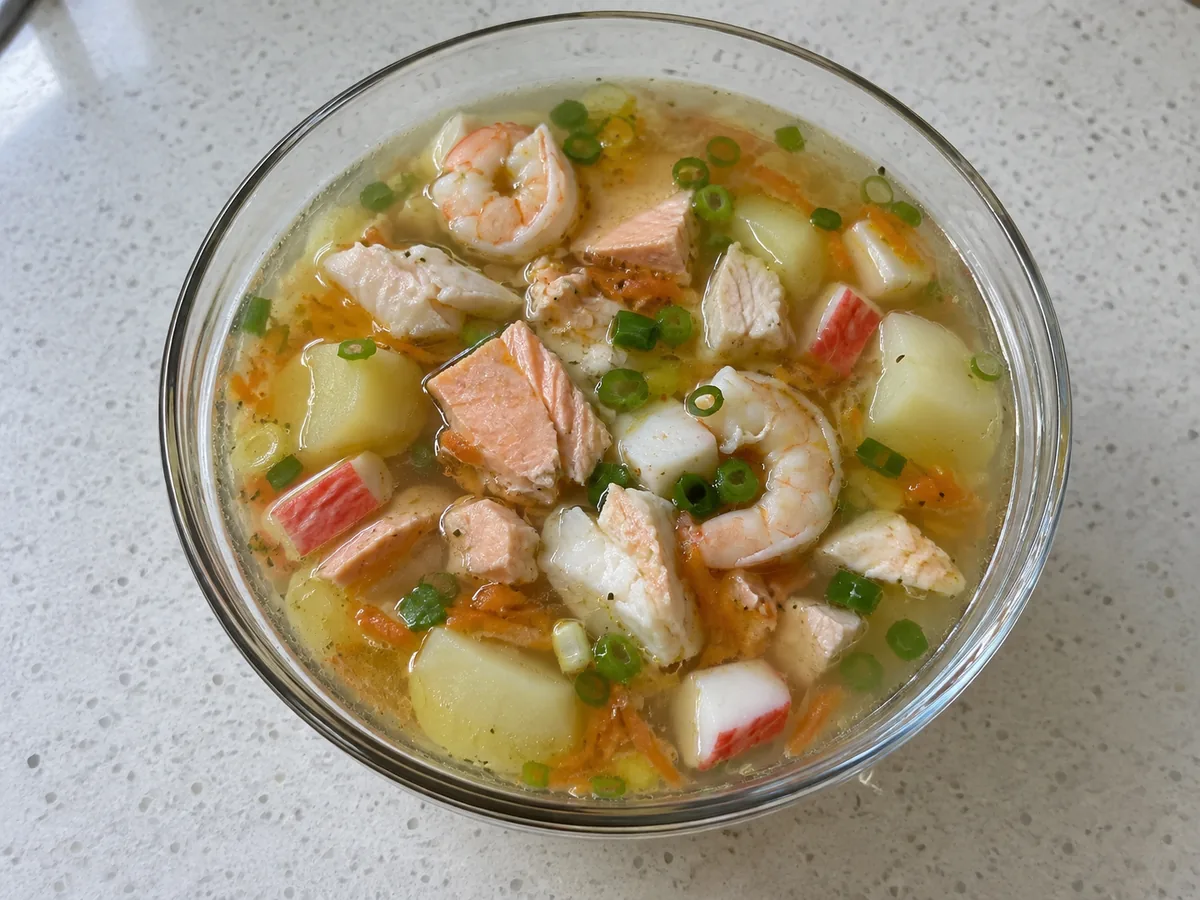
Images on this page are AI-generated seafood soup illustrations, not photographs of recipe testing, measured servings or safe cooking temperatures.
Which Seafood Soup Should You Make?
Start with broth style, then compare the yield. A recipe for four or five people and a pot serving ten or more require different shopping lists and equipment.
| Recipe | Bowl style | Publisher’s planning information |
|---|---|---|
| RecipeTin Eats seafood chowder | Creamy, with bacon and mixed seafood | 40 minutes total; 4–5 servings |
| Cre8 at Home seafood soup | Water-based, with fish, shrimp and vegetables | Recipe card: 40 minutes total; 10–12 servings |
| Chef Jean-Pierre seafood chowder | Stock, cream, vegetables and a cornstarch finish | 8 servings; allow time for the longer written method |
These are the publishers’ figures, not cooking times verified here. Read through the selected method before shopping, including thawing, chopping and any preparation that happens before the first cooking step.
Creamy Seafood Chowder with Bacon
Nagi’s Seafood Chowder at RecipeTin Eats brings together mixed seafood, bacon, potatoes, carrots and corn. Chicken stock and cream form the base, with flour for thickening and fish sauce for seasoning.
This is the option to consider when you want a creamy bowl with a smoky background. Its seafood mix can include fish, squid, shrimp and cooked mussel meat. The method separates raw seafood from already-cooked pieces and adds them at different points.
Keep that distinction when shopping. A bag of cooked shrimp is not the same starting ingredient as raw shrimp. For a flour-free variation, use the publisher’s specific cornstarch instructions and check all the other ingredients rather than changing the thickener alone.
Clear Seafood Soup with Fish and Shrimp
Irina’s Simple Seafood Soup at Cre8 at Home takes the water-based route. Salmon, haddock, shrimp, imitation crab, potatoes and grated carrot create a mixed-seafood bowl without a cream base. Scallops are optional in the source recipe.
The fish goes into this recipe before the shrimp and crab. Follow that sequence instead of transferring the chowder’s instructions. The page’s headline mentions 15 minutes hands-on, while its recipe card lists 20 minutes prep plus 20 minutes cooking; use the complete card when planning your time.
Imitation crab is a specific product, not another name for fresh crab meat. Check its ingredients if you have dietary requirements. A clear broth also does not automatically establish a low-sodium or low-calorie meal.
Vegetable-Rich Seafood Chowder with a Cornstarch Finish
Chef Jean-Pierre’s Easy Seafood Chowder is another creamy option, with shrimp, scallops, firm white fish, peppers, potatoes, tomatoes and basil. The recipe uses stock as well as cream; it is not a no-broth chowder.
The written method includes a 45-minute vegetable stage before further seafood cooking. It should not be advertised as a 30-minute dinner. Read the full sequence and serving yield before choosing it for a busy evening.
For a visual companion, see Chef Jean-Pierre’s seafood chowder video. It belongs to this recipe, not the bacon chowder above. Use the written recipe as your reference for the ingredient list, and do not mix individual instructions from different versions.
Choose and Thaw Seafood Before You Start
A useful shopping list identifies more than “mixed seafood.” Note which items are raw or cooked, whether fish is skinless, and whether shrimp needs peeling. Check the recipe’s quantities before deciding that one mixed bag will cover everything.
The FDA’s seafood handling guidance recommends keeping seafood at 40°F or below and using it within two days of purchase, or freezing it. Thaw in the refrigerator overnight. Keep raw seafood and its utensils separate from cooked or ready-to-eat foods, and clean hands and work surfaces after handling it.
For guests with dietary restrictions, review the complete recipe and product labels, including stock, fish sauce, imitation crab, cream and thickeners. If you want other soup directions to compare, browse the soup guide organized by protein ingredient.
Check Cooking and Texture Separately
There is no one finishing time for every seafood mixture. Piece size, starting temperature, batch size and the selected method all matter. Use its timing as guidance and check that the seafood is safely cooked.
The FDA recommends an internal temperature of 145°F (63°C) for most seafood. Use a food thermometer where possible. If cooking live clams, mussels or oysters, discard shells that do not open during cooking. Do not deliberately leave seafood undercooked for later reheating.
For texture, use the thickening approach in your chosen recipe. Flour and cornstarch instructions are not interchangeable amounts, and adding extra liquid changes the consistency. Decide whether you want a brothy or creamy bowl before starting rather than trying to turn one into the other halfway through.
Store and Reheat Seafood Soup Safely
Follow USDA’s guidance for leftovers: divide soup into shallow containers and refrigerate promptly, within two hours, or one hour above 90°F. Do not leave a large pot on the counter to cool completely.
Use properly refrigerated leftovers within three to four days, or follow a shorter recipe-specific limit. Freeze portions you will not use in time. Check the selected recipe’s freezing advice for texture; this guide does not promise identical results for clear and cream-based soups.
Reheat leftovers to 165°F (74°C), checking with a food thermometer. USDA advises bringing soups to a rolling boil when reheating. Steam, a warm spoonful or a fixed microwave interval is not a substitute for checking the temperature. Creamy texture is a quality consideration, not a reason to stop before safe reheating.
Serve the soup with bread or a salad, then plan which portions to eat soon. A flexible weekly dinner menu can help organize the rest of the week without assuming one batch should remain refrigerated all week.
Seafood Soup Questions
Which recipe is the clear-broth option?
The Cre8 at Home recipe uses water rather than a cream base. Open its complete recipe for the fish, shellfish, vegetables and exact quantities.
Are all three soups ready in 30 minutes?
No. Check the planning information above and read the full method. In particular, Chef Jean-Pierre’s written recipe takes longer than a 30-minute dinner.
Should every type of seafood go in at the same time?
Follow the chosen recipe’s sequence, including the distinction between raw and already-cooked seafood. Do not apply one finishing time to every mixture.
Does cornstarch make the whole chowder gluten-free?
Changing a thickener alone does not verify the finished dish. Review the complete recipe and every product label, including the seafood mix, stock and seasonings.
Can I undercook the seafood to keep leftovers tender?
No. Cook seafood safely before chilling it. Do not use intentional undercooking as a meal-prep technique.
Is reheated soup safe as soon as it steams?
Steam alone is not a reliable temperature check. Follow the reheating guidance above and use a food thermometer.
Can I combine the three recipes into one shopping list?
Choose one recipe first. The recipes have different yields, liquids and seafood handling; combining their ingredient lists does not produce a tested fourth recipe.
Are there complete cooking instructions on this page?
This page helps you compare the options. Use the clearly named publisher links for measured ingredients and the full cooking method.