Looking for pasta soup recipes? Start with the kind of broth you want: creamy chicken and Parmesan, vegetables with macaroni, or a tomato-based ground turkey soup. Then check how the selected recipe cooks its pasta and how much soup it makes.
This guide compares three complete recipes from their publishers, with links to the measured ingredients and full methods. It also covers pasta shapes and planning for leftovers. The three bowls are separate recipes, not interchangeable versions of one formula.
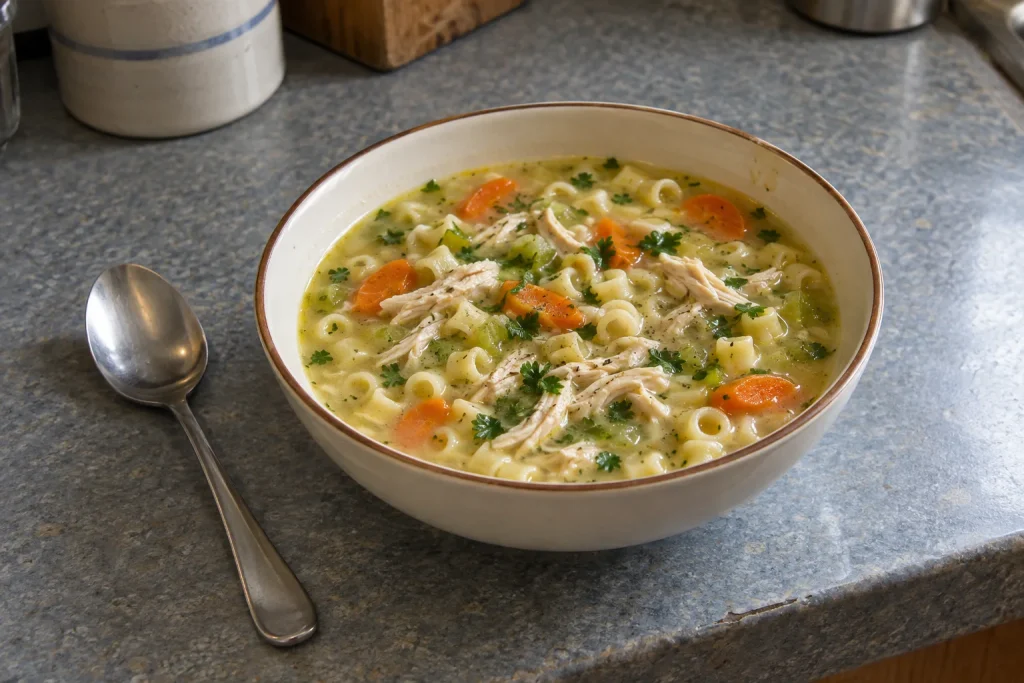
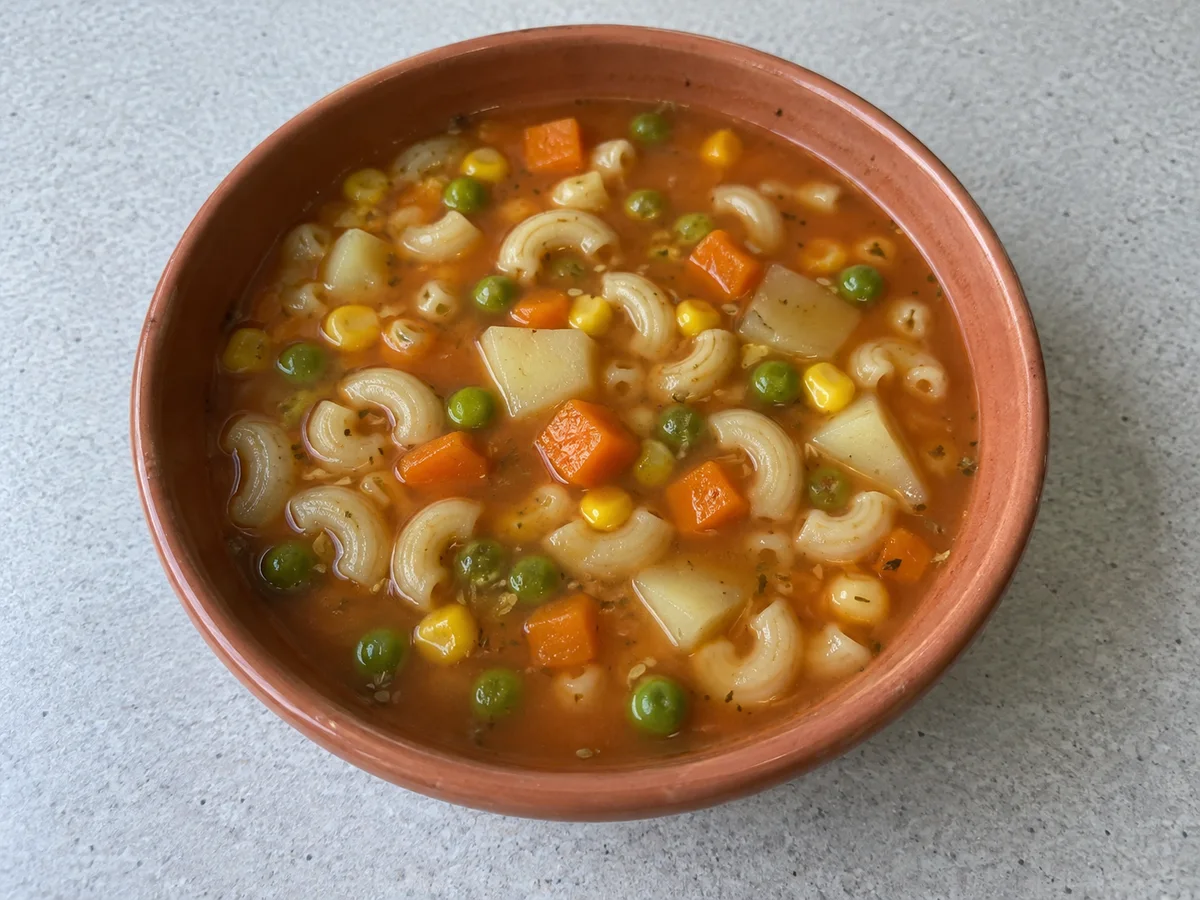
Images on this page are AI-generated soup illustrations, not photographs of recipe testing or measured servings.
Choose a Pasta Soup for Dinner
Use flavor, batch size and pasta handling to narrow the choice. A small vegetable soup and a large turkey batch need different shopping lists, amounts of liquid and equipment.
| Soup | Main direction | Pasta handling in the linked recipe |
|---|---|---|
| Creamy chicken Parmesan | Shredded chicken, milk, Parmesan and vegetables | Ditalini is cooked separately |
| Vegetable macaroni | Mixed vegetables, garlic and a tomato or lemon finish | The illustrated method preboils the pasta |
| Italian-style turkey | Ground turkey, tomatoes, greens and dried herbs | Pasta cooks in the soup |
The recipe links below are the starting points for cooking. This comparison is not a combined ingredient list, and a timing from one row should not be applied to another.
Creamy Chicken Parmesan Pasta Soup
Chris Scheuer’s Creamy Chicken Parmesan Pasta Soup at The Café Sucre Farine is the creamy option. Ditalini, shredded cooked chicken, carrots and celery sit in a milk-and-Parmesan broth. Rosemary and parsley finish the soup.
The source card lists 45 minutes total and 16 one-cup servings. Its final instruction also calls for a 15–20 minute stand, so read the complete method when planning dinner. Sixteen one-cup servings should not be interpreted as sixteen large dinner bowls.
Use that recipe’s full quantities and sequence. The separately cooked pasta is added to the soup near the end; the publisher notes that it can still absorb broth in the refrigerator. The dairy and flour are part of this version, so changing only the pasta does not make it dairy-free or gluten-free.
Vegetable Pasta Soup with Macaroni
For a vegetable-led option, Swasthi Shreekanth’s Pasta Soup uses macaroni, mixed vegetables, garlic, oregano and pepper. The recipe offers tomato or a lemon finish. Its card lists 25 minutes total and 2–3 servings.
The illustrated method boils the macaroni separately before adding it to the vegetables. The recipe also mentions an in-pot option, but that is not a reason to assume all soup methods use the same liquid amount. Follow the version you select from beginning to end.
This is not automatically a vegan bowl: the linked recipe uses butter. Check the complete ingredients and any serving extras against your needs. For a different vegetable-and-legume direction, browse the bean soup recipe collection.
Italian-Style Pasta Soup with Ground Turkey
Lillie Eats and Tells’ Italian Pasta Soup combines ground turkey, tomatoes, riced broccoli, greens and dried herbs. The recipe makes a large batch and cooks the pasta in the soup. Its card lists 30 minutes total and 12 servings; use the complete ingredient list and instructions when deciding whether that batch fits your pot and schedule.
Ground turkey must reach 165°F (74°C), checked with a food thermometer, according to the FoodSafety.gov cooking temperature chart. Browning or a particular number of minutes alone does not verify safe cooking.
Parmesan, ricotta or cottage cheese changes the finished bowl, including its dairy content. This guide does not assign one nutrition value to all three soups. The soup guide organized by protein source offers other directions to compare.
Choose a Pasta Shape That Fits the Recipe
Small pieces are convenient to scoop with broth, but shape is only one part of the choice. Thickness, brand and ingredients affect the cooking instructions. Start with the shape named in your selected recipe.
| Shape | What it offers | What to check |
|---|---|---|
| Ditalini | Small tubes that share a spoon with chopped vegetables | The chicken recipe’s separate-cooking instructions |
| Elbow macaroni | Curved, bite-size pieces for the vegetable bowl | Package timing and whether your chosen method preboils it |
| Penne or another larger short shape | A larger pasta bite | A recipe that accommodates its size, cooking time and liquid needs |
Do not swap a dry volume of one shape for another and assume the result will be identical. Follow the recipe’s specified weight or volume and any tested substitution notes. For gluten-free pasta, check the package and the entire soup: broth, flour, sauces and toppings also matter. There is no single shorter cooking time that works for every gluten-free product.
Should the Pasta Cook Separately or in the Soup?
Separate cooking gives you more control at serving
When the recipe uses a separate pot, you can check the pasta before it joins the broth. If the recipe supports storing the components separately, keep the pasta out of the portion intended for later meals. Once pasta is mixed into soup, it can continue to soften and absorb liquid.
In-pot cooking needs the recipe’s liquid and timing
An in-pot method is designed around its pasta quantity and broth. Do not add an unmeasured extra handful just because the pot looks roomy. Begin checking the pasta according to the recipe and package instructions, rather than applying one universal “one minute less” rule.
If you want another pasta-and-bean idea, watch Lidia Bastianich’s Quick & Easy Pasta and Bean Soup video. It is a separate recipe, not a demonstration of the chicken, vegetable or turkey recipes above.
Store and Reheat Pasta Soup Safely
For safe cooling and reheating, follow USDA’s leftovers guidance. Divide a large pot into shallow containers and refrigerate promptly, within two hours, or one hour when the temperature is above 90°F. Do not wait for a whole stockpot to cool on the counter.
Keep refrigerated leftovers at 40°F or below and use them within three to four days. Freeze portions you will not use in that window. Reheat leftovers to 165°F, verified with a food thermometer; bring soups to a rolling boil. Visible steam or warming gently for a few minutes is not a temperature check.
Texture needs a separate plan. Follow the selected recipe’s freezing guidance, especially for dairy-based soup, and keep pasta separate when the recipe supports it. Add liquid gradually if needed instead of automatically adding one or two cups to every batch. Taste for seasoning after adjusting the broth; extra liquid changes both consistency and flavor.
Bread and a green salad can turn the bowl into dinner. Add crunchy sides at serving time, and keep optional cheese or herbs on the table so each person can finish a portion. The flexible weekly dinner menu can help you decide which portions to eat soon and which to freeze.
Pasta Soup Questions
Which pasta soup should I choose?
Choose the creamy chicken recipe for a milk-and-Parmesan broth, the macaroni recipe for a smaller vegetable-led soup, or the turkey recipe for a larger tomato-based batch. Use the linked recipe for exact quantities.
Can I cook all three soups with the pasta in the pot?
Do not assume so. The recipes handle pasta differently. Follow the selected method and its liquid measurements rather than combining the instructions.
Are sixteen one-cup servings sixteen dinner portions?
Not necessarily. A serving measurement and a person’s dinner portion are different. Plan around the stated cup yield and how much soup you intend to serve with other food.
Why does leftover pasta soup become thicker?
Pasta can absorb more broth after mixing. Follow the recipe’s storage approach, keep components separate when suitable, and adjust liquid gradually during reheating.
Does gluten-free pasta make the whole soup gluten-free?
No. Check every ingredient, including broth and any flour used to thicken the soup, and follow the pasta package rather than a universal shortened cooking time.
Is the vegetable macaroni soup vegan?
The linked version uses butter, so do not label it vegan without checking and adapting the full recipe appropriately. Serving extras also count.
How long can leftover soup stay in the fridge?
USDA recommends three to four days for properly handled refrigerated leftovers. Freeze portions you will not use within that period and follow the cooling and reheating guidance above.
Can I judge turkey doneness or safe reheating from a photo?
No. Use a food thermometer. Ground turkey and reheated leftovers need to reach 165°F; a browned appearance, visible steam or a photograph is not proof of that temperature.


