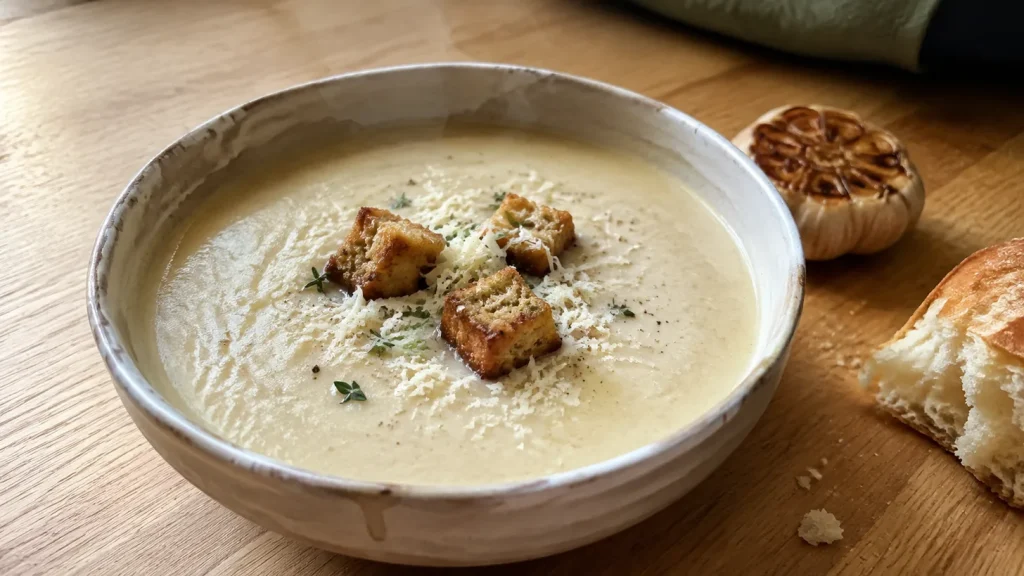
Roasted garlic soup turns a few simple ingredients into a smooth, deeply savory bowl. Slow roasting changes sharp raw garlic into soft, golden cloves with a mellow sweetness, while russet potatoes give the soup body without requiring a heavy flour-based thickener.
This version uses three whole heads of garlic, potatoes, onion, broth, cream, and Parmesan. Allow 45–60 minutes for the garlic to roast, but most of that time is hands-off. Once the cloves are ready, the soup moves quickly from the stove to the blender.
Serve it as a cozy lunch, a light dinner with bread and salad, or the creamy first course in a larger fall meal. For more seasonal bowls, browse these fall soup recipes.
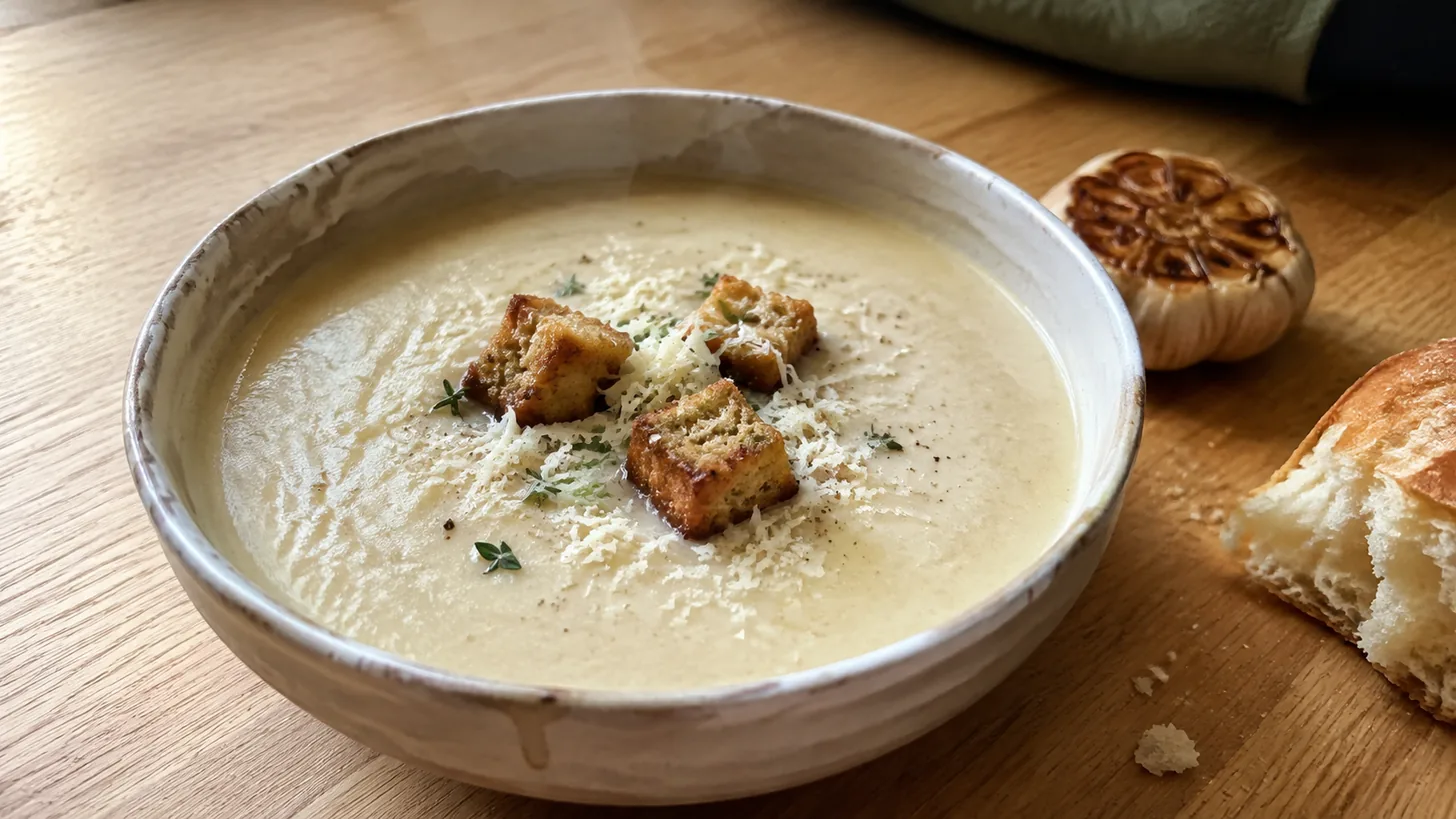
Why This Roasted Garlic Soup Works
- Roasted rather than raw garlic: baking the whole heads softens the pungency and develops a sweet, nutty flavor.
- Potatoes create natural creaminess: russets break down easily and make the blended soup feel velvety.
- A flexible broth base: chicken broth adds extra savory depth, while vegetable broth keeps the base vegetarian.
- Easy to adjust: add broth for a lighter consistency or simmer briefly after blending for a thicker bowl.
Roasted Garlic Soup Ingredients
The ingredient list is short, so use a broth and Parmesan you enjoy. Keep the garlic amount consistent at three heads; that produces a clear roasted-garlic flavor without making the soup harsh.
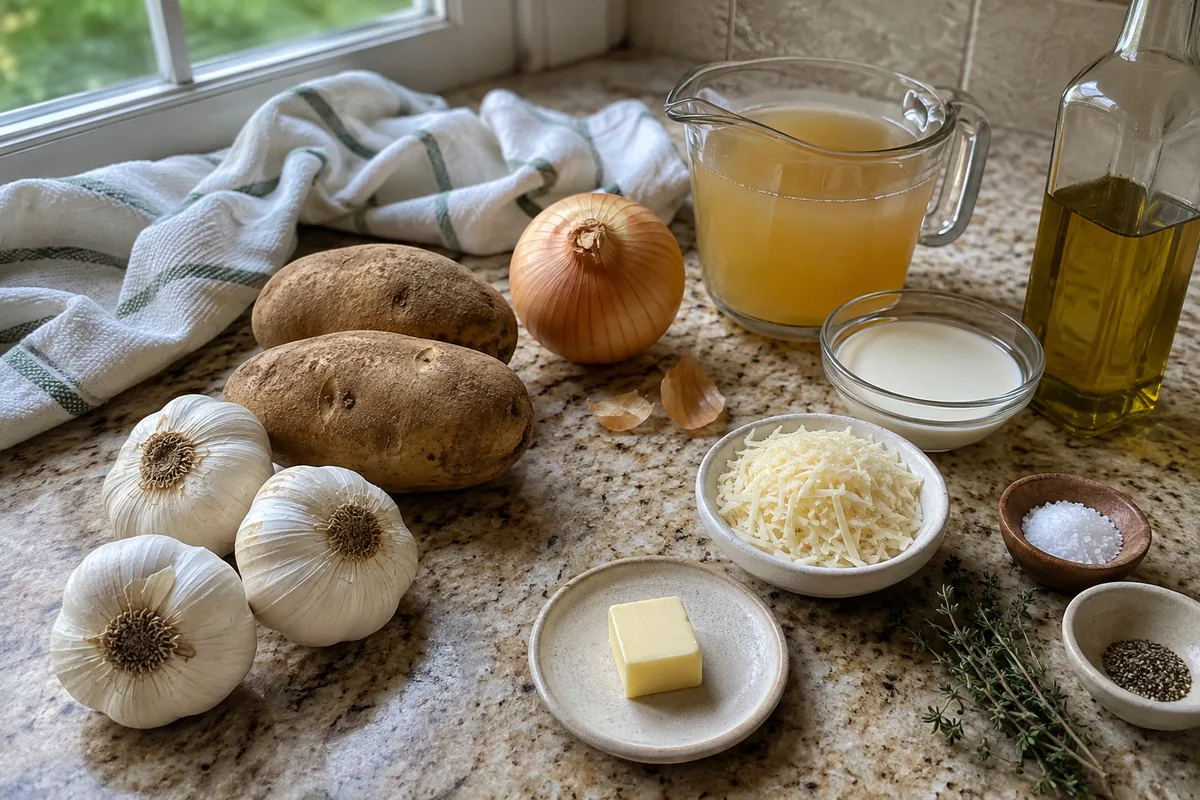
- 3 whole heads garlic: choose firm bulbs without soft or moldy spots.
- 1 tablespoon olive oil: coats the exposed cloves so they roast instead of drying out.
- 1 tablespoon butter: adds flavor while the onion softens.
- 1 large white or yellow onion, chopped: builds a sweet-savory base. Two large shallots also work.
- 2 medium russet potatoes, peeled and cubed: naturally thicken the soup when blended.
- 4 cups chicken or vegetable broth: use low-sodium broth if you want more control over seasoning.
- 1 tablespoon Italian seasoning: or use a smaller amount of thyme and rosemary to taste.
- 1 teaspoon sea salt and 1 teaspoon black pepper: start here, then adjust after blending.
- 1/2 cup heavy cream: rounds out the soup and gives it a silky finish.
- 1/2 cup finely grated Parmesan: adds saltiness and umami.
Optional: deglaze the onion with a small splash of dry white wine, or use a little broth instead. Croutons, chives, thyme, olive oil, bacon, or extra Parmesan all make good toppings.
How to Roast Garlic at 400°F
Roasting is the step that defines this soup. The cloves should be soft enough to squeeze from their skins and golden rather than dark brown. Burnt garlic can make the entire pot bitter.
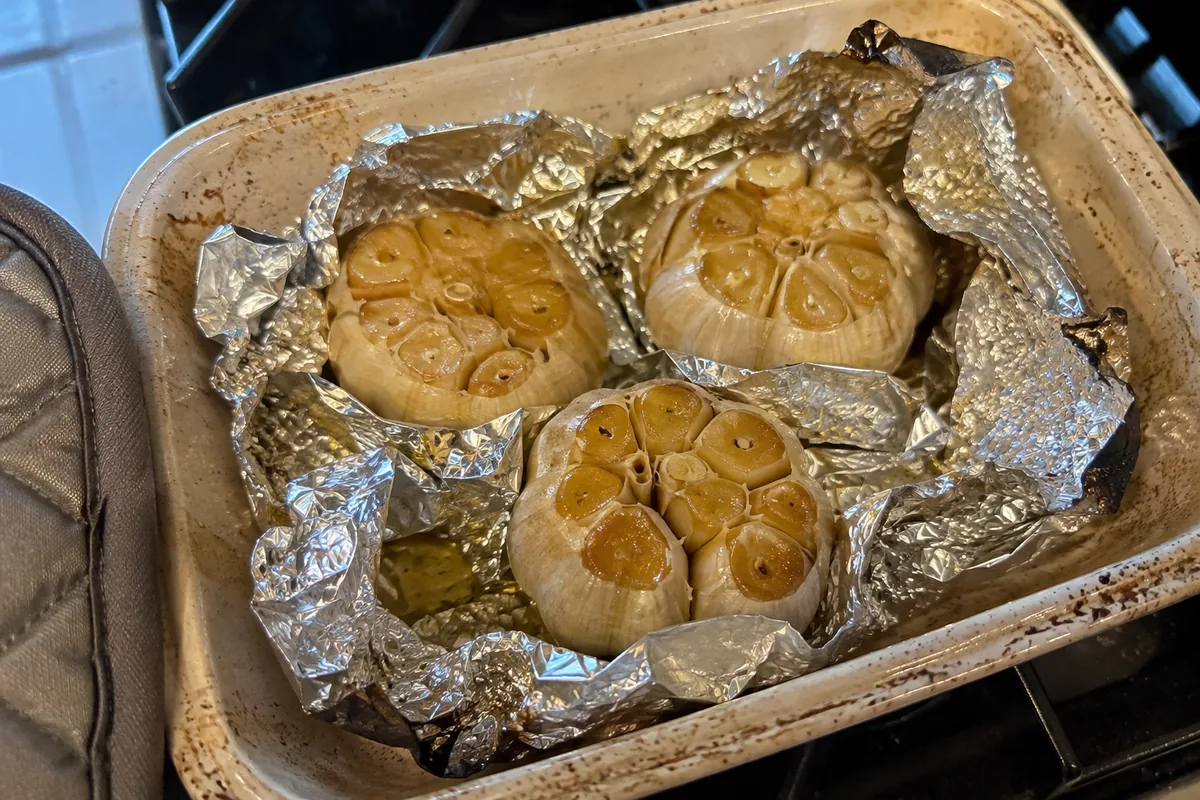
- Heat the oven: preheat to 400°F. Remove loose papery skin from three garlic heads, but keep each head intact.
- Expose the cloves: cut about 1/4 inch from the top of each head. Set the heads cut-side up on foil in a small baking dish.
- Add oil and wrap: drizzle the exposed cloves with olive oil, then close the foil loosely around the heads.
- Roast until soft: bake for 45–60 minutes. Check at 45 minutes; the cloves should be golden, fragrant, and easily pierced with a knife. Let them cool until safe to handle.
How to Make Creamy Roasted Garlic Soup
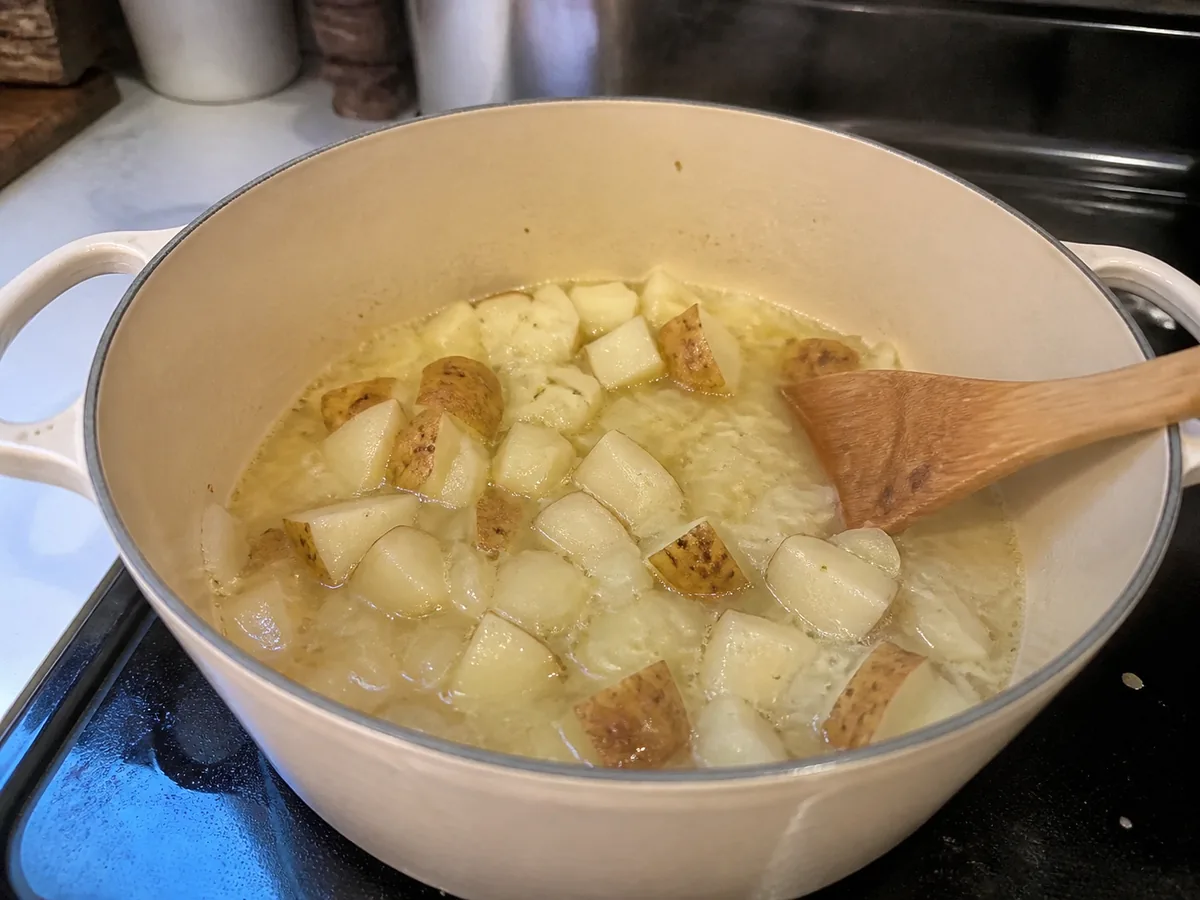
- Soften the onion. Melt the butter in a medium soup pot over medium heat. Add the chopped onion, a pinch of the salt, and a few grinds of pepper. Cook for 5–7 minutes, stirring occasionally, until soft and translucent.
- Deglaze the pot. Add a small splash of broth or optional dry white wine. Scrape up any browned bits, then stir in the Italian seasoning.
- Simmer the potatoes. Add the cubed russet potatoes and 4 cups of broth. Bring to a gentle boil, reduce to a simmer, cover, and cook for about 15 minutes or until the potatoes are very tender.
- Add the roasted garlic. Squeeze the soft cloves from all three heads into the pot. Stir and simmer for another minute so the flavor disperses.
- Blend until smooth. Take the pot off the heat and use an immersion blender until no potato or onion pieces remain.
- Finish gently. Return the pot to low heat. Stir in the cream and Parmesan until the cheese melts. Do not let the soup boil hard after adding the dairy.
- Taste and adjust. Add the remaining salt and pepper as needed. Thin with a little more broth, or simmer for a few minutes if you prefer a thicker consistency.
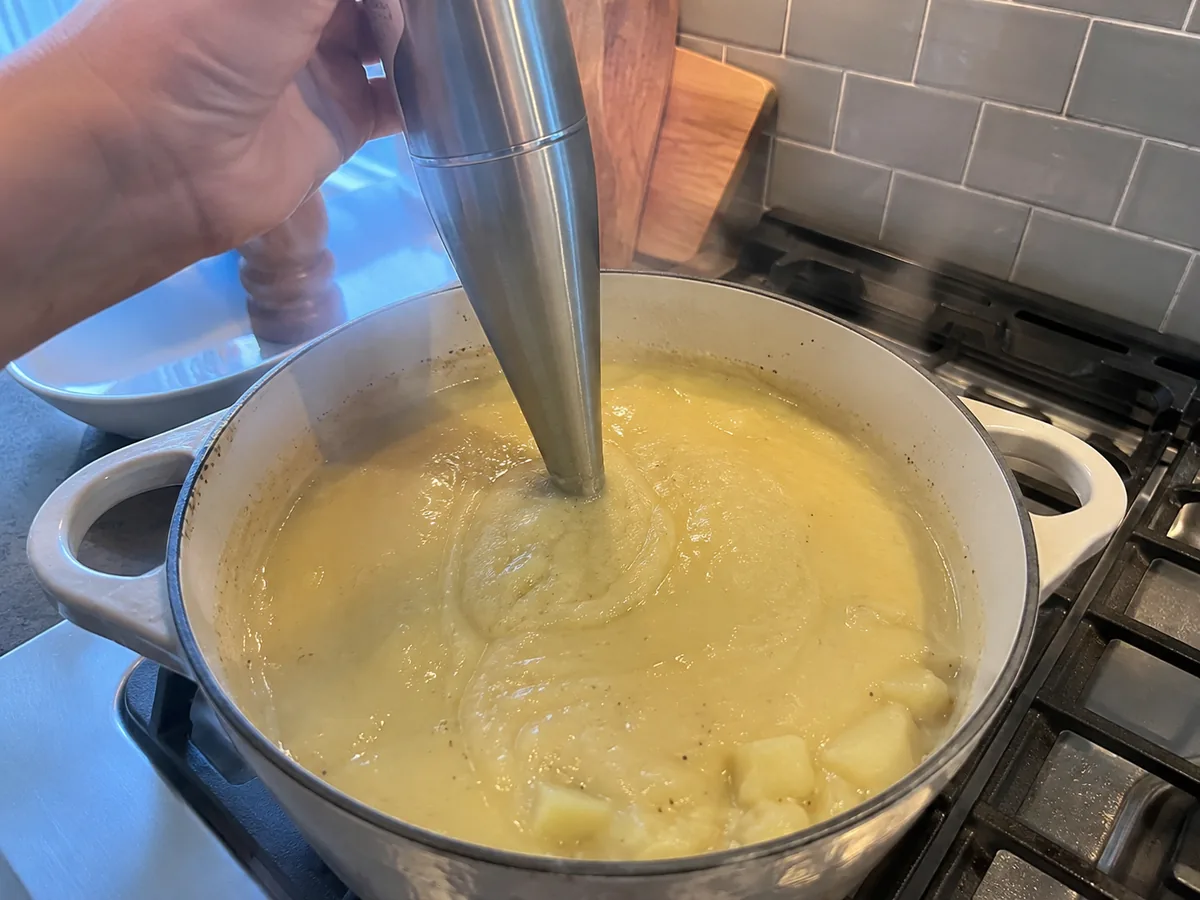
If you use a countertop blender, let the soup cool slightly and work in small batches. Never fill the jar more than halfway with hot liquid, vent the lid as directed by the manufacturer, and cover the opening with a folded towel to control steam.
How to Get the Best Texture
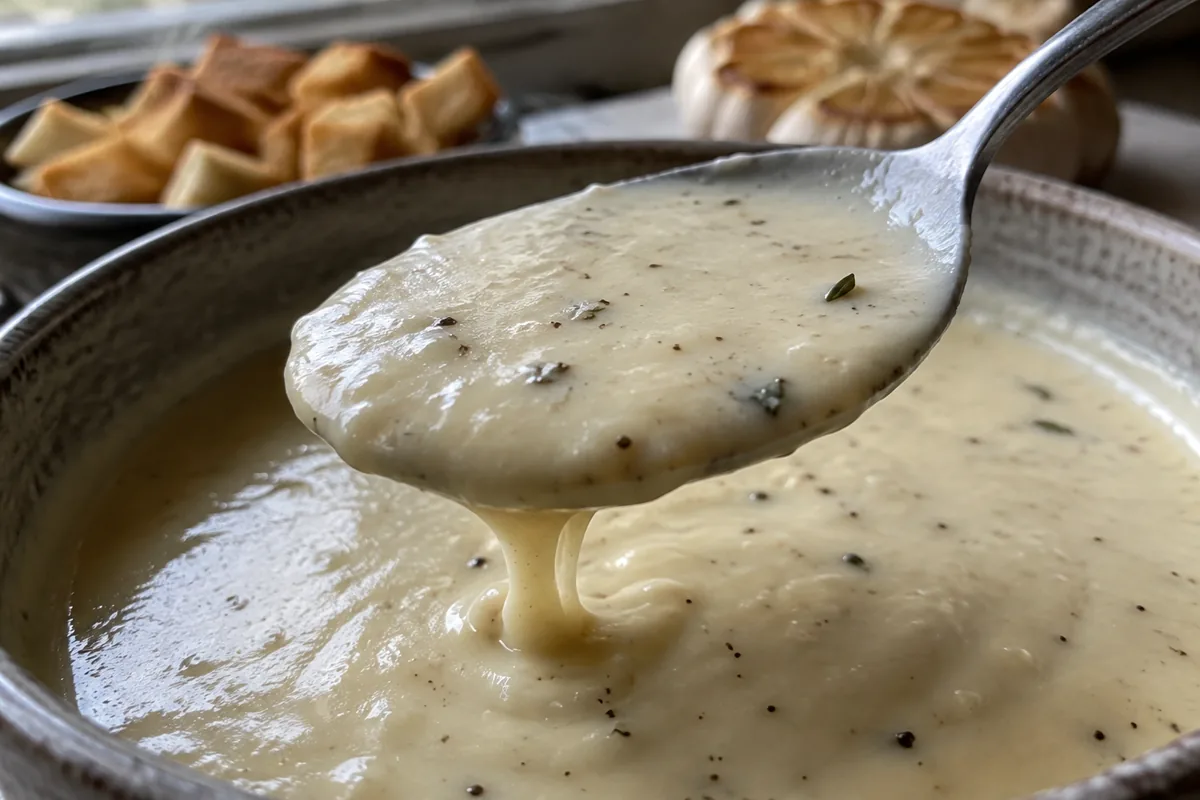
Russet potatoes make this roasted garlic potato soup creamy before the dairy goes in. Blend only until smooth; excessive high-speed blending can make starchy potatoes feel gummy. For a very polished texture, press the blended soup through a fine-mesh sieve before adding the cream and Parmesan.
- Too thick: stir in warm broth a few tablespoons at a time.
- Too thin: simmer uncovered over low heat until it reaches a spoon-coating consistency.
- Too mild: add salt gradually, then try a little more Parmesan or a squeeze of lemon rather than raw garlic.
- Too garlicky: add more cooked potato and broth, then reblend.
Substitutions and Variations
- Vegetarian: choose vegetable broth and keep the Parmesan.
- No cream: leave out the cream and add enough broth to reach your preferred texture. The potatoes will still make the soup creamy.
- Dairy-free: use olive oil instead of butter, vegetable broth, and an unsweetened dairy-free cream; omit the Parmesan or use a dairy-free alternative you already trust.
- More protein: stir in cooked shredded chicken after blending and warm it through gently.
- Herb variation: use thyme for an earthy finish or rosemary sparingly for a stronger piney note.
What to Serve with Roasted Garlic Soup
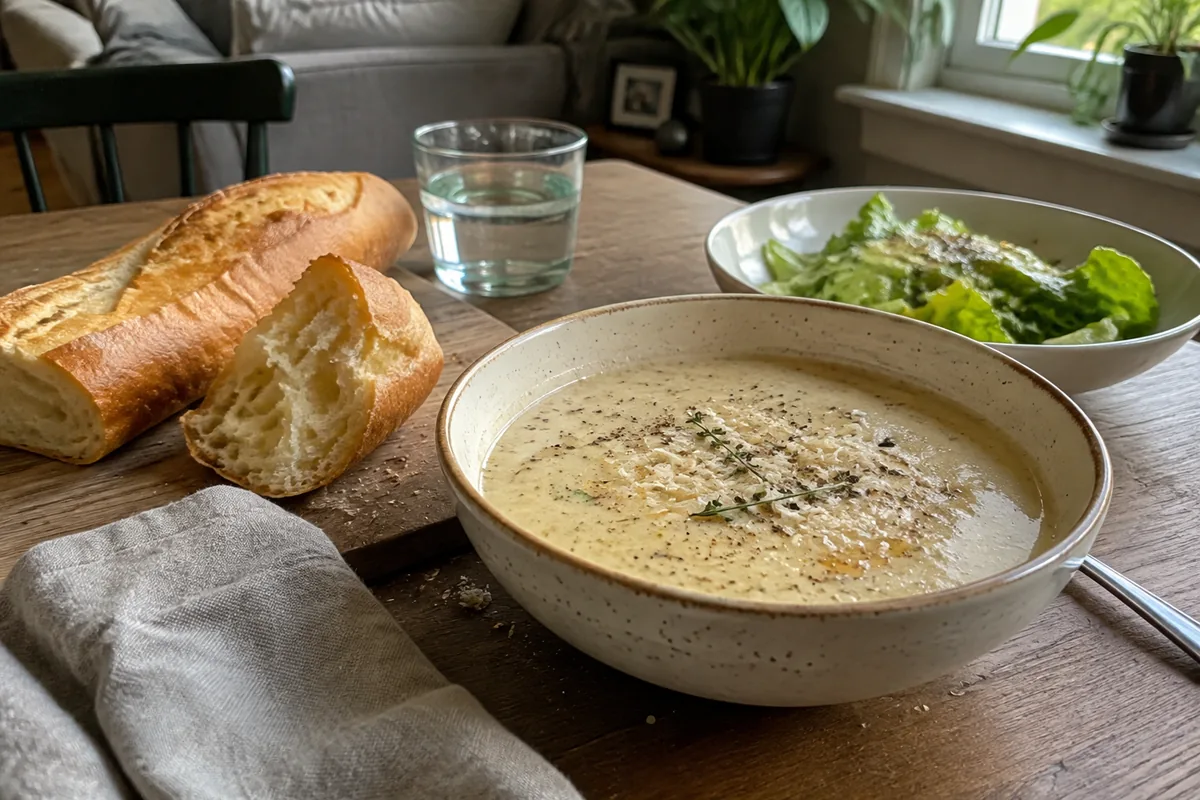
Crusty baguette, garlic bread, or herb croutons add the crunch this silky soup needs. A lemony kale salad or simple sandwich turns it into a fuller lunch. For another rich onion-forward bowl, try this French onion soup.
Keep toppings restrained so the roasted garlic stays central. A drizzle of olive oil, chopped chives or thyme, freshly cracked pepper, and a small shower of Parmesan are enough. Bacon and mild cheddar work when you want a more indulgent version.
Storage, Freezing, and Reheating
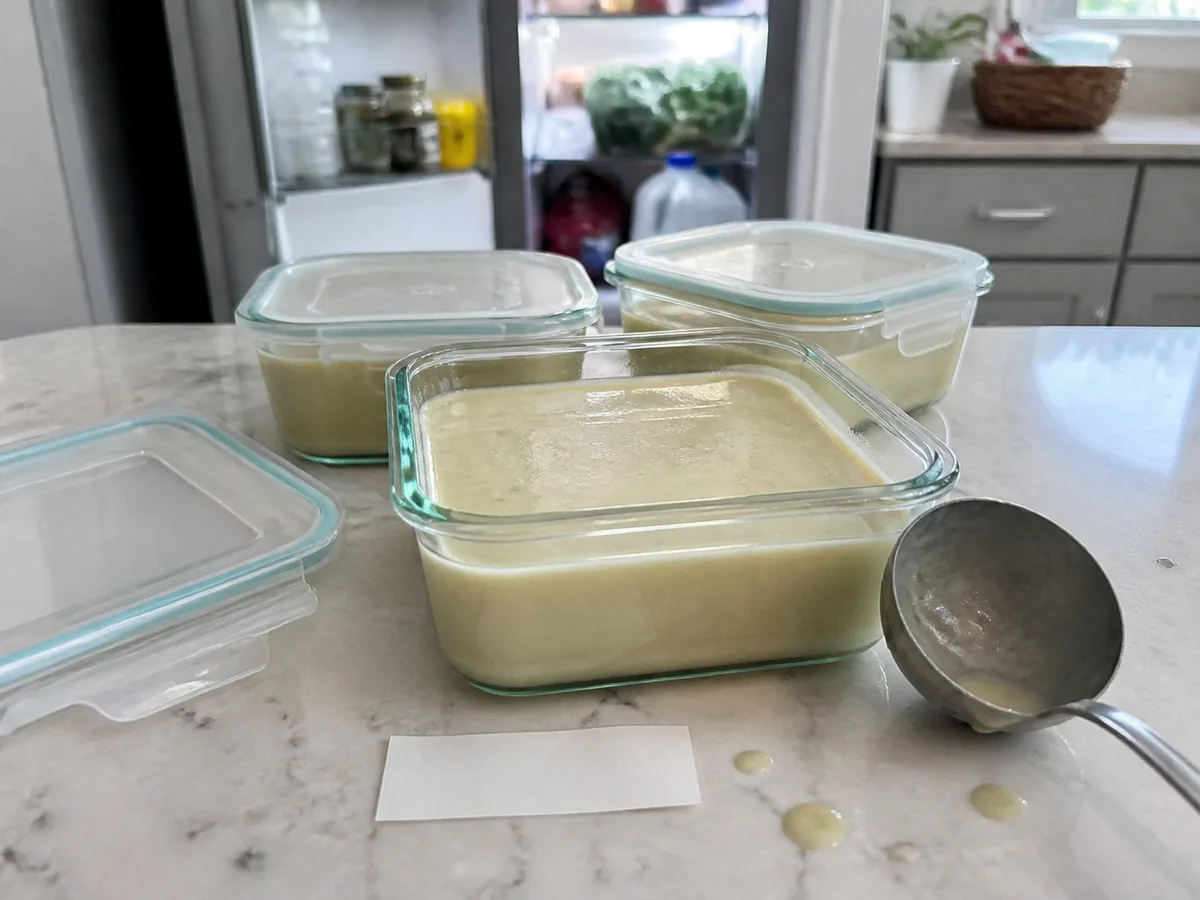
Divide leftover soup into shallow containers and refrigerate promptly instead of leaving a large pot on the counter to cool for a long time. The USDA leftovers guidance recommends using refrigerated leftovers within 3–4 days and reheating leftovers to 165°F. Frozen soup keeps its best texture when used within about 2–3 months.
- Refrigerate: cover and store at 40°F/4°C or below for 3–4 days.
- Freeze: for the smoothest thawed texture, freeze before adding the cream and Parmesan. Leave expansion space in the container.
- Reheat: warm gently on the stove, stirring often. Add a splash of broth if the soup has thickened, then add dairy after it is hot.
- Make-ahead roasted garlic: do not leave garlic in oil at room temperature. The National Center for Home Food Preservation advises keeping homemade garlic-in-oil at 40°F/4°C or below for no more than 4 days, or freezing it for longer storage.
Roasted Garlic Soup FAQs
What does roasted garlic soup taste like?
It is savory and creamy with a mellow, lightly sweet garlic flavor. Properly roasted cloves are much softer in flavor than raw garlic, so the finished soup should not taste sharp.
How do I keep roasted garlic from tasting bitter?
Check the garlic after 45 minutes and remove it when the cloves are golden and soft. Very dark or scorched cloves can taste bitter. Keeping the heads wrapped also prevents the exposed tops from drying too quickly.
Can I make roasted garlic soup without cream?
Yes. The blended russet potatoes provide most of the body. Omit the cream and thin the soup with broth as needed, or use a small amount of unsweetened dairy-free cream.
Can I use vegetable broth instead of chicken broth?
Yes. Vegetable broth makes the soup vegetarian while keeping the roasted garlic and potato flavors prominent. Choose a mild broth so it does not overpower the garlic.
Why is my roasted garlic soup too thick?
Potatoes continue to absorb liquid as the soup rests. Stir in warm broth a little at a time until the soup pours easily but still coats a spoon.
Can I freeze creamy roasted garlic soup?
You can, but dairy may separate after thawing. For better texture, freeze the blended soup before adding cream and Parmesan, then add them while reheating.
How long does roasted garlic soup last in the refrigerator?
Store it promptly in shallow, covered containers at 40°F/4°C or below and use it within 3–4 days. Reheat leftovers to 165°F.
How should I store roasted garlic made ahead?
Refrigerate plain roasted cloves promptly in a covered container. If the garlic is mixed with oil, keep it at 40°F/4°C or below for no more than 4 days; freeze it for longer storage and never keep homemade garlic-in-oil at room temperature.
More Cozy Soup Recipes
Continue the comfort-food theme with loaded baked potato soup or a smooth butternut squash soup. Both fit naturally beside this roasted garlic soup in a fall or winter meal plan.
Roast the garlic until soft and golden, simmer the potatoes until completely tender, and blend only until smooth. Those three details deliver the mellow flavor and creamy texture that make this simple soup worth repeating.


