
I still remember the first time I layered soft-scrambled eggs, crisp bacon, and melty cheese between flaky pastry. I wanted a fast, satisfying meal that packed protein and comfort in every bite.
My simple recipe starts by toasting the croissant so the shell stays crisp when the fillings go in. Then I finish the assembled halves in the oven just long enough for the cheese to pull but not make the bread soggy.

I teach a gentle method for custardy eggs using butter and a splash of milk, and I bake bacon for easy clean-up. Small swaps make this flexible—ham or turkey bacon, American or sharp cheddar—so you can tailor it to morning cravings.
Read on and you’ll save time with clear oven cues, meal-prep tips for refrigeration or freezing, and a few sauces that lift the flavor. This breakfast sandwich is built to be quick, tasty, and repeatable.
Why I Love This Breakfast Croissant Sandwich Right Now
This recipe checks the boxes I need on busy mornings: flaky layers, creamy eggs, and a salty crunch. It gives real comfort without long prep, and it scales easily whether I’m making one or a dozen.
Simple, flaky, and protein-packed for busy mornings
I cook soft scrambled eggs in butter with a splash of half-and-half so they stay custardy and light. I pair them with turkey bacon or ham for lean, crisp flavor and top it with sharp cheddar or American for the melt I want.
Oven-toasting croissants and baking the bacon cut cleanup and give consistent results. I batch these, freeze or refrigerate them, and reheat in a toaster oven, air fryer, or microwave for fast mornings.
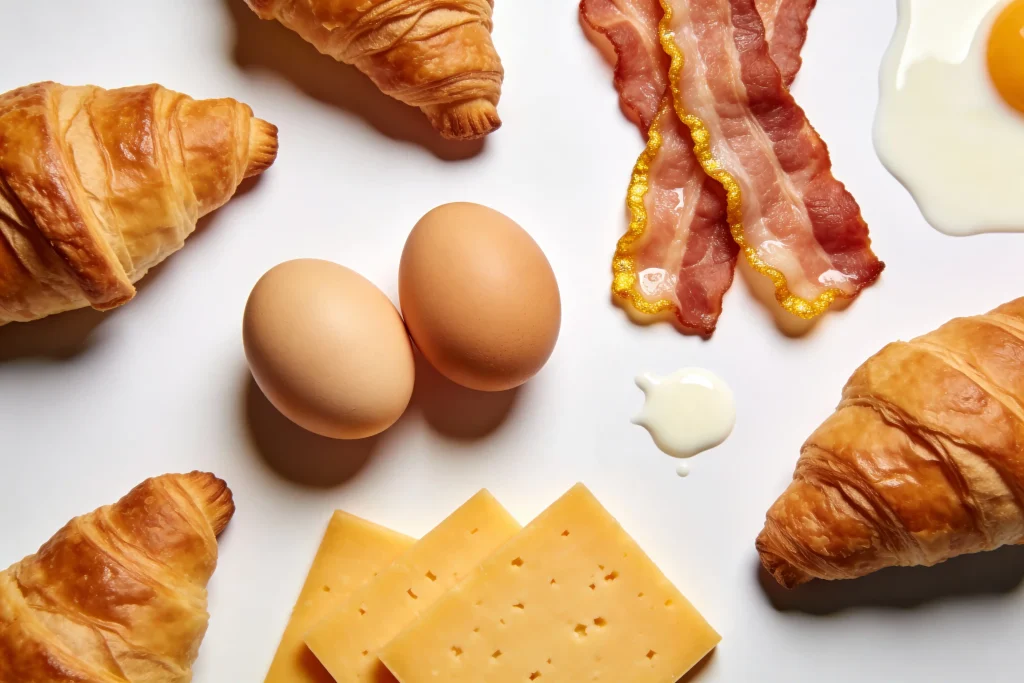
| Component | Quick Choice | Why I Pick It |
|---|---|---|
| Protein | Turkey bacon / Ham | Leaner crispness, classic flavor |
| Eggs | Soft scrambled | Custardy texture, not heavy |
| Cheese | Sharp cheddar / American | Flavor bite or best melt |
| Reheat | Toaster oven / Air fryer | Fast, keeps texture |
- Buttery croissant layers meet melty cheese for balanced richness.
- Soft eggs add protein without heaviness.
- Make-ahead friendly—perfect for busy households and small kids.
Essential Tools and Prep to Get Started
Before I start cooking, I gather a few reliable tools so the whole process moves fast and clean. A little setup means fewer surprises when the oven and skillet get busy.
Oven and sheet setup
I preheat oven to 350°F for toasting croissant halves and melting cheese. For croissants, I line a rimmed baking sheet with parchment so the bottoms toast evenly.

When I bake bacon, I switch to foil on the sheet and roast at 420°F for 10-15 minutes. Then I transfer strips to a paper towel-lined plate to drain.
Skillet basics and egg technique
I use a nonstick skillet and a rubber spatula for soft-scrambled eggs. I melt butter, add whisked eggs with salt, pepper, and a splash of milk or half-and-half, then stir gently over medium to medium-low heat until just set.
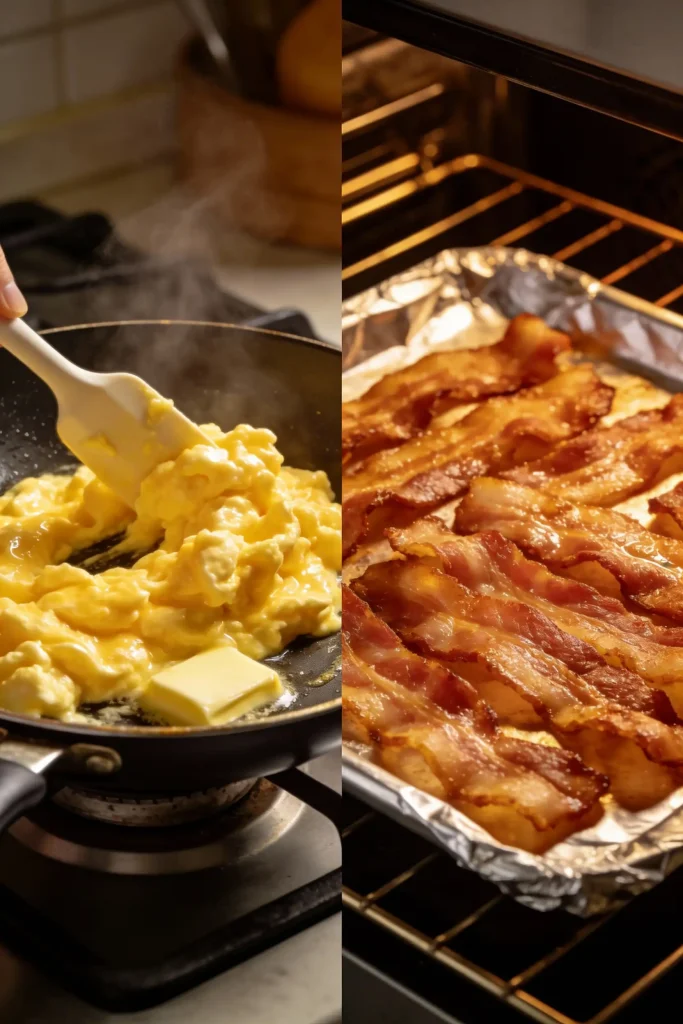
- I set aside tongs for bacon and a spatula for eggs to keep motion smooth.
- A rimmed sheet prevents drips when toasting and finishing multiple sandwiches.
- Keep paper towels handy to blot bacon so sandwiches stay crisp, not greasy.
| Task | Temp | Minutes |
|---|---|---|
| Toast croissants | 350°F | 5–8 |
| Bake bacon | 420°F | 10–15 |
| Finish in oven | 350°F | 2–4 |
Breakfast Croissant Sandwich Ingredients
The ingredient list is small, but each item matters for texture and flavor. I pick bakery-fresh croissants so the layers stay flaky and the base holds fillings without getting soggy.
Cores I always keep on hand
I use eggs whisked with a splash of half-and-half and cooked in butter for soft, custardy texture. A pinch of salt and pepper finishes them simply.
- Buttery croissant or two from the bakery section
- 2–3 eggs per cup measure if making a batch
- Bacon or turkey bacon, oven-crisped; ham slices as an easy swap
- Cheese that melts—American for gooey, extra sharp cheddar for tang
Smart swaps and extras
If I want more heft, I add a breakfast sausage patty. For variety I mix mayo, mustard, and maple syrup into a quick maple mustard sauce.
| Protein | Texture | Why I pick it |
|---|---|---|
| Bacon | Crisp | Deep smoky flavor |
| Turkey bacon | Lean crunch | Lower fat, similar snap |
| Ham / Sausage | Meaty | Easy to layer or hearty bite |
Step-by-Step: How I Make My Croissant Breakfast Sandwiches
I break the process into short, reliable steps so timing stays predictable and textures line up. The key is timing the oven work, the skillet eggs, and a quick finish so everything is warm and melty together.
Toast croissants on a parchment-lined baking sheet
I preheat the oven to 350°F, slice croissants, and place cut sides up on a parchment-lined baking sheet. Toast for 5–10 minutes until lightly golden, then set aside to cool a moment.
Crisp the bacon and drain
I bake bacon on a foil-lined sheet at 420°F for 10–15 minutes until crisp. I move the strips to a paper towel-lined plate to drain so the sandwich stays crisp, not greasy.
Make soft scrambled eggs in butter
In a nonstick skillet I melt butter, lower to medium, and pour in whisked eggs with a splash of half-and-half, salt, and pepper. I stir constantly until they are just set and still glossy.

Assemble, bake until melty, and serve hot
I layer cheese on croissant bottoms, add bacon or ham, then spoon on the eggs. Return open-faced sandwiches to the 350°F oven for 10–15 minutes until the cheese is melty and croissants are warm.
- Watch the minutes closely to avoid over-browning.
- Scale the steps to a full tray without changing temps.
- Cap and serve immediately for best texture.
| Task | Temp | Minutes |
|---|---|---|
| Toast croissants | 350°F | 5–10 |
| Bake bacon | 420°F | 10–15 |
| Finish sandwiches | 350°F | 10–15 |
Pro Tips for Fluffy Scrambled Eggs and Crispy Bacon
Small technique shifts make a big difference when I cook eggs and bacon for a morning meal. I focus on gentle heat and timing so the eggs stay soft and the bacon stays crisp without extra mess.

Heat control, gentle stirring, and timing
I whisk eggs in a bowl with a splash of half-and-half or milk and season with salt and pepper. If I have time, I let that mix rest for 10–15 minutes to tenderize the curds.
I melt butter, reduce the heat to medium or medium-low, then pour in the eggs and stir slowly with a rubber spatula. I sweep the pan so nothing overcooks at the edges.
I pull the pan off the heat when the eggs look slightly glossy; carryover heat finishes them. That short, careful timing keeps the texture creamy and light.
Oven-baked bacon vs skillet: mess-free crispiness
For even crisping, I roast bacon on a foil-lined sheet in a preheated oven at 420°F for about 10–15 minutes. Then I move strips to a paper towel-lined plate to drain excess grease.
Skillet bacon works when I’m only cooking a slice or two, but it splatters more and takes focus. The oven option gives consistent results and less cleanup.
- I whisk eggs in a bowl with dairy to create steam and softness.
- I start with butter, keep the heat low, and stir gently for tender curds.
- I bake bacon on foil, then blot on paper towel so the bread and filling stay dry.
| Method | Result | When I use it |
|---|---|---|
| Oven-baked bacon | Even, crisp slices | Batch cooking, less splatter |
| Skillet bacon | Fast, hands-on | One or two servings |
| Low-heat eggs | Soft, creamy curds | When I want tender eggs |
Variations I Love on a Croissant Breakfast
Changing one element—meat, sauce, or cheese—turns the same base into many favorites. I keep the method the same so swaps are fast and reliable.
Meaty twists
I swap meats freely: juicy sausage patties or salty ham both pair beautifully with fluffy eggs. For a lighter crunch I pick turkey bacon, and when I feed a crowd I sometimes double up the protein.
Cheese choices
I play with cheese to change the melt and flavor. Cheddar adds bite, American gives a supreme melt, and Swiss or mozzarella softens the profile for a milder finish.
Add a kick
Heat and balance matter. A splash of hot sauce or grainy Dijon wakes things up. I also whisk a maple mustard sauce—mayo, mustard, and real maple syrup—for a sweet-savory lift.
Vegetarian and global spins
For meatless options I build Greek with feta, Kalamata, red onion, and oregano. Mexican-style gets salsa, diced jalapeños, and a Mexican cheese blend. Pesto with sun-dried tomatoes and mozzarella is another favorite.
- I add slices of cheese both under and over the meat for extra-gooey layers.
- I treat these as mix-and-match croissant sandwiches so everyone builds their perfect bite.
- A dusting of black pepper finishes many of my versions.
| Category | Key ingredients | When I use it | Flavor profile |
|---|---|---|---|
| Meaty | sausage, ham, bacon | Weekend brunch or hungry mornings | Rich, savory, filling |
| Cheesy | cheddar, American, Swiss | When I want gooey, melty slices | Tangy to mild melt |
| Spicy/Sweet | hot sauce, Dijon, maple mustard | To add contrast to rich eggs | Bright, balanced heat |
| Global/Vegetarian | feta, olives, salsa, pesto, mozzarella | When I want bold, different profiles | Herby, tangy, or smoky |
Make-Ahead, Storage, and Freezer-Friendly Breakfast Sandwiches
A little planning lets me grab a warm, cheesy handheld in under ten minutes. I cool cooked fillings before I wrap so steam doesn’t ruin the layers.
I refrigerate finished sandwiches in an airtight container for 1–2 days. For speed, I reheat in a toaster oven or air fryer until warmed and crisp. The microwave works fast, but I finish in a toaster oven to restore texture.
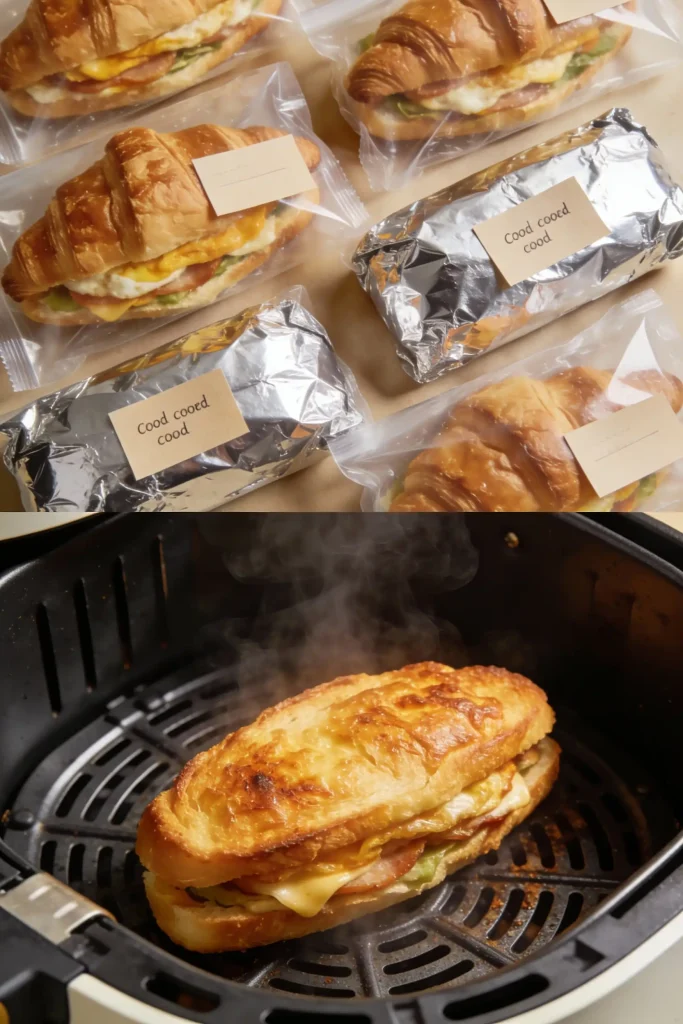
Freeze, wrap, and reheat
To freeze, I flash-freeze assembled portions on a tray, then wrap tightly in plastic or foil and label the date. They keep well up to three months. Reheat from frozen in a 350°F oven for 15–20 minutes, or microwave briefly, then toast to re-crisp.
- I tuck a paper towel under the sandwich when microwaving to cut soggy bottoms.
- I swap to sturdier bread if croissant texture fades after long storage.
- I label each wrap so I know the filling and date at a glance.
| Storage | Best for | Reheat |
|---|---|---|
| Refrigerate | 2 days | Toaster oven, air fryer |
| Freeze (flash) | Up to 3 months | 350°F oven 15–20 minutes |
| Quick microwave | Under a minute | Finish in toaster oven for crunch |
Serving Ideas: How I Turn Breakfast Sandwiches into Brunch
I like a set-and-go approach that keeps guests moving and food warm. A DIY bar helps everyone pick exactly what they want without long waits.
Batch toasting and quick assembly
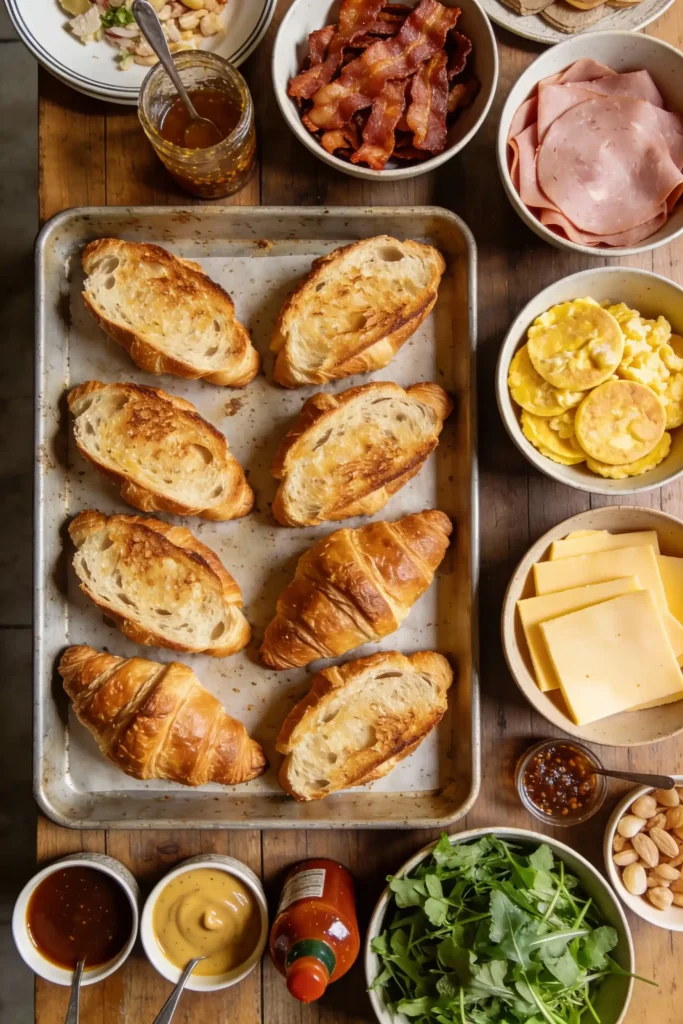
I toast croissant halves on a baking sheet so a full tray is ready at once. While those warm, I bake bacon on a sheet pan and blot it dry to keep layers crisp.
Egg patties and a tidy bar
I scramble eggs, press portions into rounds, and keep them warm on low heat. That makes stacking fast and neat for crowds.
- I toast croissants in batches on a baking sheet for even color and heat.
- I cook bacon in the oven for a crowd and keep it warm while I assemble.
- I portion egg patties and offer slices of American and cheddar for easy melty choices.
- I set up a DIY bar with meats, cheeses, sauces (hot sauce, Dijon, maple mustard), and toppings.
- I keep croissants warmed gently so layers stay flaky without drying out.
- I add sides like fruit salad, greens, or hash browns and a kid station with mild cheese and ham.
| Station | What I set out | Why it helps |
|---|---|---|
| Warm tray | Egg patties, bacon | Fast assembly, consistent heat |
| Cheese & slices | American, cheddar | Guest choice, good melt |
| Toppings | Greens, tomatoes, pickled onions | Fresh contrast and variety |
These small steps scale my recipes to any crowd while keeping the vibe relaxed and tasty.



Nutritional Notes: Protein, Fat, and Satisfying Starts
Small swaps in meat, dairy, or portion size change the nutrition profile more than you’d think. A typical croissant breakfast sandwich can range from about 500 to 880 calories depending on size and fillings.
Balancing indulgence with smart portions
I rely on eggs and a single slice of cheddar for steady protein without piling on fat. Soft-scrambled egg made with a small pat of butter and a splash from a cup of milk or half-and-half keeps texture rich but controlled.
- I cut fat by choosing turkey bacon or one slice of ham instead of double meat.
- I use thinner cheese slices and moderate sauces so flavor stays strong without excess calories.
- I pair the sandwich with fruit or a small side salad to stretch satisfaction and add fiber.
- For busy mornings, I save richer, double-meat builds for brunch and keep weekday versions lighter.
- Hydrating and listening to hunger cues helps me avoid overeating—sometimes I eat half now and save half for later.
| Choice | Typical fat | Calories (approx) |
|---|---|---|
| Classic (bacon, cheddar) | Higher | 650–880 |
| Lean (turkey bacon, thin cheese) | Lower | 500–650 |
| Simple (egg, single slice) | Moderate | 550–700 |
Troubleshooting and Time-Saving Fixes
Little hiccups happen in the kitchen, but most are easy to fix with a few minutes and the right trick.
If the cheese won’t melt, I open the sandwich and place it under a 350°F oven for 10–15 minutes until the cheese flows. Placing cheese directly on the toasted croissant bottom helps it stick and melt faster.
To stop soggy bottoms, I bake bacon on a foil-lined sheet and drain strips on paper towel before assembly. Cooling fillings briefly before stacking keeps trapped steam from steaming the pastry.
If eggs overcook, I lower the heat on the skillet next time and pull the pan when curds look glossy and just set. Trusting carryover heat saves texture and prevents dryness.
- I prevent greasy layers by blotting meats so excess fat doesn’t soak the bread.
- I use foil for bacon and parchment for croissants to speed cleanup.
- I wrap for transport only after steam has dissipated so the croissant stays crisp longer.
| Problem | Quick fix | Minutes / Notes |
|---|---|---|
| Stubborn cheese | Open-face and return to 350°F oven | 10–15 minutes until melty |
| Soggy bottom | Drain bacon on paper towel; cool fillings | Allow 2–3 minutes before stacking |
| Overcooked eggs | Lower skillet heat; pull when glossy | No extra minutes—adjust heat next time |
| Cooled, limp pastry | Quick re-bake to re-crisp | 5–8 minutes at 350°F |
Conclusion
I like ending on a simple promise: this quick recipe gives bakery-level results at home with a clear, repeatable flow. A toasted croissant, soft-scrambled egg finished in butter and a splash of half-and-half, and oven-crisped bacon timed right make the build reliable and fast.
I keep the oven doing the heavy lifting—toast at 350°F, bacon at 420°F for 10–15 minutes, then a short return to 350°F until cheese melts. That few-minutes finish saves time and cleanup and keeps texture consistent.
I scale the method for crowds, swap in ham or sausage and different cheeses, or add Dijon, hot sauce, or maple mustard to brighten the flavors. Try these croissant breakfast sandwiches soon and make the idea your own.


