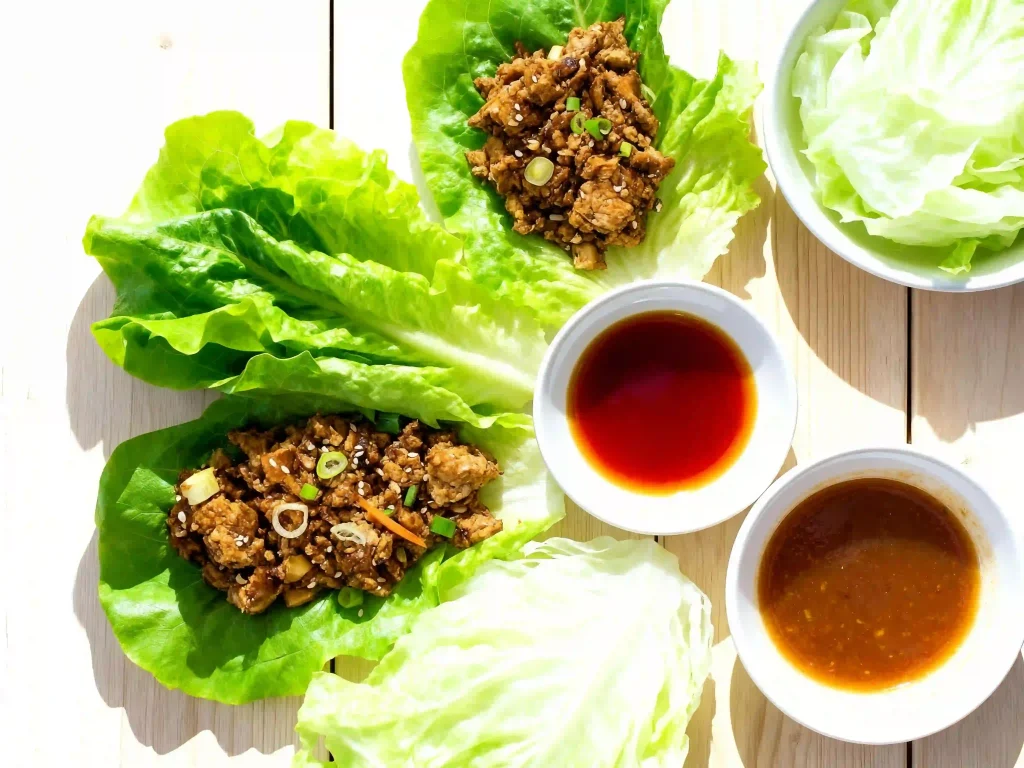
I still remember the first time I tried to mimic that takeout crunch at home. I had thirty minutes and a fridge of simple ingredients, so I browned ground chicken with ginger, garlic, mushrooms, and water chestnuts until it smelled amazing.
To keep the leaves crisp I set the filling aside and mixed a thick sauce with tamari and a splash of soy sauce. I use butter or romaine so each bite stays hand-held and tidy, and I save extra sauce for dipping.
This recipe is my weekday trick: quick, flexible, and full of flavor. I’ll show you how I time each step so dinner comes together fast and your meal stays fresh every single time.
Why I Love Chicken Lettuce Wraps Right Now
Lately I keep coming back to this quick, bright skillet meal that feels like takeout without the fuss. It hits the balance of cool leaves and savory filling, with a light sauce that lifts the flavor without weighing it down.
I make it on the stovetop: soften onions in a tablespoon of olive oil, add garlic and ginger, then brown the ground chicken. A splash of water and a simple pan sauce bring it together fast.
What I like most is how fast it moves from prep to table. In about thirty minutes I can have a family-friendly recipe that pairs well with rice. If I want heat, I stir in a little sriracha. If I’m feeding a crowd, I set out bowls of toppings and let everyone customize their own.
- Bright, crisp texture meets warm, juicy filling.
- Simple pantry staples and quick cook time make this a weeknight winner.
- Easy to tweak—more spice, more crunch, or milder sauce.
Ingredients & Pantry Staples I Use
I keep a short, reliable grocery list so the filling builds quickly and tastes bright. This helps me move from prep to plate in about thirty minutes.
Protein, produce, and aromatics
I usually start with 1 lb ground chicken for a classic base, but ground turkey works well too. I add finely minced mushrooms (6–8 oz), a drained can of water chestnuts, sliced green onions, fresh ginger, and garlic.
Diced red bell peppers or grated carrots give extra crunch and color when I want it.
Sauces and seasonings for bold flavor
My go-to sauce choices are coconut aminos, gluten-free tamari, or a splash of reduced sodium soy. I finish with a teaspoon of sesame oil for a nutty note and keep sriracha on hand for heat.
I measure seasonings in a small cup—tablespoons and teaspoons—so the mixture tastes balanced every time.
The best lettuce leaves for sturdy wraps
For sturdy leaves I reach for butter lettuce, romaine hearts, or iceberg. Butter lettuce makes flexible cups; romaine holds a hearty filling; iceberg adds extra crunch.
- Keep olive or neutral oil ready to sauté aromatics.
- Adjust texture: chop mushrooms and chestnuts fine for a smooth mixture or larger for bite.
- Organize ingredients so you can move from onions and garlic to ground meat, then add sauce last.
Step-by-Step: How I Make the Filling in Minutes
I start every skillet the same way: warm oil, soft onions, and a quick hit of garlic. That short base gives the filling real depth before any protein goes in.
Sauté the aromatics for depth
I heat a tablespoon of olive or neutral oil over medium to medium-high. I soften the onions about five minutes, then add garlic and ginger for one minute until fragrant. This prevents burnt garlic and builds flavor fast.
Brown the ground chicken and build texture
Next I add the ground chicken and let it sear in spots before breaking it up. That quick browning creates texture and tasty browned bits on the pan.
Add mushrooms and water chestnuts for umami and crunch
I stir in minced mushrooms and chopped water chestnuts, cooking three to five minutes until the mushrooms soften and the chestnuts keep some bite.
Finish with soy, tamari, or coconut aminos without over-wetting
I pour in about four tablespoons of coconut aminos, tamari, or soy sauce, plus a teaspoon of sesame oil. I cook one to two minutes to reduce slightly, scraping the pan so the mixture glazes. If I want heat, I add a few drops of sriracha at the end. The goal is a spoonable filling with no pooled liquid so each wrap holds its shape.
- Keep heat steady at medium-high to evaporate excess water.
- Taste and add a tablespoon more sauce only if needed.
- Finish when the mixture is cohesive and easy to portion into lettuce wraps.
Quick Dipping Sauce Options (PF Chang’s-Inspired)
I keep two go-to sauces that take minutes to whisk together and pair well with my filling. Both are bold enough to cling to chicken and lettuce without making the leaves soggy.
Dijon, tamari (or coconut aminos), and a touch of sriracha
Whisk together 1/4 cup Dijon and 1/4 cup tamari or coconut aminos. Add chili oil or sriracha to taste for heat.
If it tastes too salty, dilute with a tablespoon or two of water. I keep garlic or a drizzle of oil handy for a silkier texture.
Hoisin, soy sauce, rice wine vinegar blend
Mix 3 tablespoons hoisin, 1 tablespoon soy sauce, and 1 tablespoon rice wine vinegar. Stir in a few drops of sesame oil and sriracha for the classic sweet-savory balance.
I usually make about a cup so everyone can spoon, dip, or drizzle at the table.
Adjusting salt, heat, and sweetness to taste
Taste as you go. Add a teaspoon of vinegar for brightness or a pinch of pepper to sharpen the flavor.
Feel free to tweak by the tablespoon. I always test a bite of the filling with the sauce to make sure the seasoning lands right before serving.
- I whisk together the Dijon-and-tamari option for a punchy, PF Chang’s-inspired dip.
- The hoisin-soy-rice vinegar mix gives a familiar sweet-savory profile that plays well with rice and crunchy toppings.
- Adjust heat with extra sriracha for spice lovers or dilute with water if it’s too salty.
Choosing Lettuce: Butter, Romaine, or Iceberg?
Picking wide, sturdy leaves saves me from spills and soggy edges. The right green makes assembly faster and keeps the filling crisp. I also let the filling cool a minute before filling so the leaves stay fresh.
Butter lettuce for flexible cups
I reach for butter lettuce when I want soft, flexible cups that don’t crack as I peel and fill them. The leaves separate easily and make generous, neat pockets for the filling.
Iceberg for extra crunch (PF Chang’s style)
When I crave that classic crunch, I choose iceberg. Its firm ribs and crisp texture keep every bite snappy and resist wilting from a touch of sauce.
Romaine hearts as a sturdy middle ground
Romaine hearts offer a balance: sturdy leaves with a bit of snap and a long shape that helps hold the filling neatly. I sometimes double leaves for a heftier, drip-free wrap.
- I look for leaves with wide cups and thicker ribs to support the chicken without tearing.
- I stack extras on the plate and keep a small bowl of sauce so guests control moisture.
Smart Swaps & Diet-Friendly Variations
I often swap proteins and sauces to match diets without changing the method. These small moves keep the dish familiar while fitting gluten-free, paleo, or low-sodium needs.
Protein alternatives that work
Ground turkey, pork, or beef brown well and soak up flavor. I use ground turkey when I want a lighter bite and pork for a richer finish.
Picking the right seasoning base
| Option | Gluten | Taste note |
|---|---|---|
| Coconut aminos | None | Sweeter, soy-free; Whole30-friendly |
| Tamari | Usually none | Deep, salty without wheat |
| Soy sauce | Contains soy | Classic, bold; choose reduced-sodium |
- I watch sodium by starting with reduced-sodium sauces and tasting before adding salt.
- I toss in bell peppers, jicama, or grated carrots for crunch and color.
- Sesame seeds add a nutty finish; a splash of fish sauce or rice vinegar boosts umami.
- For heat I reach for sriracha or red pepper flakes and finish with a crack of black pepper.
- I use water chestnuts for crisp bite but sub diced celery if I’m out.
Serving Ideas That Make It a Complete Meal
A quick side of rice and a bowl of crunchy toppings make this feel like a complete meal. I often cook fluffy white rice or steam cauliflower rice to keep prep simple and fast.
I set out roasted peanuts, crispy wonton strips, and chow mein noodles for texture. Guests can add a little crunch to each cup, so every bite has contrast.
I portion the filling by the cup for family-style serving. This makes it easy to spoon into a leaf or onto rice without fuss.
| Side | Prep Time | Texture & Benefit |
|---|---|---|
| White rice | 15–20 minutes | Fluffy base; balances sauce and makes the meal heartier |
| Cauliflower rice | 5–10 minutes | Lower carb option; soaks up sauce without weighing the dish down |
| Extra veggies (diced bell peppers) | 5 minutes | Adds color, crunch, and fresh flavor to the platter |
| Crunchy toppings bowl | 0–2 minutes | Custom texture: peanuts, wonton strips, or chow mein noodles |
Spoon a little sauce over the rice and offer soy sauce in a small bowl so people can drizzle more. I finish with sesame seeds and a crack of pepper for a simple, tasty garnish.
Let the filling cool a minute before assembling to protect leaves from wilting. Leftovers reheat in minutes and taste great over rice for an easy lunch.
Make-Ahead, Storage, and Reheat Tips
Make the filling ahead and your weeknight assembly becomes almost effortless. I cool the cooked filling fully before packing so the steam doesn’t gather in the container.
Refrigeration windows and airtight containers
I store the filling in an airtight container and label it with the date. I plan on 3–4 days in the refrigerator for best quality; some versions hold up to 5 days, but I usually eat it sooner.
Keeping leaves and filling separate for best texture
I keep the leaves in a different container or wrapped in paper towels inside a breathable bag. This keeps the leaves crisp so they stay sturdy when I assemble.
- I let filling cool, then pack in a clean airtight container to avoid excess condensation.
- I portion the filling by the cup for easy lunches and keep the sauce in a small separate container.
- Reheat gently: short microwave bursts or warm in a skillet with a splash of water while stirring so the texture stays juicy.
- Rinse and spin the leaves dry before serving to refresh the texture and prevent sogginess.
- I always taste and adjust the sauce after chilling since flavors can mellow over a few days.
Quick reheating and assembly tips
Microwave in 20–30 second bursts, stirring between each, until hot. Or warm the filling in a skillet with a teaspoon of water to revive juiciness.
Assemble just before eating to protect the leaves and keep the filling’s texture lively. Once hot and spoonable, I scoop a cup of filling into each leaf and serve immediately.
Chicken Lettuce Wraps: Nutrition Notes at a Glance
Nutritional info makes it easy for me to adjust this meal to fit a busy night. A typical serving without sauce runs about 200–300 calories with roughly 18–30g protein, depending on portions and ingredients.
I favor a protein-forward approach by building the filling around lean ground chicken and vegetables. Swapping rice in or out changes carbs fast, so I add it only when I need more energy for the meal.
Protein, carbs, and sodium in practice
- I keep carbs lighter by using lettuce instead of a bun or tortilla and add rice on the side when desired.
- I watch sodium by starting with reduced-sodium soy or tamari and tasting before I whisk together extra seasoning.
- I portion the filling so each person gets enough protein without overloading the leaves, and I let the filling rest a minute before assembling to keep crisp texture.
- Measure sauces with a teaspoon when tracking macros, and add sauce sparingly to control sodium and calories.
| Choice | Calories per Serving | Protein (g) | Sodium Tip |
|---|---|---|---|
| Lean ground chicken filling | 200–280 | 18–30 | Use reduced-sodium soy sauce or tamari |
| Add white rice (½ cup) | +100–120 | +2–3 | Balances sauce; watch portion size |
| Extra sauce (1–2 tbsp) | +20–50 | 0 | Whisk together and taste; add slowly |
Let’s Wrap It Up: My Go-To Dinner in Less Time Than Takeout
A fast stovetop cook and a bold, reduced pan sauce make this a go-to weeknight dinner. I brown the ground mix hot and fast, fold in mushrooms and water chestnuts for texture, then reduce the sauce until it clings.
I lean on butter lettuce or another sturdy leaf so the wraps hold a juicy, well-seasoned filling without falling apart. Assemble just before serving for the best crunch and bright flavor.
I make extra and store the filling in an airtight container for 3–4 days. Reheat quickly and refresh with crisp leaves. Taste as you go and tweak the sauce so each wrap lands with the right punch.
I hope you try this recipe, make it your own with a favorite dip, and keep it in rotation for fast, satisfying dinners.


