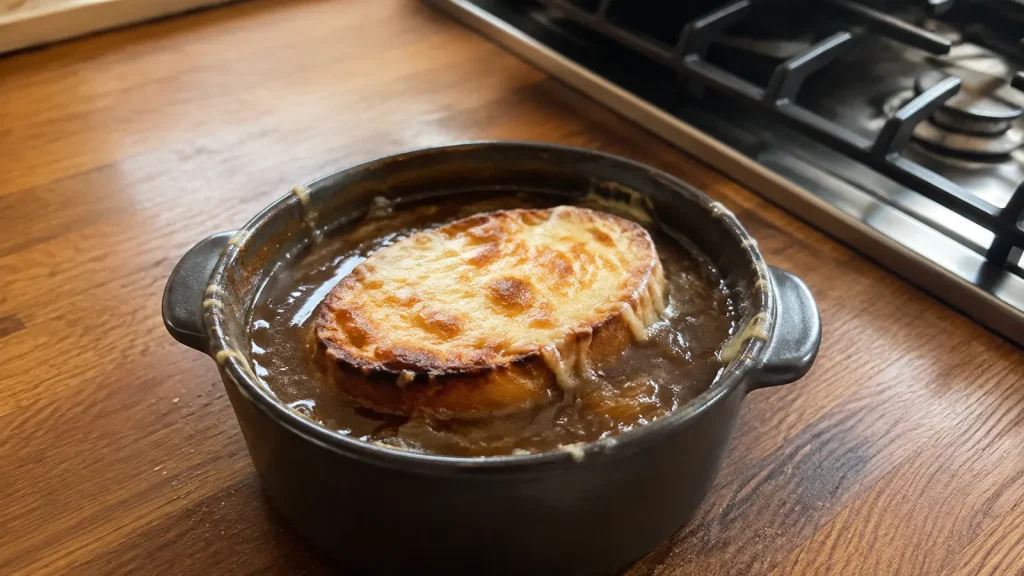
French onion soup is built on one essential step: cooking sliced onions slowly until they become deeply golden, soft, and sweet. This version pairs those caramelized onions with beef stock, dry white wine, toasted baguette, and Gruyère, then finishes each bowl under the broiler for a bubbling cheese top.
Plan on 45–60 minutes for the onions. That time does more for the flavor than adding extra seasonings or trying to brown them quickly over high heat. Once the onions are ready, the broth comes together quickly and can be made ahead before you add the bread and cheese.
If you are planning more cold-weather meals, browse these fall soup recipes or save the broader collection of cozy soup recipes.
Why This French Onion Soup Works
- Patient caramelization builds the base. Thinly sliced yellow onions cook until jammy and deep amber without becoming burnt or crisp.
- Wine lifts the fond. Dry white wine loosens the browned bits on the bottom of the pot so their flavor stays in the soup.
- Toasted bread protects the topping. Dry, crisp baguette holds up better than soft bread once it meets the broth.
- A short broil finishes each bowl. Gruyère melts, bubbles, and browns without overcooking the soup.
French Onion Soup Ingredients
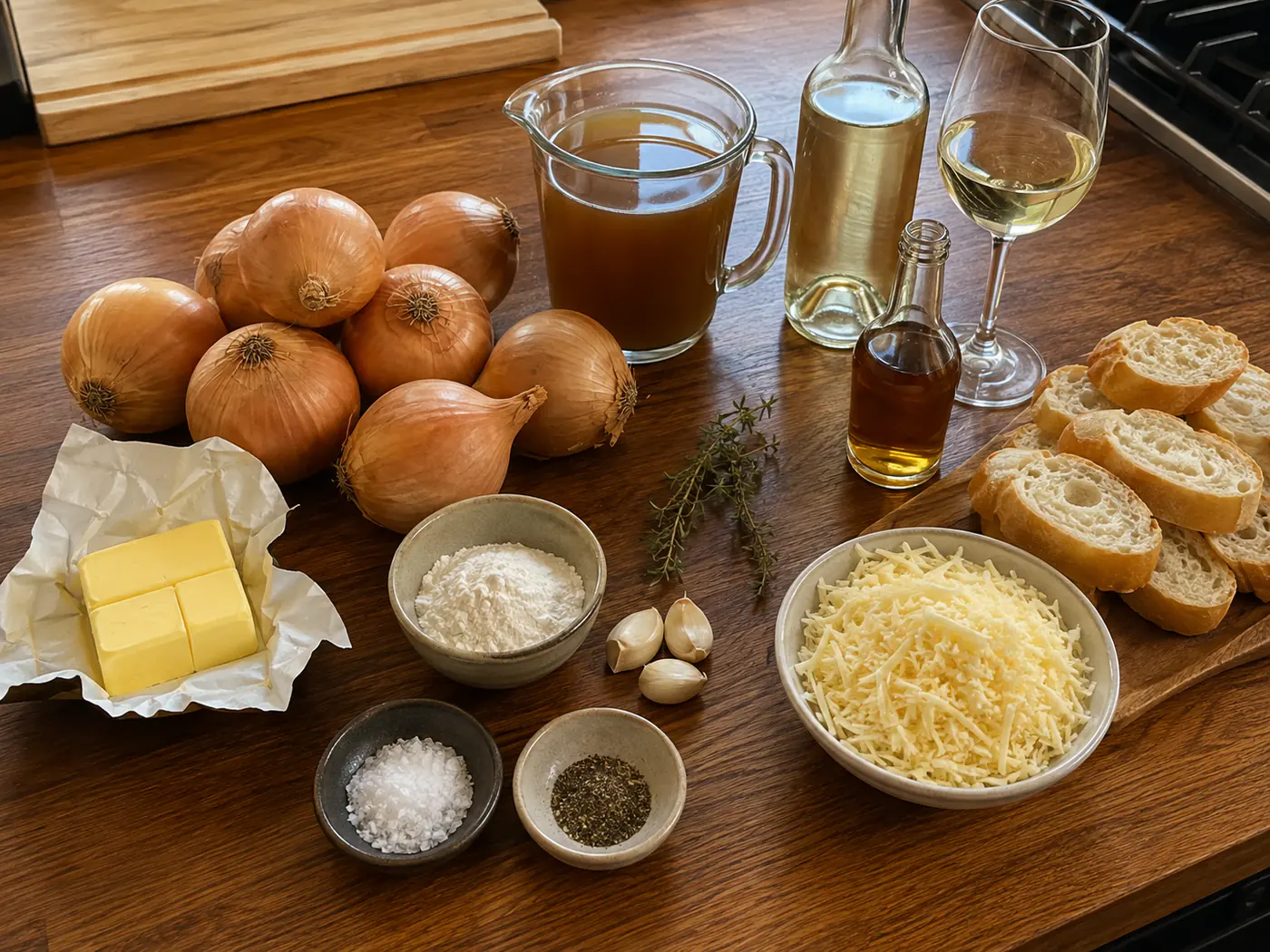
The ingredient list is short, so the quality and handling of the onions, broth, bread, and cheese matter. These are the quantities used in the current version of the recipe:
- 3–4 large yellow onions, about 3 pounds total
- 3 tablespoons unsalted butter
- 3 garlic cloves, minced
- 1 tablespoon all-purpose flour
- 1 cup dry white wine
- 1 tablespoon dry sherry
- 2 quarts beef stock
- 1 fresh thyme sprig, plus more for serving if desired
- ¾ teaspoon kosher salt, divided
- ½ teaspoon freshly ground black pepper
- 8–12 slices baguette or country bread
- About 1½ cups grated Gruyère
Choose yellow onions for balanced flavor
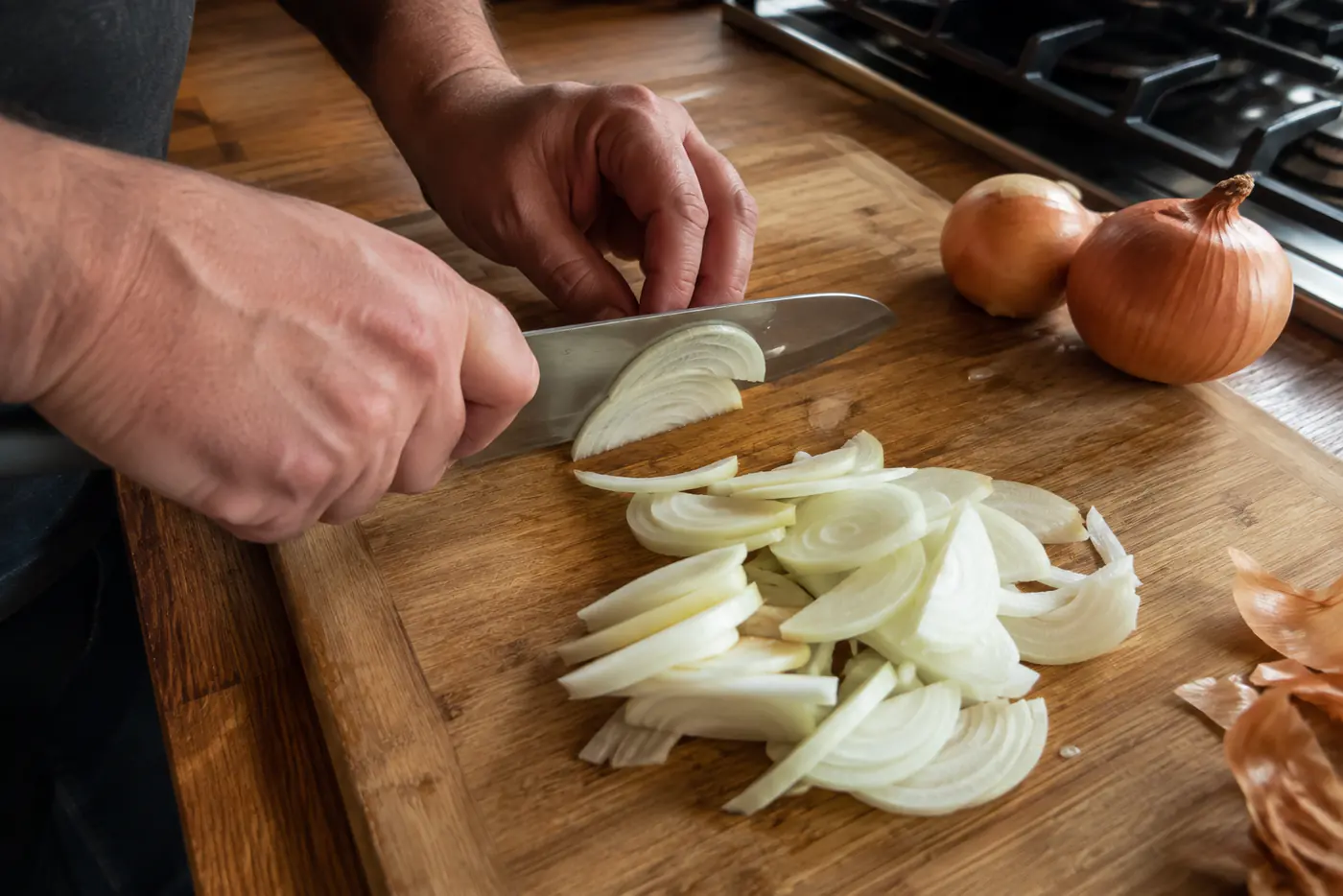
Yellow onions have enough natural sweetness to caramelize well while retaining savory depth. Slice them thinly and as evenly as practical so they soften at a similar rate. A few uneven slices are fine; the goal is consistent cooking, not machine-perfect cuts.
Use a broth you enjoy on its own
Beef stock gives this version its savory backbone. Because the broth remains prominent, choose one that tastes balanced rather than excessively salty. If the stock is already well seasoned, wait until the final simmer before adding the remaining salt.
Gruyère is the classic melting choice
Gruyère melts smoothly and develops nutty browned spots under the broiler. Comté, Emmental, or a blend of Gruyère and Parmesan can also work. Pre-shredded cheese may contain anti-caking ingredients, so freshly grated cheese generally melts more evenly.
Tools and Broiler Setup
A heavy Dutch oven distributes heat steadily during the long onion-cooking stage. You will also need a wooden spoon, chef’s knife, cutting board, ladle, rimmed baking sheet, and bowls specifically labeled oven- and broiler-safe. The baking sheet makes the hot bowls easier to move and catches any melted cheese.
For more ways to use the same pot during soup season, see these Dutch oven soup recipes.
How to Make French Onion Soup
1. Slice and soften the onions
Halve the onions from root to stem, peel them, and slice them into thin half-moons. Melt the butter in a heavy Dutch oven over medium heat. Add the onions and ½ teaspoon of the salt, stir to coat, cover, and cook for 5 minutes to begin softening them.
2. Caramelize slowly until deep amber
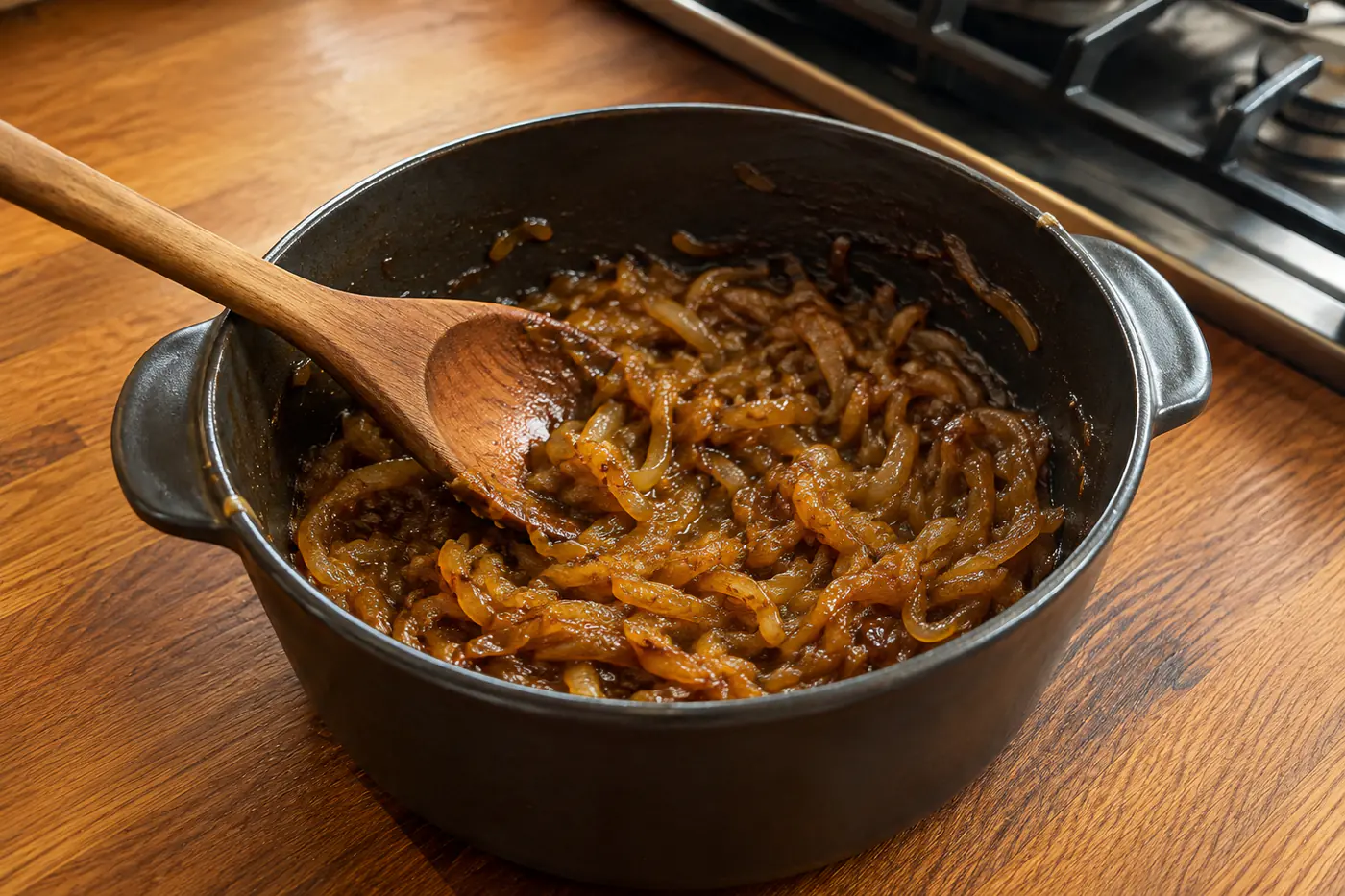
Remove the lid and reduce the heat to medium-low. Cook for 45–60 minutes, stirring every few minutes at first and more frequently as the onions darken. Scrape the bottom of the pot so the browned fond is folded back into the onions. If the edges begin to blacken before the onions are evenly brown, lower the heat and add a small splash of water.
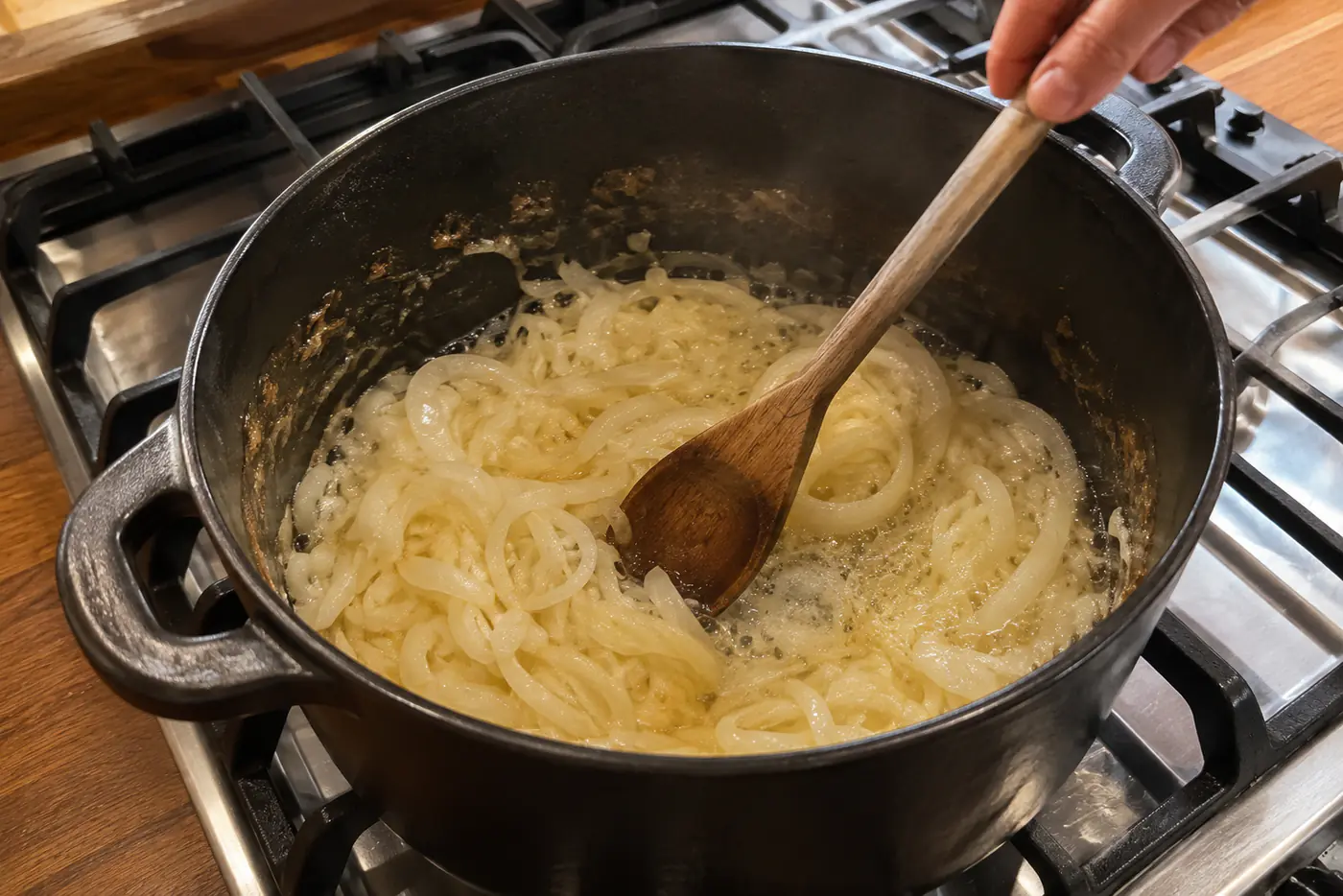
The onions are ready when their volume has reduced substantially and they look soft, glossy, and deep golden amber. Pale onions will produce a lighter, flatter-tasting broth; blackened onions can make it bitter.
3. Build the broth
Stir in the garlic and thyme until fragrant. Sprinkle the flour over the onions and cook for 1–2 minutes, stirring so no dry flour remains. Gradually pour in the wine and sherry, scraping the bottom of the pot to loosen the fond. Add the beef stock, the remaining ¼ teaspoon salt, and the black pepper.
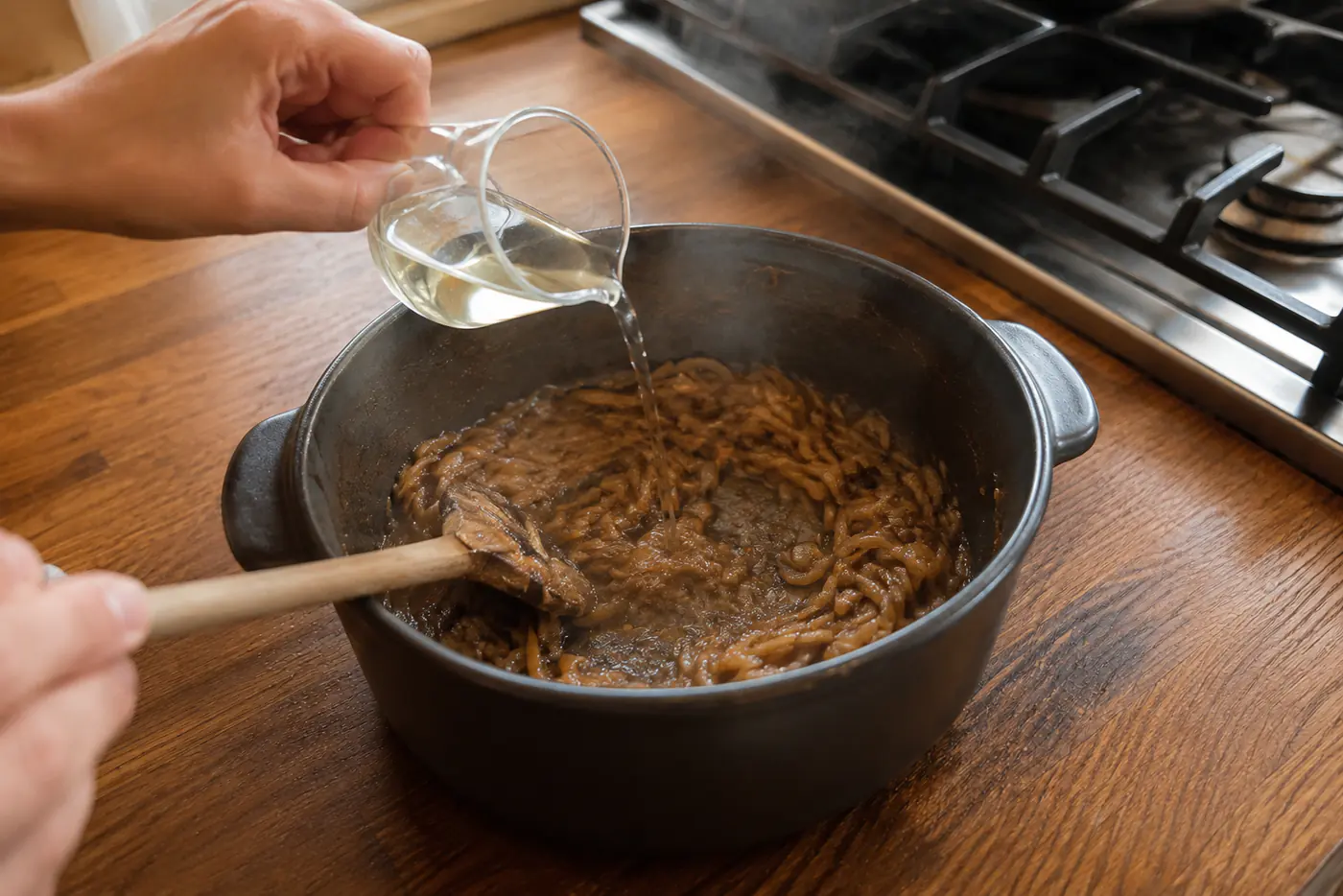
Bring the soup to a gentle simmer and cook for about 10 minutes so the flavors come together. Taste before adding more salt, especially if the stock was seasoned. Remove the thyme sprig.
4. Toast the bread
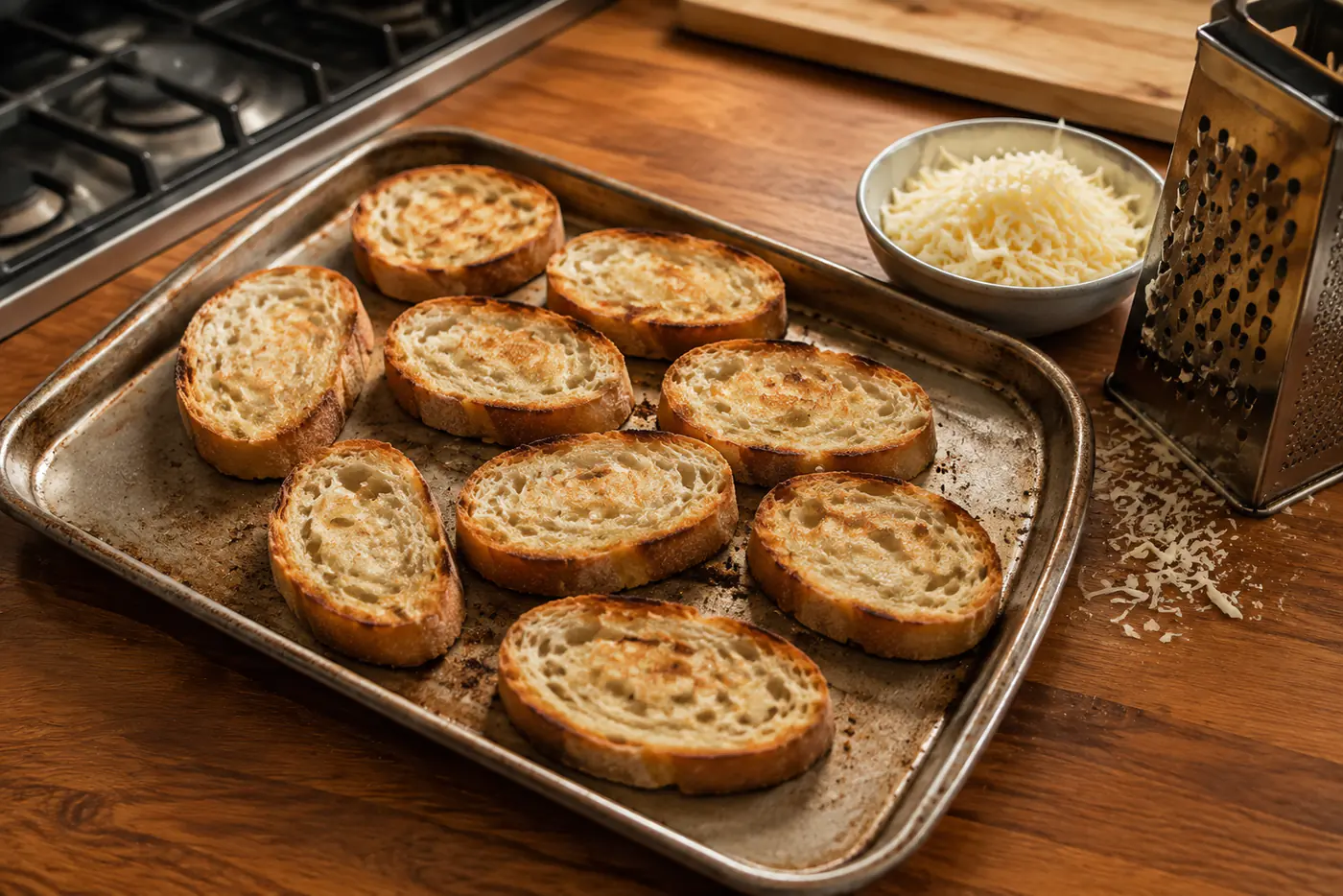
While the soup simmers, heat the oven to 450°F. Arrange the baguette slices on a rimmed baking sheet and toast until dry and lightly golden, turning once if needed. Toasting first helps the bread stay intact after it is placed on the soup.
5. Fill the bowls and broil
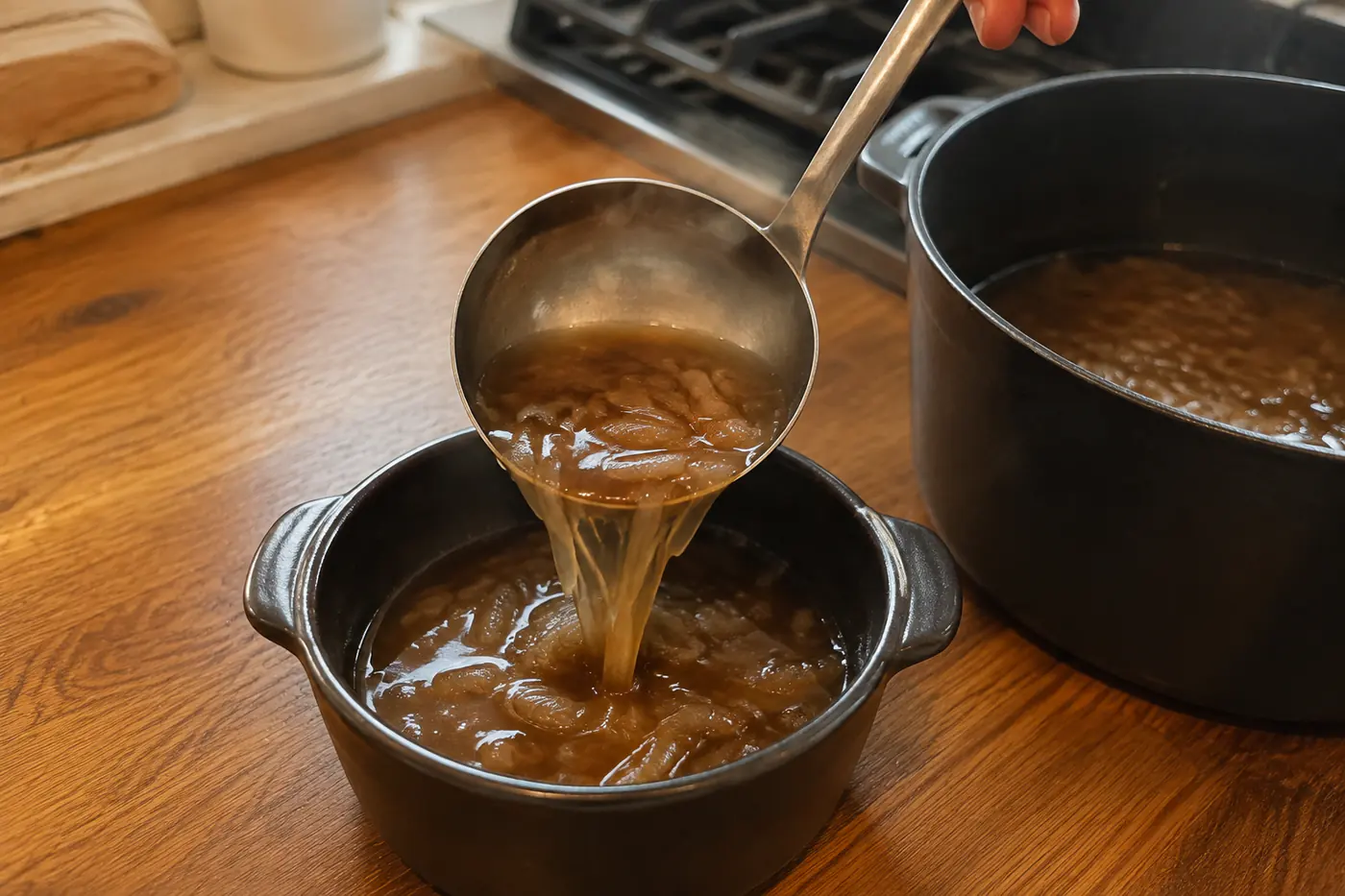
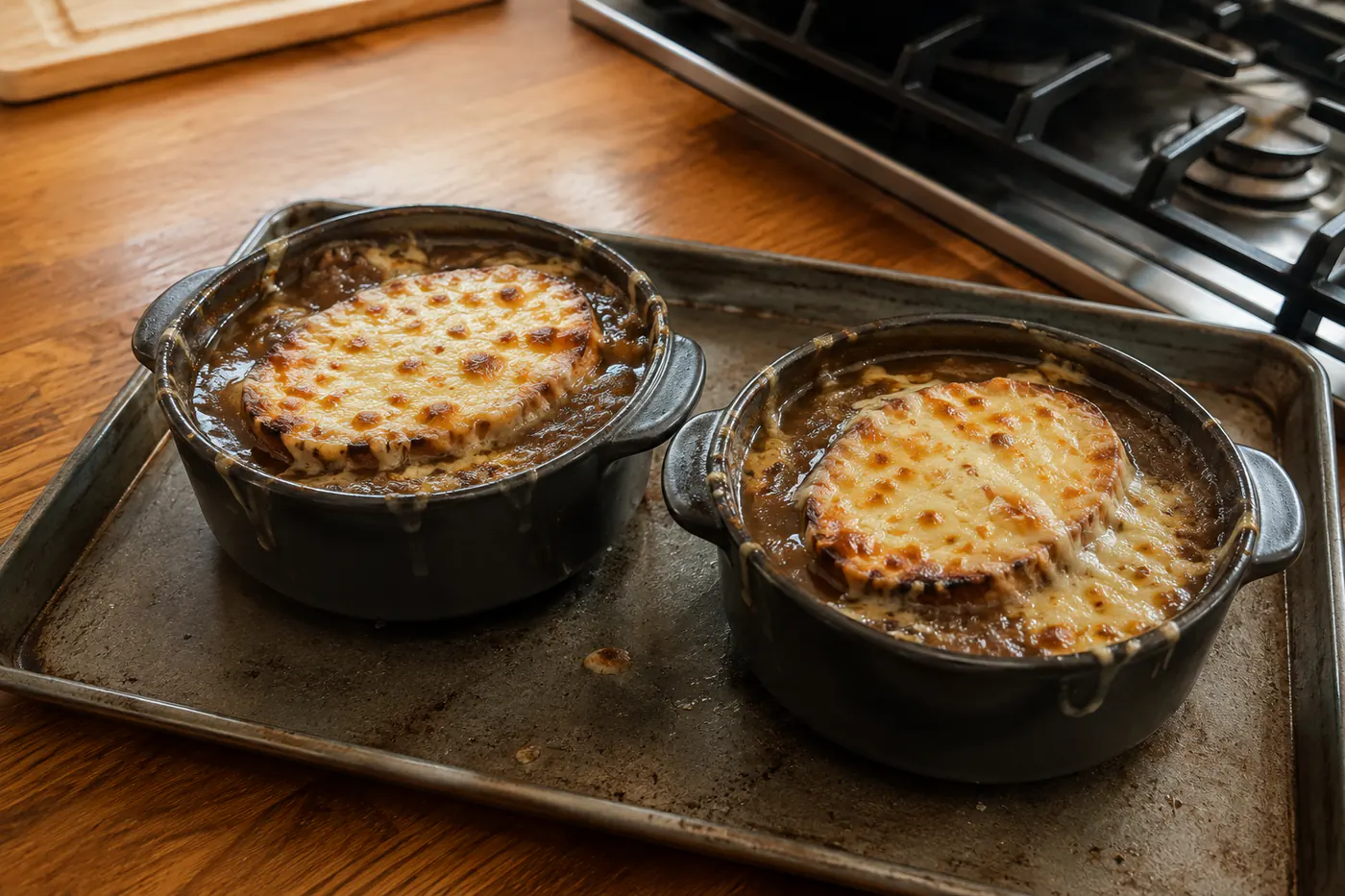
Set broiler-safe bowls on a sturdy rimmed baking sheet. Ladle in the hot soup, leaving enough room for the bread and cheese. Place one or two toasted slices on each bowl, depending on their size, and cover with grated Gruyère.
Move the tray under a hot broiler and watch continuously. Broil for about 1–2 minutes, or only until the cheese is melted, bubbling, and browned in spots. Broilers vary, so use the appearance of the cheese rather than the clock as the final cue. Remove the entire tray with dry oven mitts and serve carefully—the bowls and handles will be extremely hot.
Caramelized Onion Troubleshooting
| What you see | Likely cause | What to do |
|---|---|---|
| Onions remain pale | The heat is too low, the pot is crowded with moisture, or they need more time | Continue uncovered and stir periodically; raise the heat slightly only after most moisture has evaporated |
| Edges brown too quickly | The heat is too high or the pot has a hot spot | Lower the heat, stir more often, and add a tablespoon or two of water |
| Dark bits stick to the pot | Fond is forming | Scrape up brown—not black—bits as you stir; deglaze before they scorch |
| Finished broth tastes flat | The onions need more color or the seasoning is out of balance | Simmer briefly, then adjust salt and pepper a little at a time |
Variations and Substitutions
Vegetarian French onion soup
Replace the beef stock with a robust vegetable broth and use olive oil or a combination of olive oil and butter for the onions. Tamari and a small splash of balsamic vinegar can add savory depth. If you use Worcestershire sauce, check the label and choose a vegetarian or vegan version because standard Worcestershire commonly contains anchovies.
Alcohol-free option
Replace the wine and sherry with additional broth. Deglaze with the broth, scraping the fond from the bottom of the pot, and add a small splash of balsamic or sherry vinegar near the end only if the finished soup needs brightness. This produces a different flavor profile but keeps the method alcohol-free.
Cheese and bread alternatives
Comté, Emmental, provolone, or a Gruyère-Parmesan blend can replace all or part of the Gruyère. Use sturdy baguette or country bread rather than very soft sandwich bread. Gluten-free bread may be used, but toast it thoroughly and confirm that the broth and every seasoning are also gluten-free.
What to Serve with French Onion Soup
Because the cheese-topped soup is rich, pair it with something crisp or simply dressed. A green salad, pear and walnut salad, roasted vegetables, or an uncomplicated sandwich makes a balanced meal. For a smaller first course, use modest bowls and one toasted baguette slice per serving.
Make-Ahead, Storage, and Reheating
The soup base can be prepared through the simmering step. Keep the toasted bread and grated cheese separate, then assemble and broil only the portions you plan to serve.
- Refrigerate: Transfer leftovers to shallow containers and refrigerate within 2 hours. Use refrigerated cooked leftovers within 3–4 days.
- Freeze: Freeze the soup base without bread or cheese for up to 2 months for best quality. Thaw safely in the refrigerator before reheating.
- Reheat: Reheat the soup base to 165°F, then transfer it to broiler-safe bowls and add freshly toasted bread and cheese.
These refrigeration and reheating guidelines follow the USDA FSIS food-safety steps. Do not place a cold glass bowl directly under intense heat unless the manufacturer confirms it is broiler-safe.
French Onion Soup FAQ
What onions are best for French onion soup?
Yellow onions are a dependable choice because they become sweet as they caramelize while keeping savory depth. Sweet onions can work, but the finished soup may taste noticeably sweeter.
How long should onions caramelize?
Allow about 45–60 minutes after the initial covered softening stage. Pot size, onion moisture, and burner strength all affect the exact timing, so look for soft, reduced, deep amber onions rather than relying only on the clock.
Why are my onions not browning?
They may still be releasing water, the pot may be crowded, or the heat may be too low. Continue cooking uncovered until the moisture evaporates, then adjust the heat slightly while stirring often enough to prevent scorching.
How do I keep caramelized onions from burning?
Use moderate heat, stir more frequently as the onions darken, and scrape the pot regularly. If you see black edges or smell bitterness, lower the heat and add a small splash of water to slow the browning.
What cheese is best for the topping?
Gruyère is the first choice for its nutty flavor, smooth melt, and ability to brown. Comté, Emmental, or a blend with Parmesan are useful alternatives.
Do I have to use wine?
No. Additional broth can deglaze the pot. A small splash of balsamic or sherry vinegar added near the end can restore some brightness, although the flavor will not be identical to the wine version.
Can French onion soup be made vegetarian?
Yes. Use a flavorful vegetable broth, replace some or all of the butter with olive oil if desired, and build umami with tamari and a little balsamic vinegar. Check Worcestershire labels because standard versions commonly contain anchovies.
Can I make it ahead or freeze it?
Make and store the soup base without bread or cheese. Refrigerate it for 3–4 days or freeze it for up to 2 months for best quality, then reheat before assembling and broiling individual bowls.
Ready to Broil and Serve
The best cue is visual: the onions should be deep amber before the broth is added, and the Gruyère should be bubbling with browned spots when the bowls leave the broiler. Keep the bread and cheese separate for make-ahead portions so every serving has a crisp, freshly browned top.


