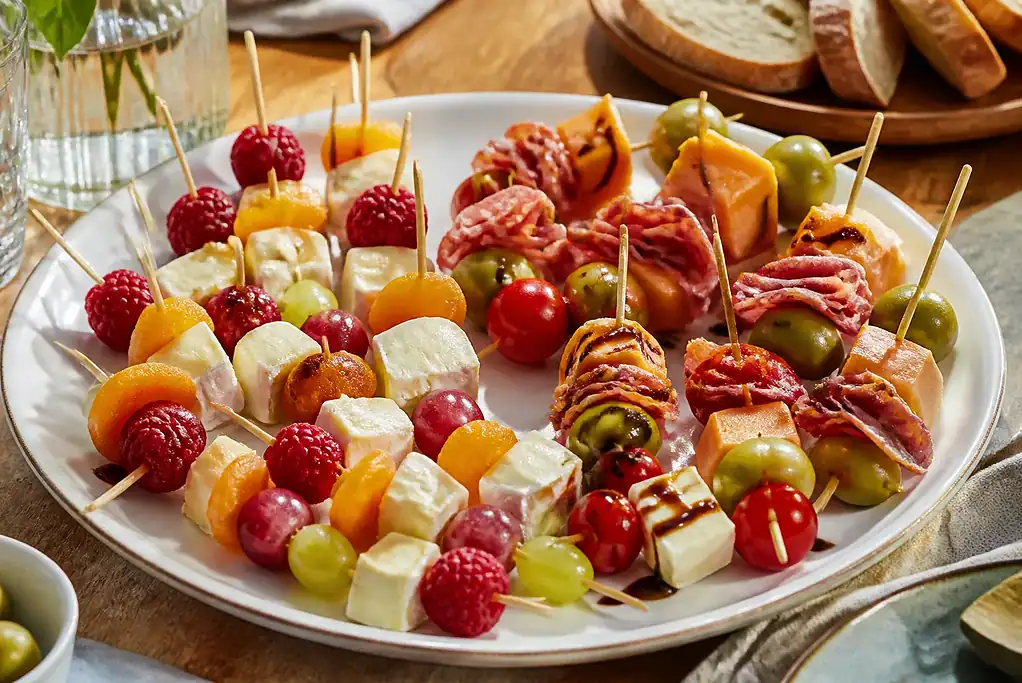
These cheese skewers appetizers turn a few simple ingredients into colorful, grab-and-go party bites. Build sweet skewers with brie, havarti, grapes, and berries, or make savory versions with cheddar, olives, tomatoes, and cured meat.
The combinations are easy to assemble ahead, scale for a crowd, and arrange on a platter without last-minute cooking. For more party inspiration, pair them with these burrata cheese appetizers or use them as a starter for one of my group dinner ideas.
Below you will find pairing formulas, assembly steps, vegetarian swaps, storage guidance, and practical serving tips for a polished appetizer spread.
Quick Cheese Skewer Pairing Guide
| Style | Cheese | Best add-ins | Finish |
|---|---|---|---|
| Sweet | Brie or havarti | Grapes, berries, dried apricots | Honey or balsamic glaze |
| Savory | Cheddar or gouda | Olives, tomatoes, prosciutto | Herbs or pepper |
| Vegetarian | Mozzarella or feta | Cucumber, peppers, artichokes | Lemon-herb oil |
Key Takeaways
- This no-cook recipe is fast and crowd-pleasing for parties and summer gatherings.
- I split builds into sweet-and-creamy and savory-and-salty for variety.
- Room-temperature service boosts cheese flavor and texture.
- The platter scales up or down and stays grab-and-go for mingling.
- Simple ingredients and small prep let you focus on guests, not the kitchen.
Why I Love Serving Cheese Skewers at Parties
I started making threaded bites after learning pairing rules in culinary school, and they changed how I host.
Splitting the platter into sweet and savory comes from those pairing lessons. I match soft cheese with fruit and sharper varieties with olives or pickles. That contrast showcases flavors textures and makes every bite feel deliberate.
I love that this format brings the spirit of charcuterie to a party without hours of styling. It saves me setup time while still looking curated.
“Handheld bites keep guests comfortable—chatting, moving, and holding a drink all at once.”
- Guests prefer a grab-and-go snack over standing at a board or at a crowded cup.
- I use it in summer because it’s no-cook and light, but it also works for a cozy dinner or holiday spread.
- The build scales easily: a dozen for a quiet night or trays for a big bash, and people come back for seconds.
Ingredients for My Cheese Skewers Appetizers
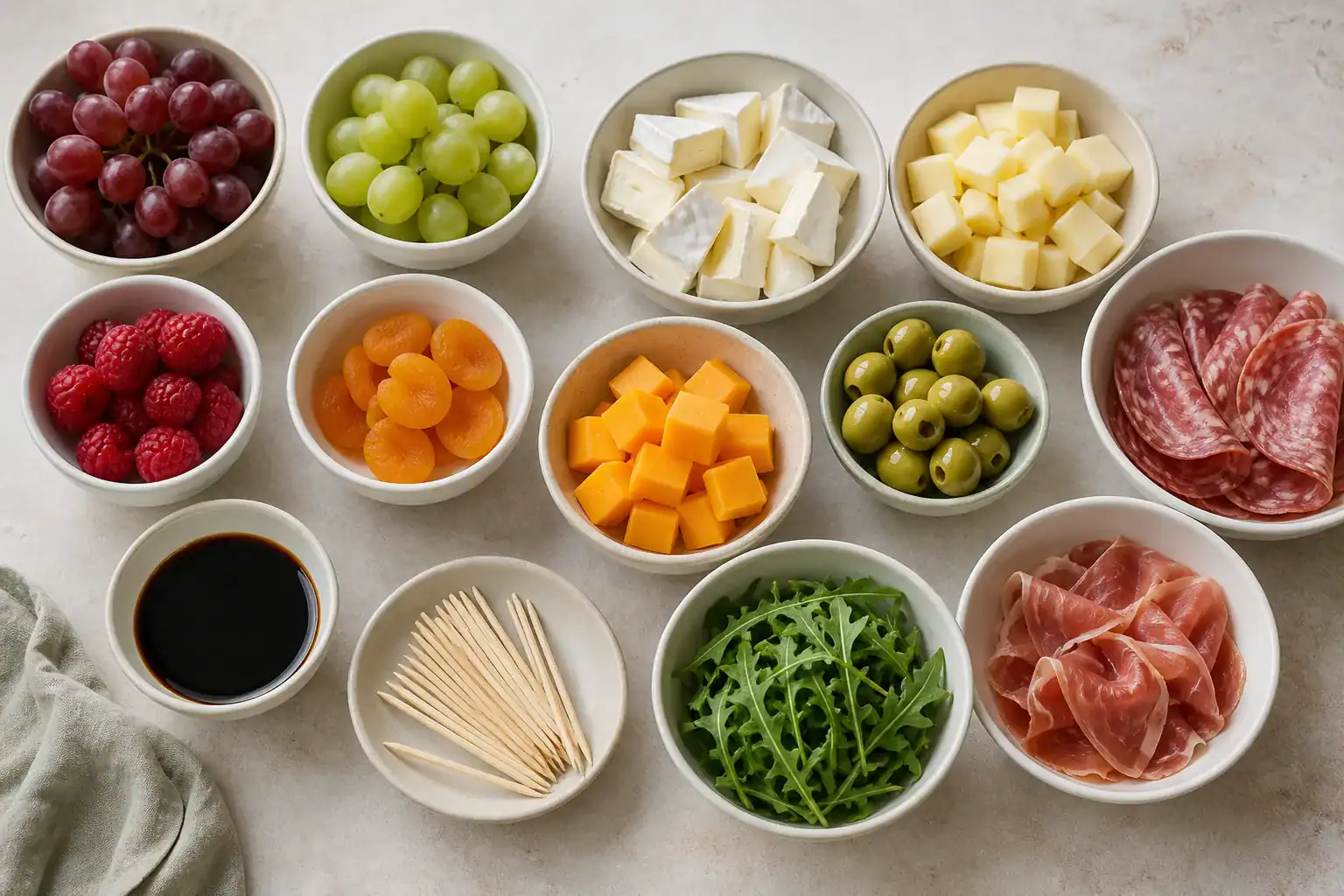
When I plan a platter, I start by laying out the ingredients so every bite feels balanced and simple.
Sweet and creamy combo
I pick mini brie or small wedges and havarti as a soft base. I add grapes, dried apricots, and raspberries for juicy contrast.
- Mini brie or wedges
- Havarti (cut into about 1-inch cubes)
- Grapes and raspberries
- Dried apricots
Savory and salty combo
For the bold side I layer peppered salami and prosciutto with sharp cheddar or Scotch bonnet cheddar. I add Castelvetrano olives and cheese-stuffed cherry peppers for briny heat.
- Sharp cheddar or Scotch bonnet cheddar (1-inch cubes)
- Havarti for balance
- Castelvetrano olives and cherry peppers
- Peppered salami, prosciutto
Optional flavor boosters
I like having extras on hand so I can tweak color and tang. Arugula, balsamic glaze, and cherry tomatoes brighten the platter.
“A sprinkle of arugula or a drizzle of glaze turns good bites into memorable ones.”
Tools and Skewers I Use
I keep a small kit of picks and a sharp knife close by so assembly goes fast and looks intentional.
Choosing the right length and material makes a big difference for presentation and handling. Below I explain my go-to picks, how I stack ingredients, and the simple habits that save me prep time.
Pick choices
- I reach for 6-inch appetizer picks for elegant, one-bite builds that sit neatly on a small plate and are easy to grab.
- For a dramatic display or heartier portions, I use 10-12 inch BBQ bamboo skewers and stack heavier items near the bottom so the top stays light.
- 4-5 inch wooden picks work great for mini builds; they’re easy to find in stores or online and hold up to juicy fruit and olive pieces.
Assembly tools and tips
I use a sharp knife and a stable cutting board so I can cube cheese cleanly; uniform pieces speed assembly and save me time.
I choose picks with a flat end or a decorative knot for grip. I also keep extra bamboo skewers on hand because some can splinter; a quick pre-check avoids last-minute hassles.
| Pick Type | Best Use | Length | Durability |
|---|---|---|---|
| Appetizer pick | One-bite servings, small plates | 4–6 inch | Good for soft and firm items |
| Wooden mini pick | Mini builds, fruit and olive pieces | 4–5 inch | Widely available, holds juice well |
| BBQ bamboo | Hearty portions, dramatic trays | 10–12 inch | Sturdy but check for splinters |
I thread with balance in mind: dense items sit lower, and softer pieces rest between firmer ones for stability. I arrange finished skewers on a rimmed tray for transport, then move them to a showpiece platter when I arrive.
Step-by-Step: Assemble Savory Skewers
Assembling savory bites is where the platter really finds its rhythm. I keep the steps simple so each piece looks polished and holds up on a crowded tray.
Prep to bite-size
I slice havarti and cheddar into about 1-inch cubes so every mouthful feels even. Folding salami into quarters gives it texture and helps it grip on the pick.
I roll prosciutto into tight logs and cut each slice in half. Those compact rolls thread easily and won’t flop off the end of a skewer.
Threading order for balanced flavor and stability
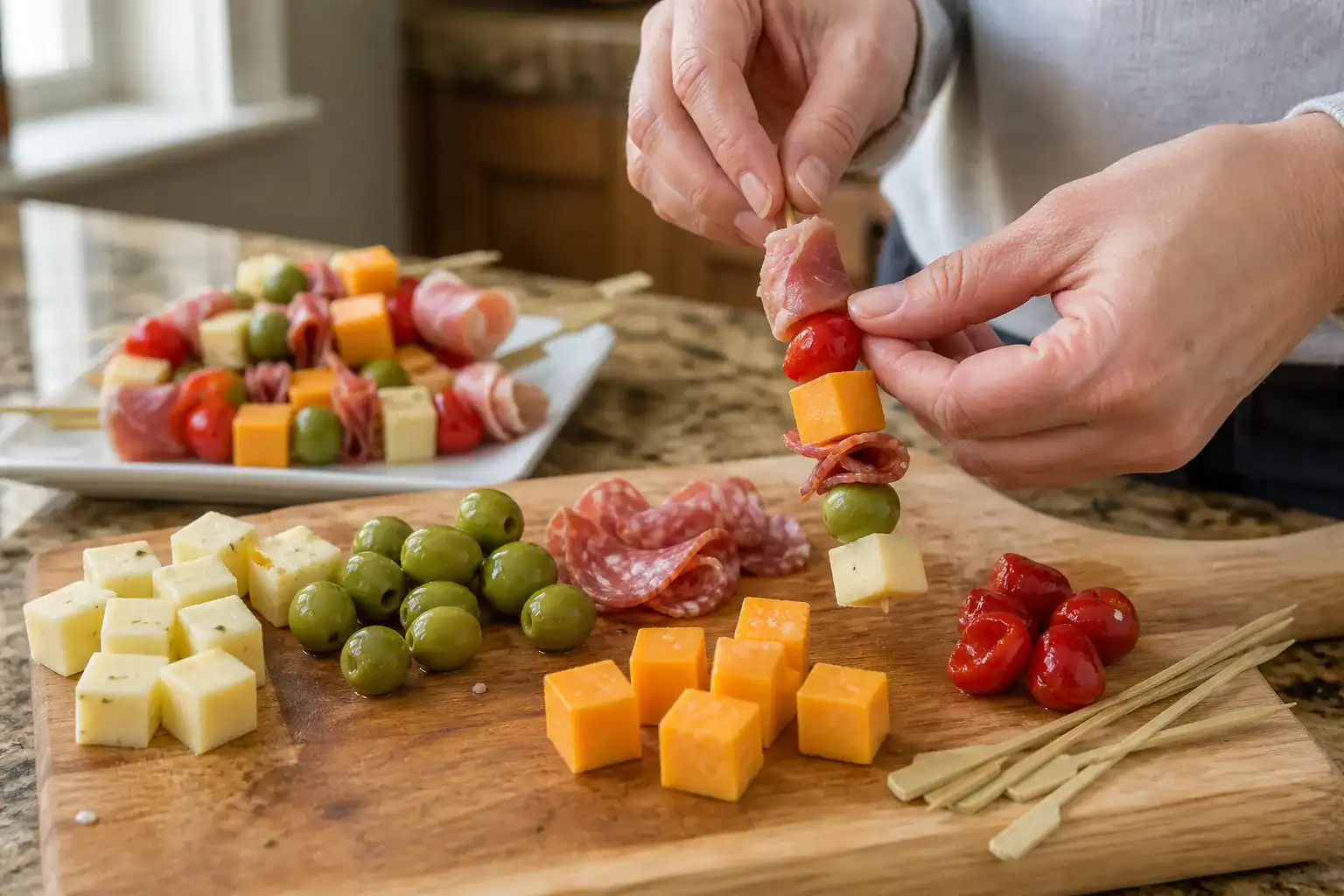
- I start with a havarti cube to give a soft, sturdy base for the rest of the ingredients.
- Next comes a buttery Castelvetrano olive for brine and a folded salami for savory lift.
- Then I add a cheddar cube for sharpness, a cheese-stuffed cherry pepper for heat and color, and finish with a prosciutto roll.
- Place heavier or slippery items lower on the skewer to keep the center of gravity steady on the platter.
- I build a dozen at a time; once prep is done, that batch takes just a few minutes to assemble.
- Leave a little space at the top so guests can grab the skewer, and let the tray sit at room temperature for about 30 minutes before serving.
“A steady order and a short resting time bring out the best in the mix of briny, creamy, and spicy notes.”
Step-by-Step: Assemble Sweet Skewers
For a bright, dessert-style bite, I build sweet threaded pieces that pop with color and contrast. The order matters: it creates balance so every mouthful feels complete.
Grape, apricot, brie or havarti, berry pattern
I start with a gentle layer of havarti or a small brie wedge so the first note is creamy. Next I add a dried apricot for chew and honeyed sweetness.
Then I slide on a firm grape for juicy contrast and a jewel-toned pop. After that I add a mini brie piece or another cube to restore the creamy texture. I finish with a raspberry for tang and color.
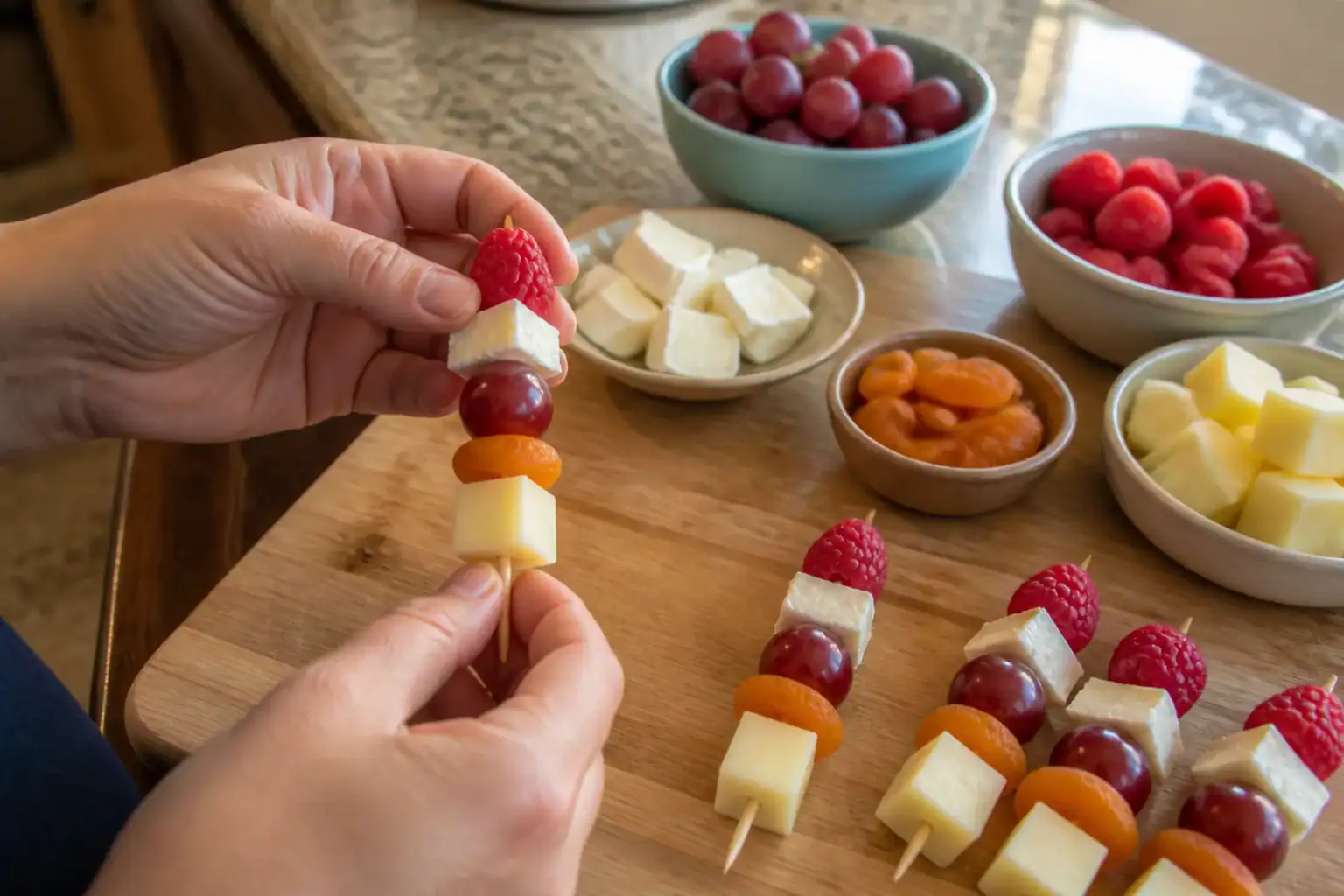
- I pick firm grapes and pat them dry so they slide on cleanly.
- I keep fruit and cubes similar in size for a stable bite.
- Swap in gouda when I want a nuttier bridge between fruit and dairy.
| Milk Pick | Texture | Best Pairing |
|---|---|---|
| Havarti | Buttery, mild | Red or green grape, apricot |
| Brie (mini) | Soft, creamy | Raspberry, grape |
| Gouda | Nuttier, firm | Grape, dried fruit |
Flavor Variations You’ll Want to Try
Small swaps bring big returns. I like to test one change at a time so each bite stays balanced and easy to eat.
Gouda, prosciutto, arugula, and balsamic
I build a sweet-salty variation with gouda, prosciutto, arugula, and a few grapes. A glossy drizzle of balsamic glaze brightens the whole plate.
Marinated cheese and olive combo
For a marinated take I warm olive oil with orange zest and juice, sliced garlic, a rosemary sprig, and a pinch of red pepper flakes. I stir in chopped parsley and cool the oil completely.
I toss fresh mozzarella, green olive pieces, and mild red piquanté peppers in that citrus-herb oil. Let the mix sit 4 to 48 hours, then thread olive‑pepper‑cheese‑olive for a briny, garlicky bite.
Vegetarian swaps and seasonal boosts
When I want meat-free builds, I double up on different cheeses—feta, queso blanco, havarti, gouda, or mild cheddar work well. I add extra olives, fruits, cherry peppers, and pickled veggies for texture and zip.
Rotate add-ons with the seasons: cherry tomatoes in summer, roasted red peppers any time, or marinated artichokes for an antipasto twist. Feel free to riff—there’s no wrong way when it tastes right to you.
| Variation | Key Ingredients | Marinade & Time | Serving Tip |
|---|---|---|---|
| Gouda & Prosciutto | Gouda, prosciutto, arugula, grapes | No marinade; finish with balsamic drizzle | Drizzle just before serving |
| Marinated Mozzarella & Olive | Mozzarella, green olives, piquanté peppers | Warm olive oil with garlic, orange zest; 4–48 hrs | Thread olive‑pepper‑cheese‑olive for balance |
| Vegetarian Mix | Feta, havarti, mild cheddar, pickled veggies | Optional quick herb oil; 2–12 hrs | Double up on firm cheeses to protect soft pieces |
Pro Tips for Flavors, Textures, and Timing
Small timing and size choices are where good bites become great ones. I focus on three simple rules to keep every piece tidy, stable, and tasty.
Keep sizes around 1 inch. I cut cubes roughly 1 inch so each bite feels even and threads cleanly. Uniform pieces stop ingredients from sliding and make handling a tray easier.
Serve at room temperature. I bring the platter out about 30 minutes before serving so the flavors open and fats soften slightly. This time is key to hearing the texture and tasting the full flavor of each item.
- I place softer pieces between firmer ones to protect delicate textures and keep bites intact.
- I pair sweet, buttery varieties with fruit, and match sharper options with briny olive or pepper elements for contrast.
- Let any infused oil cool completely before tossing with cheeses; warm oil can soften edges or melt surface fat.
- Arrange heavier items low on the pick for stability and lighter items near the top for easy grabbing.
- If holding the tray for hours, I cover and chill, then let the display come back to room temperature before serving.
“Taste and tweak — a dash more briny olive or an extra fruit piece can pull the whole platter together.”
Cheese Skewers Appetizers: Make-Ahead, Storage, and Food Safety
Prep and storage keep my platter fresh from setup through the last guest. I assemble most builds 1–4 hours ahead so textures stay lively. If I’m pressed for time, I prep the night before and seal trays tightly.
I refrigerate covered trays and bring them to room temperature about 30 minutes before serving. That short rest wakes up flavor without risking safety.
I follow a firm safety rule: discard any platter left out at room temperature for roughly 4 hours. While hosting, I plan service windows so food never sits too long.
Storing leftovers and quick tips
- I store leftovers in an airtight container to keep fruit from drying and to stop olives from scenting the fridge.
- Aim to eat saved bites within 2–3 days; mozzarella builds can last 3–4 days but lose texture over time.
- Separate delicate pieces from strong olive-forward picks to prevent flavor transfer.
- Use parchment between layers, label containers with the prep date, and keep fresh tongs ready for serving.
How I Serve These Skewers for Dinner Parties and Boards
A thoughtful spread sets the mood—so I plan placement, pace, and pairing before I plate. I arrange pieces to guide guests and keep the table flowing during a dinner or casual get-together.
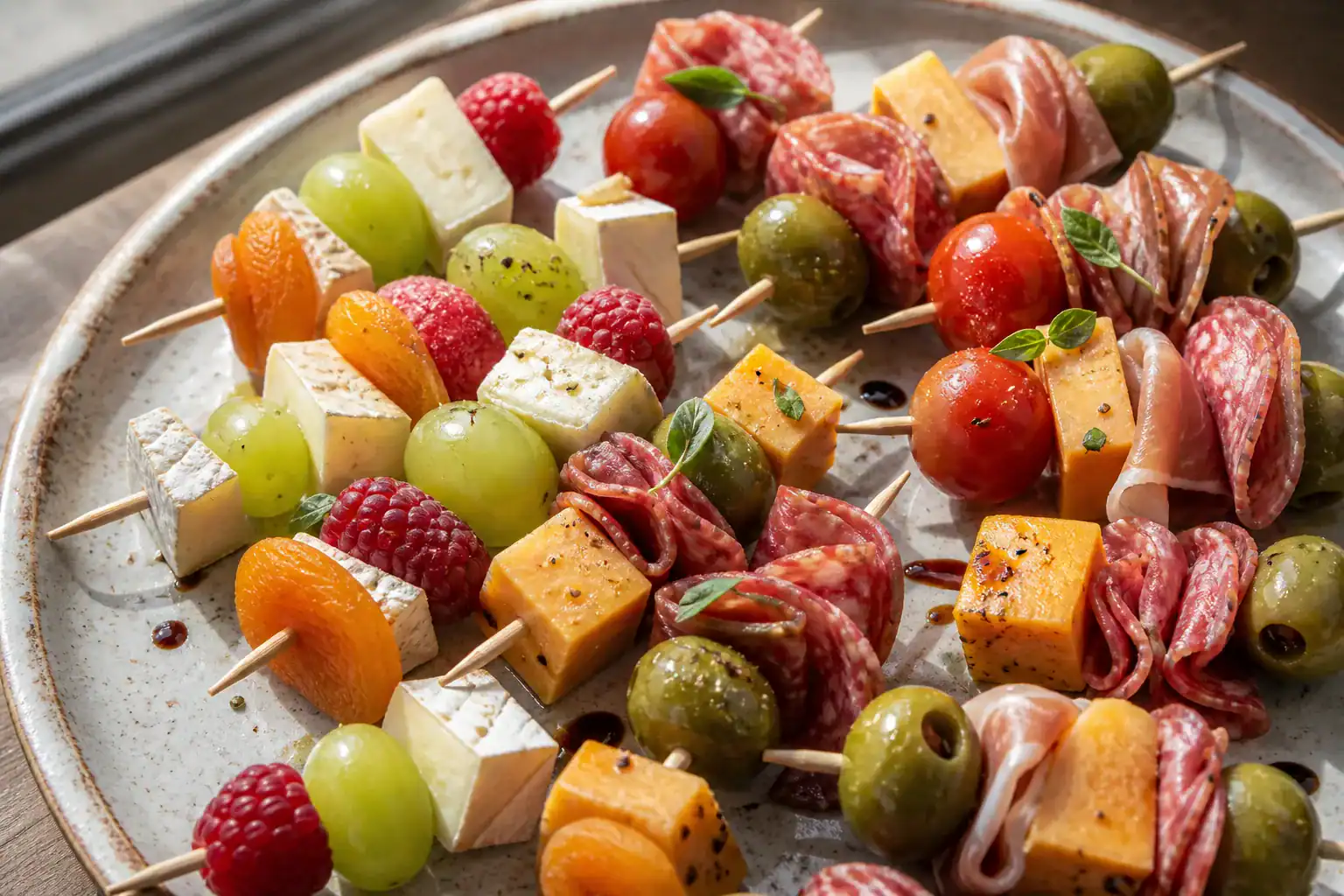
Arrange on a platter or charcuterie board for grab-and-go snacks
I fan skewers across a wide platter or a rustic board so people can spot sweet versus savory at a glance and grab what they love. I tuck small bowls of marinated tomatoes, olives, and mustard nearby to round out bites.
Scale up for crowds, down for snacks; mix colors and shapes
For a quiet night I use fewer varieties and fewer picks. For a big party I add more meats, cheeses, fruit, and add-ons so the board looks abundant.
I balance richer items with bright fruit to keep the spread from feeling too heavy on fat. I weave in red and green—grapes, peppers, or tomatoes—for a festive look year-round.
Course ideas: appetizer before dinner, light summer snack, party bites
I place savory-forward offerings near wine and cocktails and set sweeter builds closer to lighter sips. These make a great first course before dinner, a light summer snack, or elegant party bites at a mix-and-mingle.
- I write tiny labels for key builds so guests know what they’re tasting.
- I finish long picks upright in a vase for height and lay shorter ones flat for variety—skewers perfect for any tablescape.
- I sprinkle herbs or microgreens as a final fresh note and aroma.
Ready to Make This Recipe and Share Your Spin?
Give this one a go: a little prep and about 15 minutes of assembly turns pantry items into a shareable tray. I set aside minutes to cube and fold, then assembly flies.
Feel free to make recipe your own—swap varieties, fruits, and briny bites until the platter matches your taste. Try a half-and-half board so you can compare sweet and savory in one go.
You can prep pieces hours ahead and bring them to room temperature before serving so flavors bloom. If you try different recipes or a new way of stacking, drop a note or tag a photo—I love seeing your spins.


